The most useful question in a 1950s bathroom remodel is not what to buy but what to save. I have spent many years walking homeowners, contractors and designers through rooms like this, and the best results come from deciding wall by wall. Sound tile is often worth keeping; tile hiding water damage is not.
In 21 seconds: when to keep, repair or replace 1950s bathroom tile, from a simple tap test to the boldest color pairings.
Best Tiles for Updating a 1950s or 1960s Bathroom
of 15
Should You Keep Your Original 1950s Bathroom Tile?
Clients often assume the tile is the problem, but in reality it is usually tired grout, flat lighting and a mismatched vanity. If the tile is intact and the color works for you, keeping it preserves the craftsmanship of the house.
02
of 15
Signs Your Original Bathroom Tile Is Worth Keeping
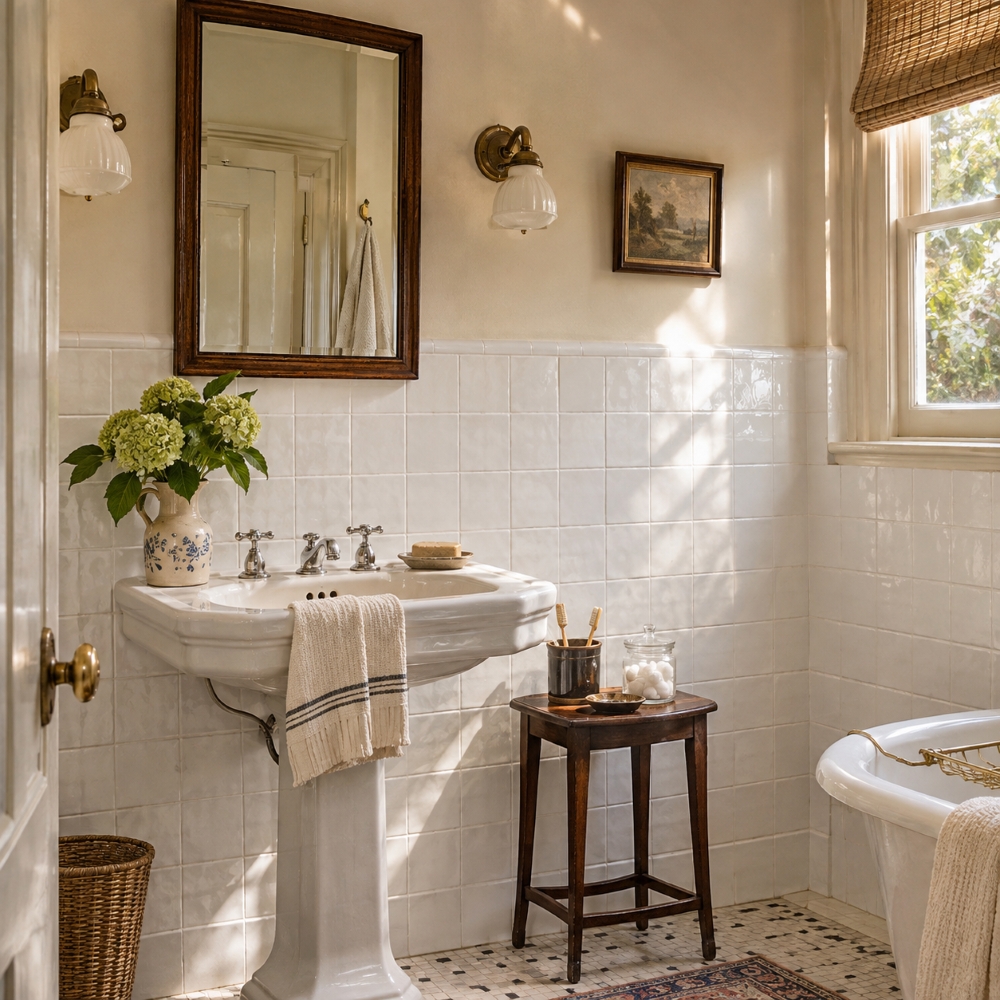
Tap each wall with a screwdriver handle. A solid sound, a crisp glaze and hairline grout cracks at most are good signs. A careful regrout changes the room more than most people expect.
03
of 15
Signs It Is Time to Replace the Tile
Hollow sounds across several tiles, soft walls around the tub or staining at the base of the wall point to water behind the surface. At that stage the tile is telling you about the wall, and the honest answer is to open it up.
04
of 15
The Middle Path: Keep the Wall Tile, Replace the Floor
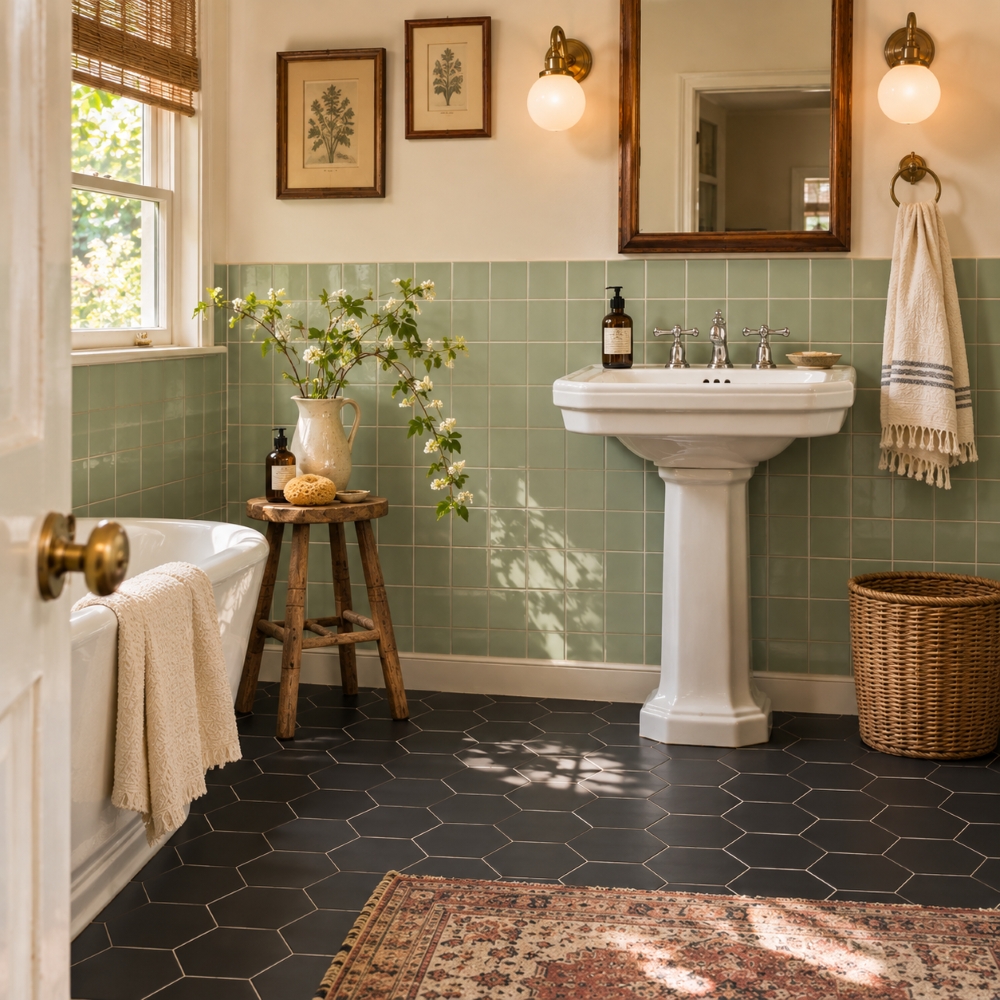
The most common mistake we see is treating the room as all or nothing. Floors wear first. Keeping a pastel wainscot and laying new floor tiles beneath it gives you modern performance underfoot and original character at eye level.
05
of 15
What 1950s Bathroom Tile Usually Looks Like
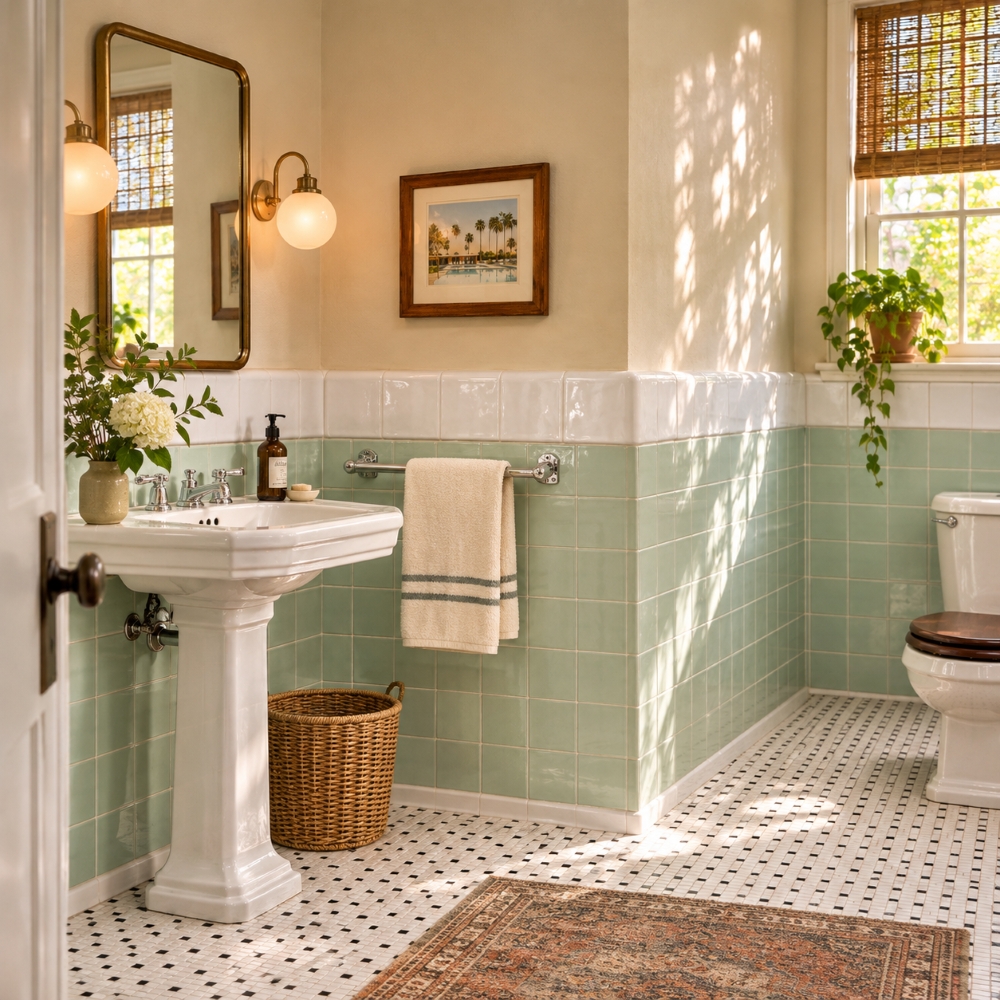
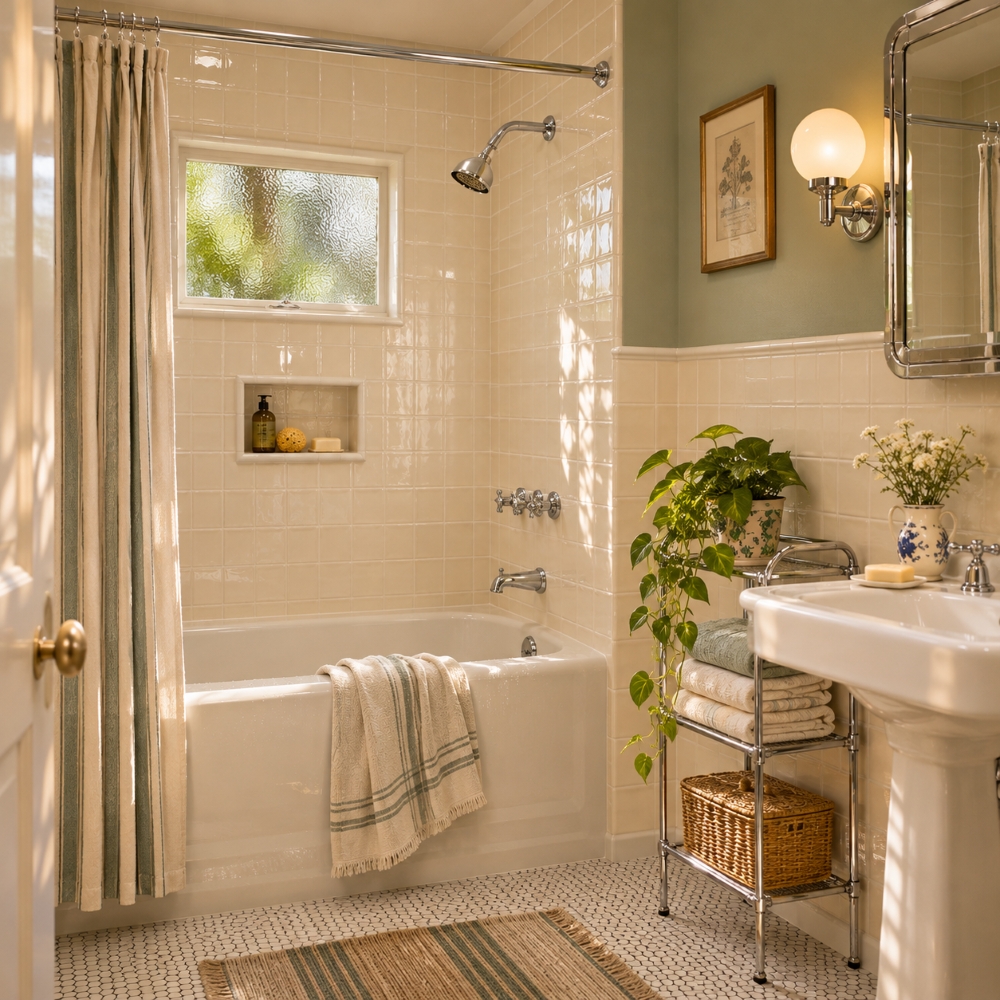
Most bathrooms of the era paired square glazed wall tile in pastel tones with a contrasting liner, often black tile, and a small mosaic floor.
Square tile, not long rectangles, set the rhythm. That vocabulary guides you whether you restore it or reinterpret it in fresh ceramic tile.
06
of 15
Before You Remove Old Bathroom Tile: What to Check First
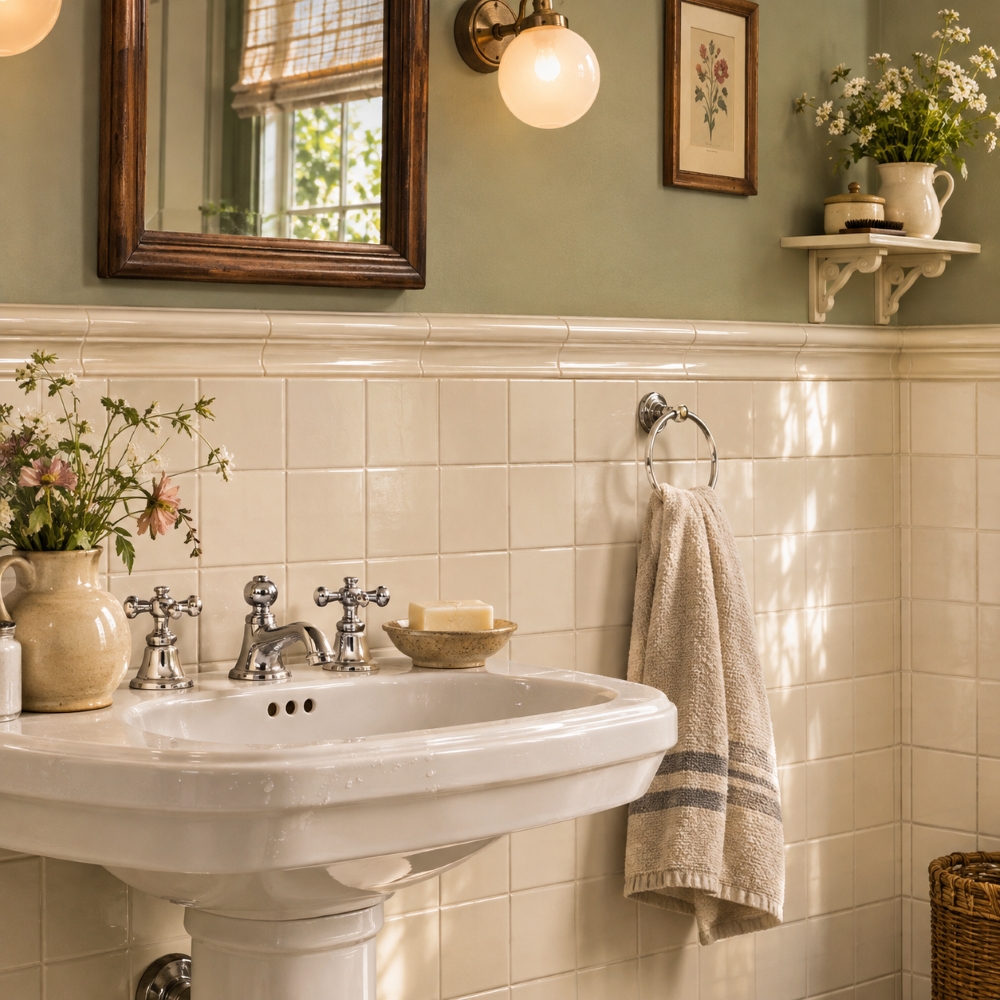
Older vinyl floor tiles, sheet flooring backing and adhesives can contain asbestos, so have suspect layers tested and follow local rules before demolition.
While the room is intact, photograph every wall and measure tile size, thickness and trim. That record will be the only one you have.
07
of 15
How to Update a 1950s Bathroom Without Removing the Tile
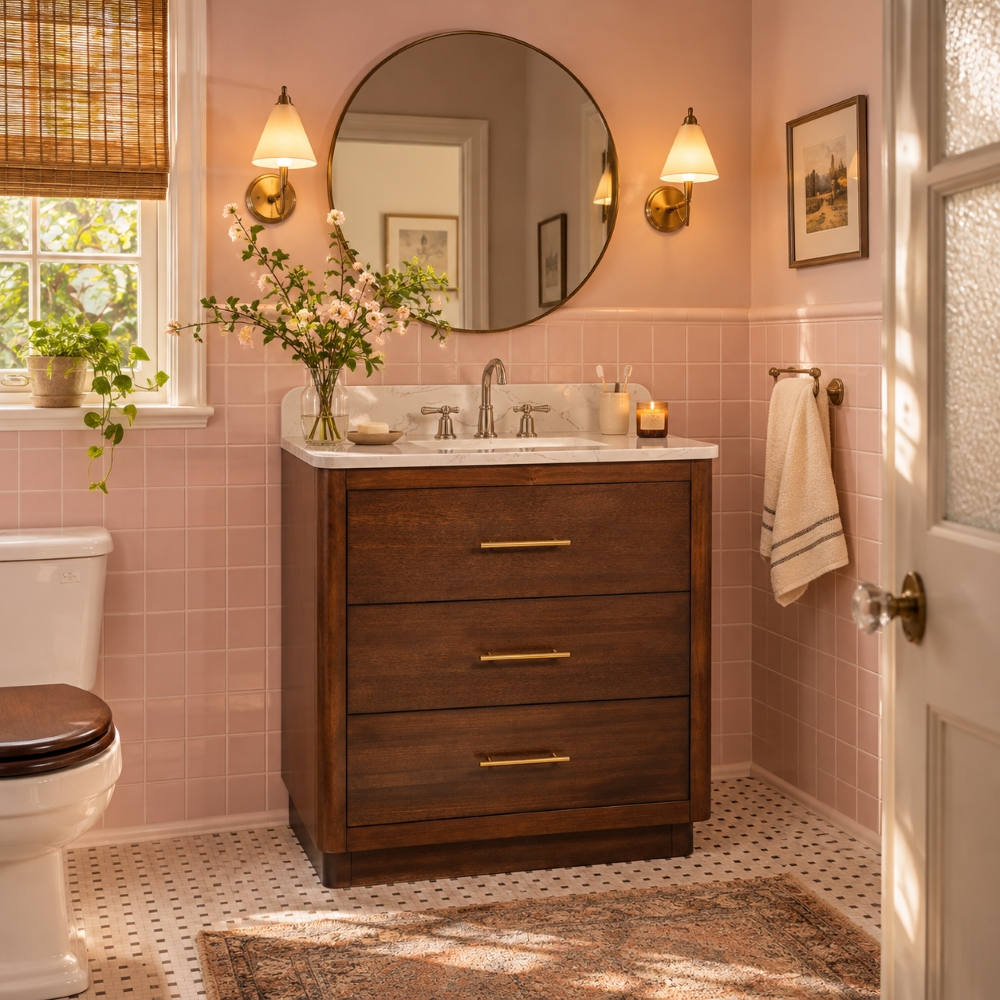
Many of the strongest rooms I have worked on kept every original wall tile. Warmer lighting, a simpler mirror, paint drawn from the tile and well proportioned vanities make vintage bathroom tile feel deliberate.
In a windowless room, the best tile ideas for small bathrooms with no natural light apply too: reflective glaze up high, quieter finishes underfoot.
08
of 15
Can Original 1950s Bathroom Tile Be Repaired?
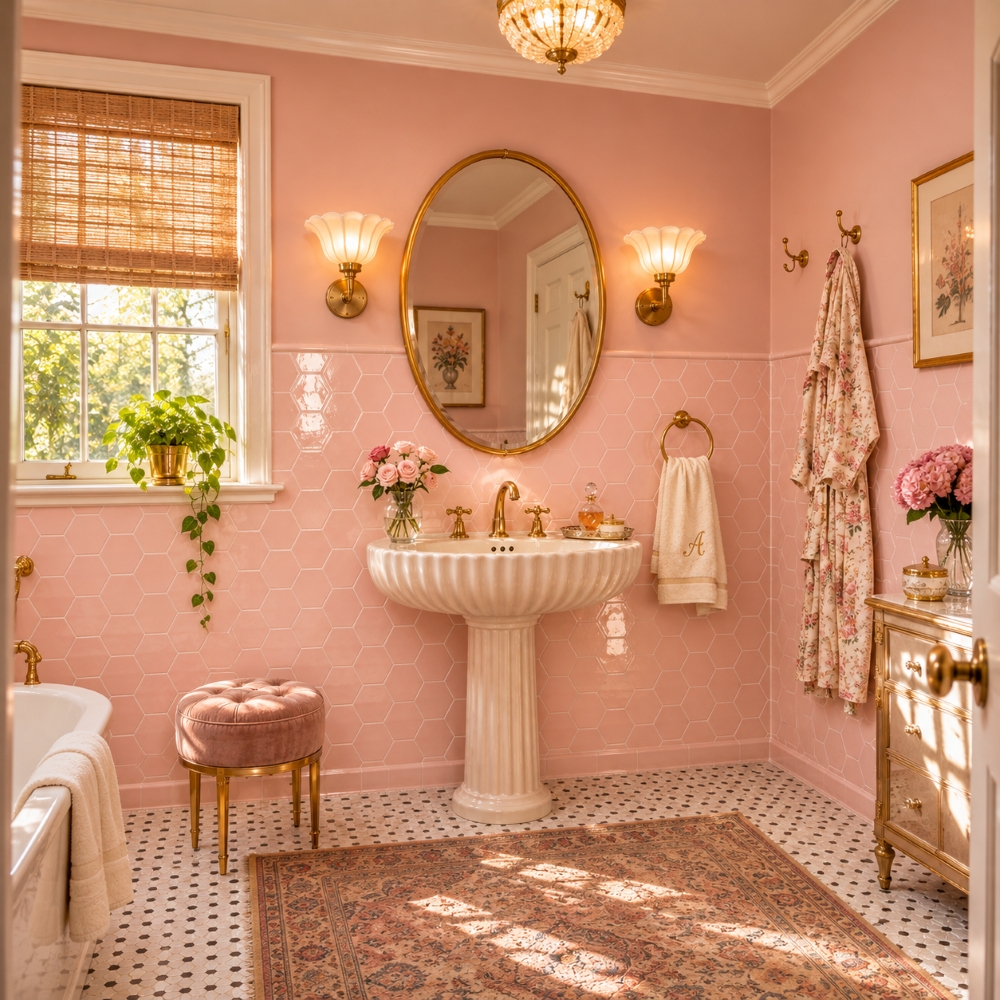
Usually, yes. Cutting out cracked grout in old bathroom tile and regrouting is far less disruptive than most clients fear, and broken pieces can be swapped one at a time.
The choice between epoxy and cement grout matters too, because the new joints set the tone of the whole wall.
09
of 15
How to Update Pink, Green, Blue or Yellow Bathroom Tile
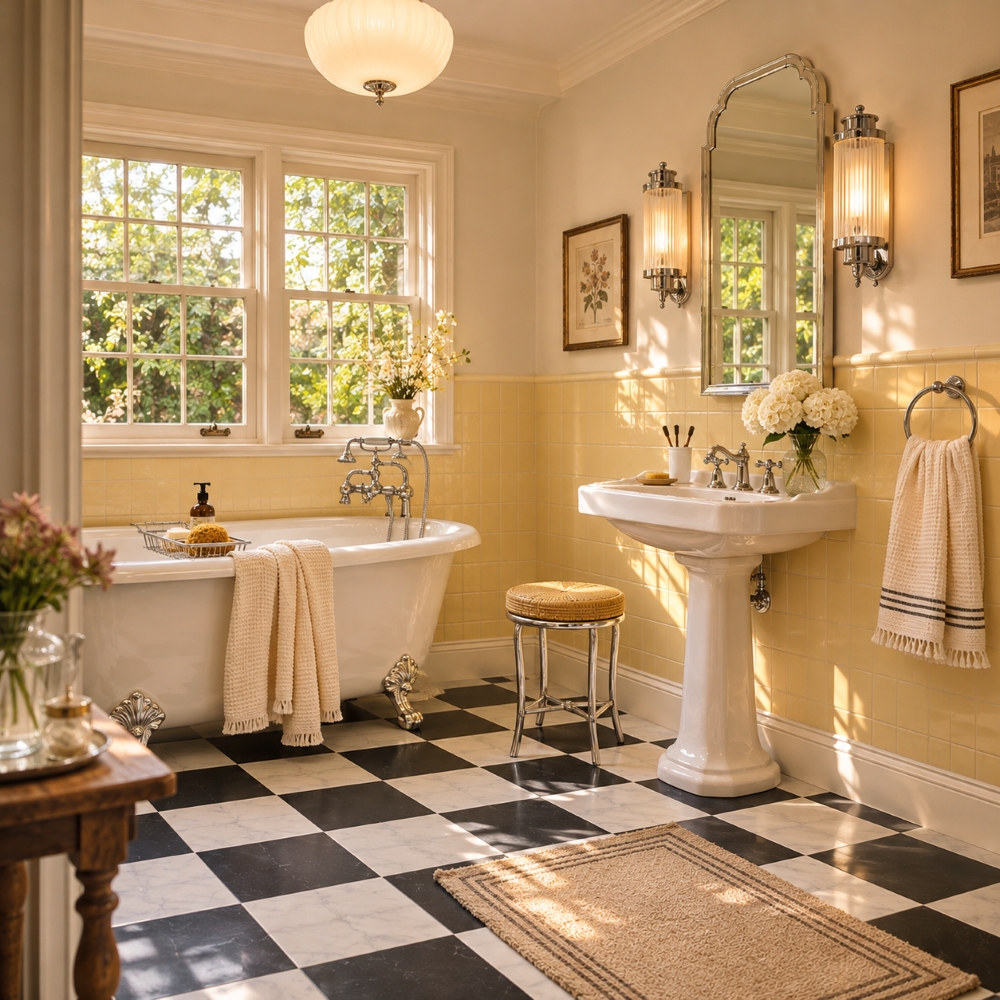
Work with the color, not against it. Pink bathroom tile looks refined beside warm white and brass; green tile and blue tile sit well with walnut; yellow tile comes alive above a checkerboard floor. A grout tone close to the tile quiets the grid.
10
of 15
Choosing New Mid Century Bathroom Tile
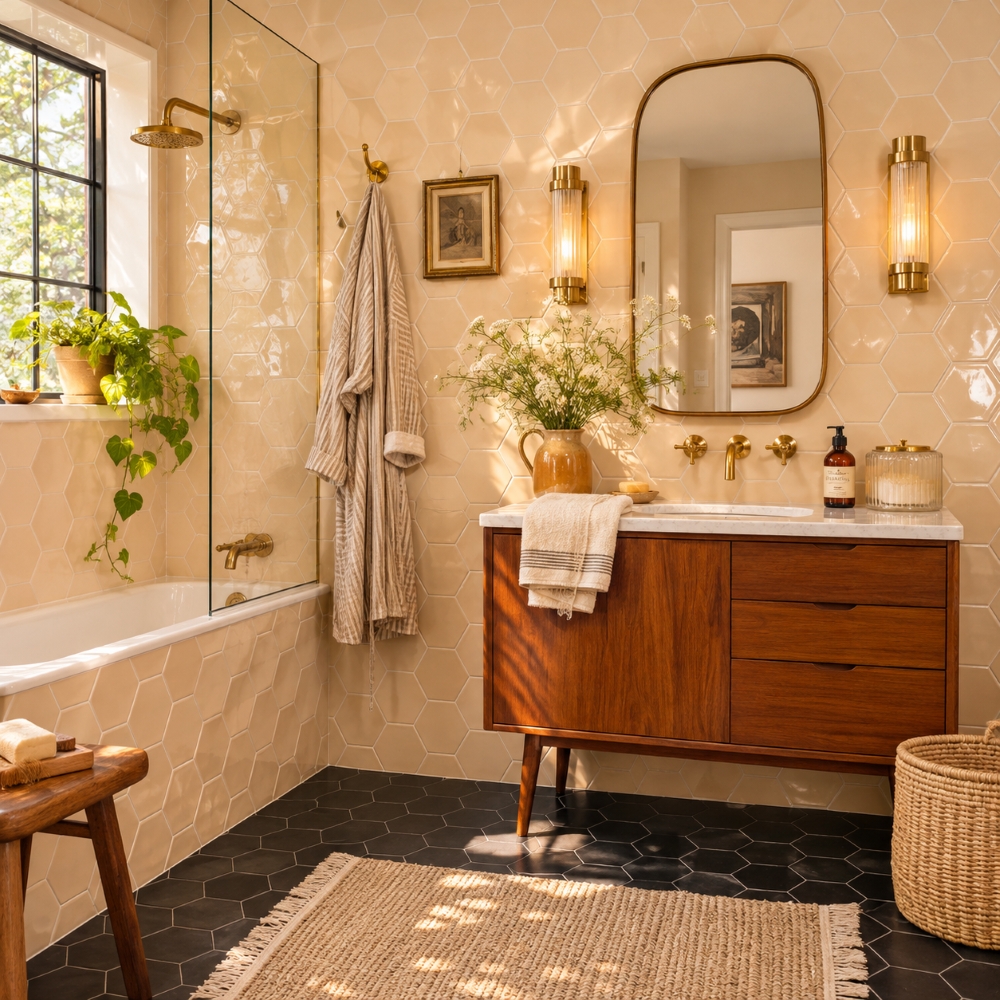
If replacement is the right call, whether in a 1950s or a 1960s bathroom remodel, aim for a room that looks as though it was always there.
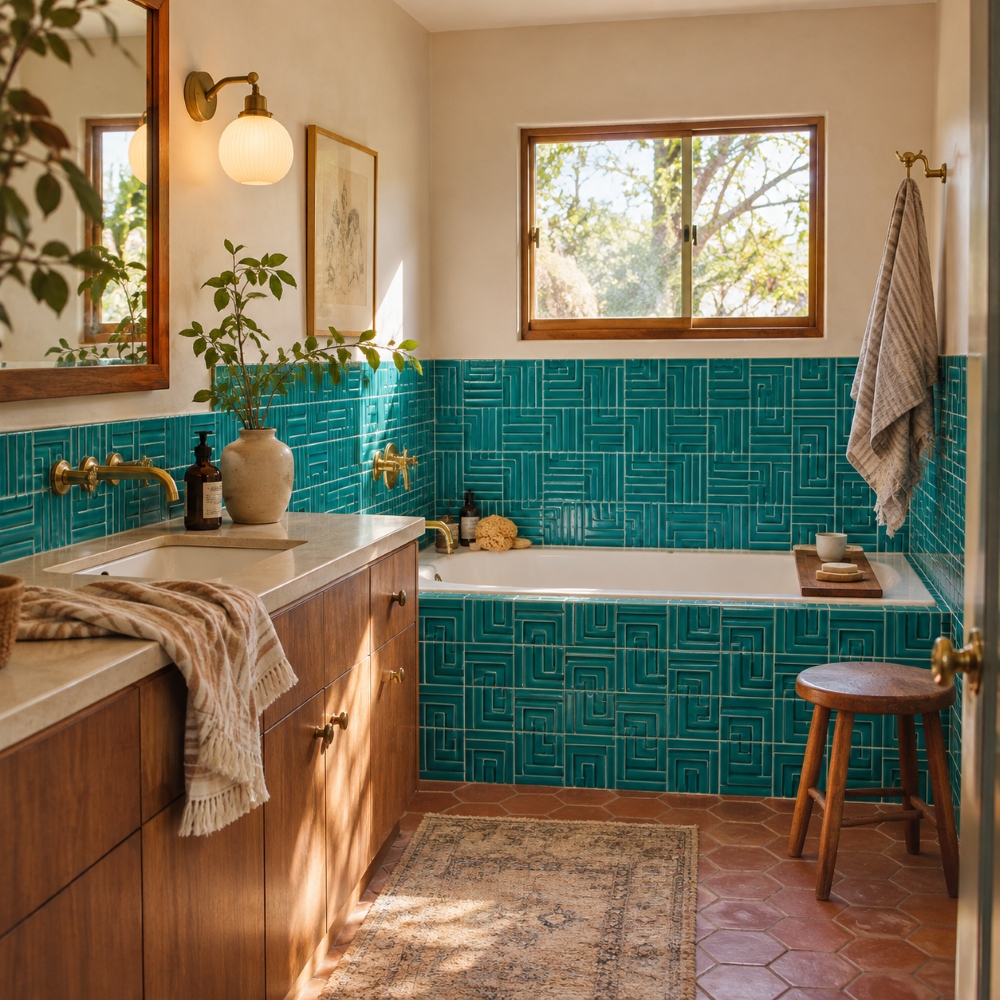
To push past pastels, these mid century modern tile ideas run from sunny yellow bathroom walls to black hexagon floors.
11
of 15
Mid Century Bathroom Floor Tile Ideas
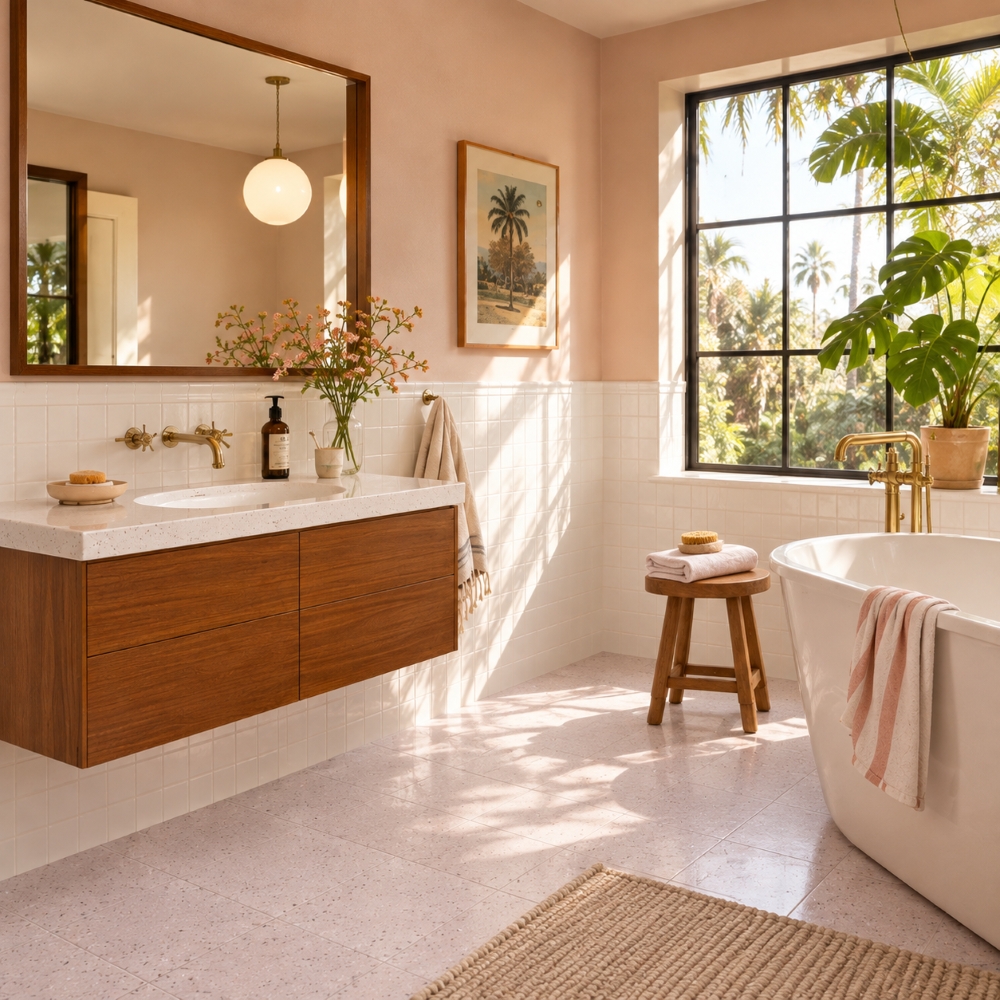
Small hexagons and penny rounds from our mosaic tiles suit the era, and their grout lines add grip. Terrazzo tile is another honest choice, matte porcelain tile the practical one.
If anyone in the household is unsteady on their feet, compare non slip bathroom floor tiles by their wet DCOF rating.
12
of 15
Retro Bathroom Wall Tile and Trim
Most suppliers stop at the field tile. We plan the trim accessories at the same time, because bullnose, cove and liner pieces make a new wainscot read as original.
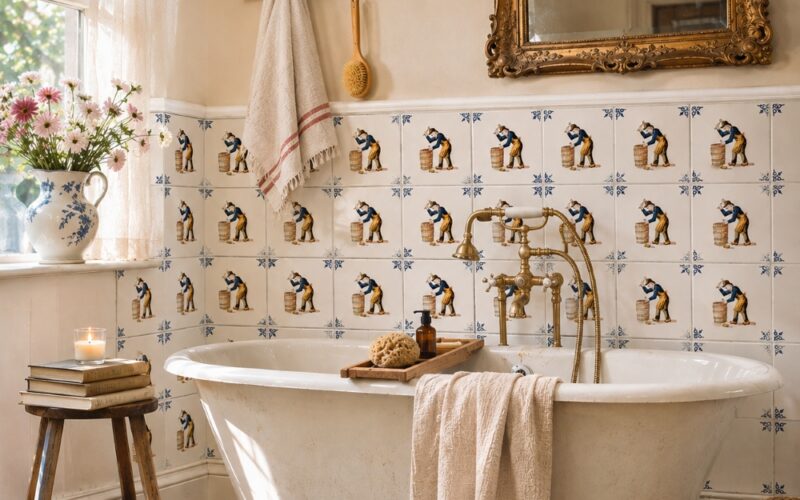
Solid color glazed squares do most of the work, subway tiles suit a looser interpretation, and hand painted tile adds a heritage note.
13
of 15
Shower Tile for a 1950s Bathroom Remodel
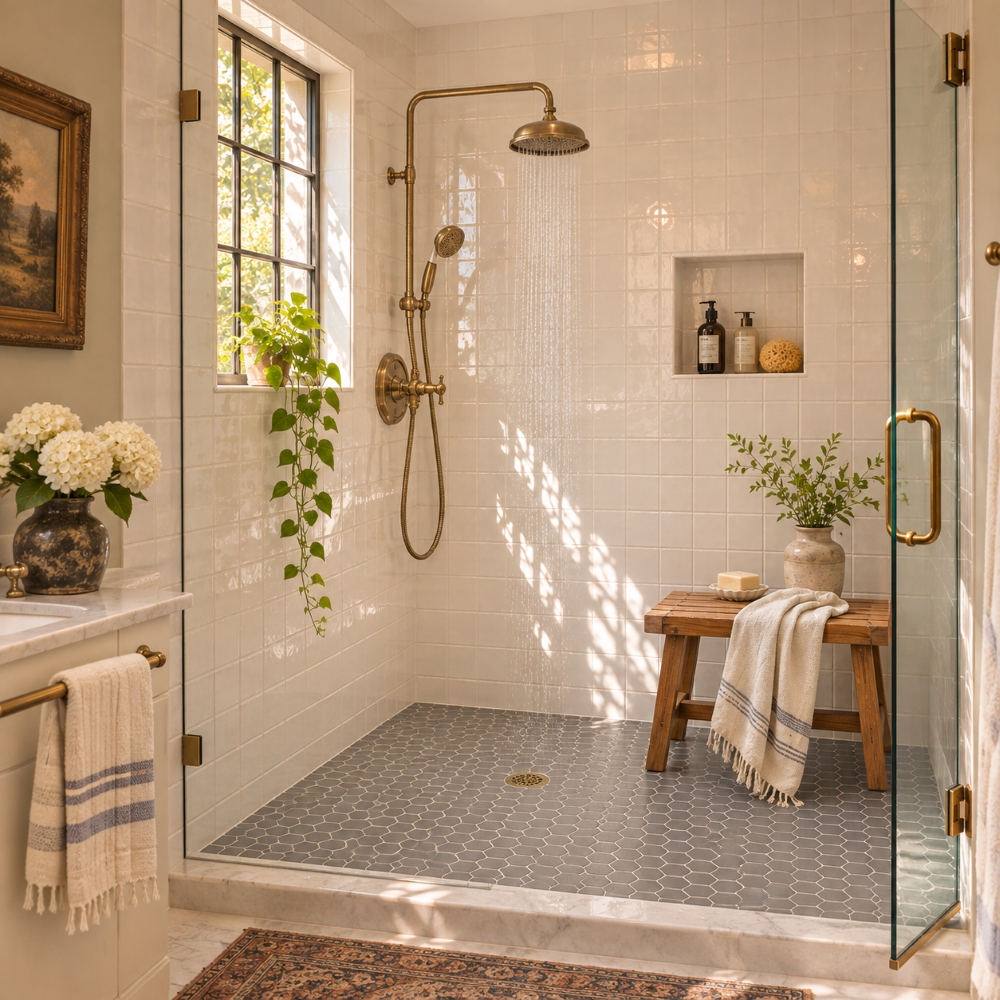
Inside the shower, practicality leads. Glazed shower wall tiles clean easily, and mosaic or matte shower floor tiles grip better when wet.
Acidic descalers will etch a marble tile mosaic, which is why the best shower tile for hard water is usually glazed porcelain or ceramic.
14
of 15
Finding Replacement Tile for a Vintage Bathroom
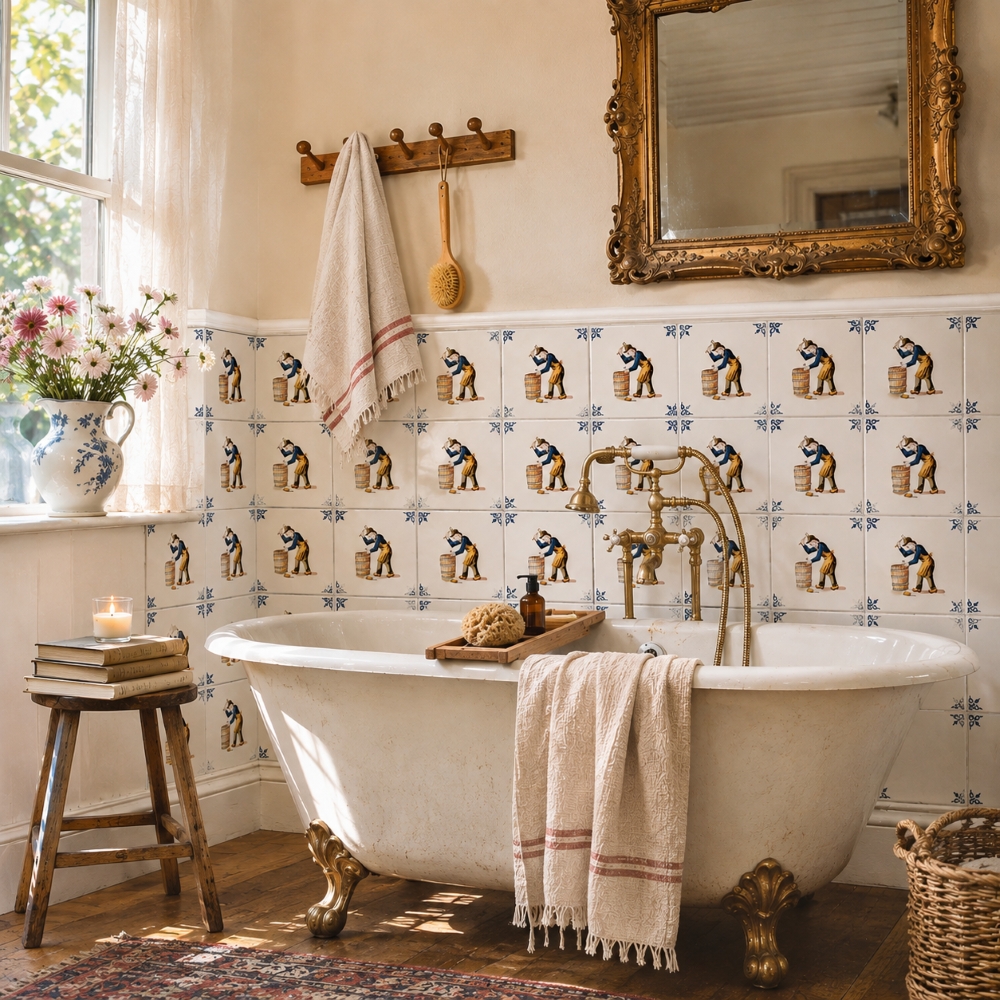
Clients often expect an exact color match, but in reality vintage glazes varied by batch and few are still made.
Our made to order tile, handmade by artisans in California and along the West Coast, carries that same glazed depth. Bring a loose original piece and we will tell you honestly how close a match can be.
15
of 15
Plan Your 1950s Bathroom Remodel With Us
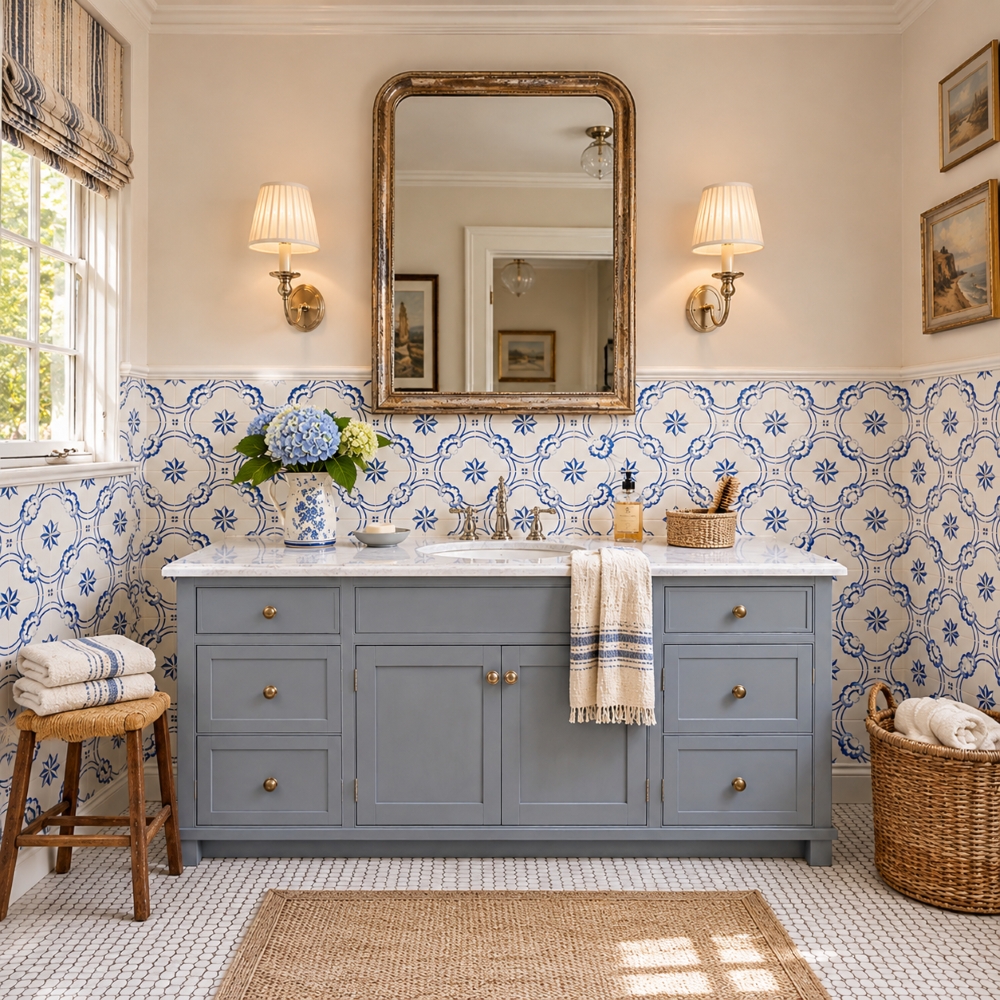
Bring photos, measurements and a piece of the original tile to a Country Floors showroom.
Seeing bathroom tile, trim and color side by side makes the choice to keep or replace far clearer than any screen.
FAQ About a 1950s Bathroom Remodel
Can I tile over old bathroom tile instead of removing it?
Sometimes, but only if the old tile is firmly bonded, flat and dry and the added height still works at doorways, tub edges and trim, so have an experienced installer check it first.
Can new tile match my original 1950s bathroom tile exactly?
An exact match is rare because vintage glazes varied from batch to batch, but handmade made-to-order tile can come close in tone and character when you compare it against a loose original piece.
Do I need to test for asbestos if my bathroom tile is ceramic?
The usual concern is not the glazed ceramic itself but older vinyl flooring, sheet flooring backing and adhesives that may sit underneath, so test any of those layers before demolition begins.