If you’ve spent any time walking through the Mission or catching the light bounce off a Victorian facade in Noe Valley, you already understand something about San Francisco that’s hard to put into words: this city treats color and pattern as a form of storytelling. That same instinct is showing up inside homes right now, and it’s driving one of the most compelling design conversations I’ve had with clients this year, the rise of San Francisco hand painted tile as a way to bring that same sense of narrative indoors.
Where the Trend Comes From
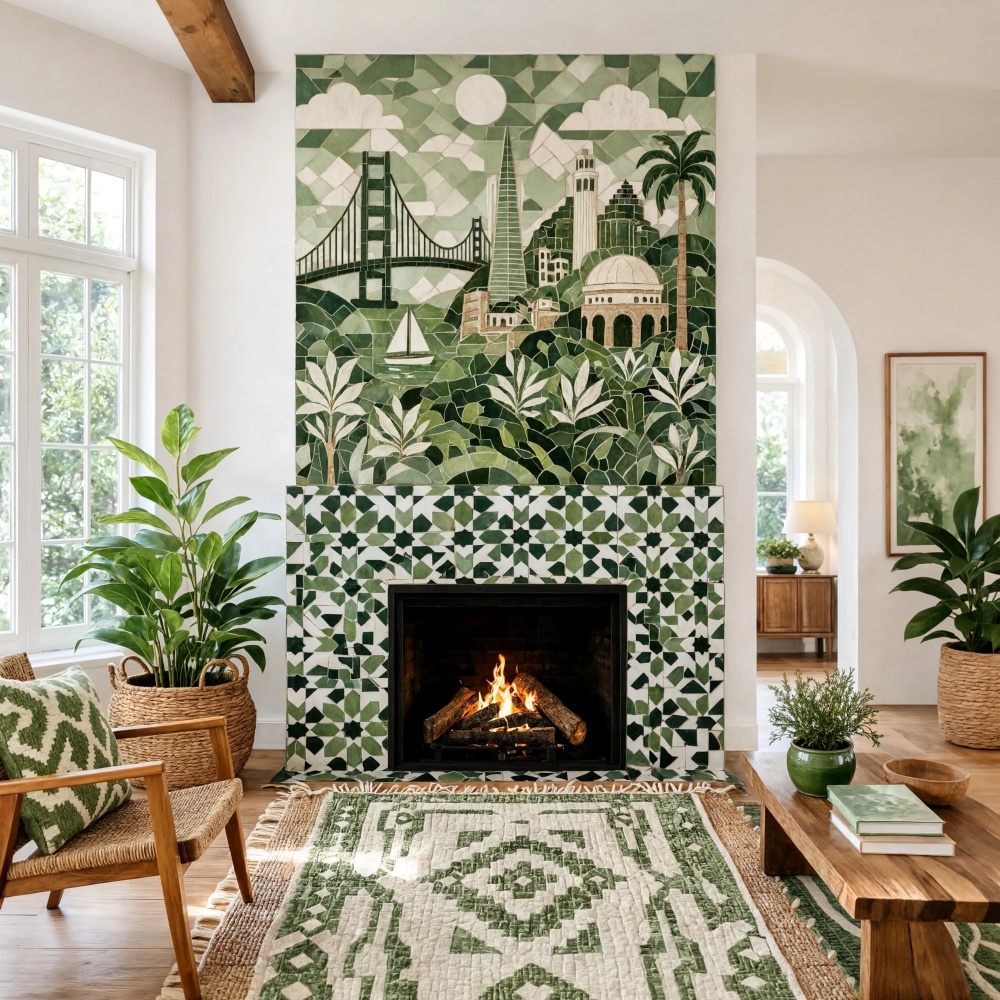
San Francisco has never been a city that plays it safe with color. The murals along Balmy Alley, the Painted Ladies of Alamo Square, the layered graphic energy of the Fillmore, all of it points to a community that has always understood walls as canvases. Hand painted tile fits into that lineage almost effortlessly.
Each piece is brushed by hand, glazed, and fired individually, which means no two tiles come out exactly alike. Clients who grew up around this city’s visual culture tend to gravitate toward that imperfection immediately, because it mirrors something they already value: work that carries a human hand behind it, not a machine.
What Actually Makes a Hand painted Tile Different
I get this question constantly from contractors and homeowners alike, and it’s worth answering honestly. A printed or digitally reproduced tile will give you perfect uniformity, every unit identical, every edge crisp. A hand painted tile won’t do that, and that’s the entire point. The glaze pools slightly differently from piece to piece.
A brushstroke might run a touch heavier on one tile than the next. In the kiln, tiny variations in heat create subtle shifts in tone across a batch. When you install these pieces across a wall, that variation reads as depth and warmth rather than inconsistency, the same reason our zellige collection has held its appeal for centuries. It’s a material quality you feel more than you notice at first glance.
Hand painted Tile Ideas for Kitchen Walls and Backsplashes
The kitchen is where I see this trend land hardest, and it makes sense. It’s the room where people actually gather, and a backsplash gives you a contained, high impact surface to work with. A Mediterranean leaning hand painted pattern behind a range, think cobalt and ochre florals against a cream ground, turns a functional wall into the visual anchor of the entire room.
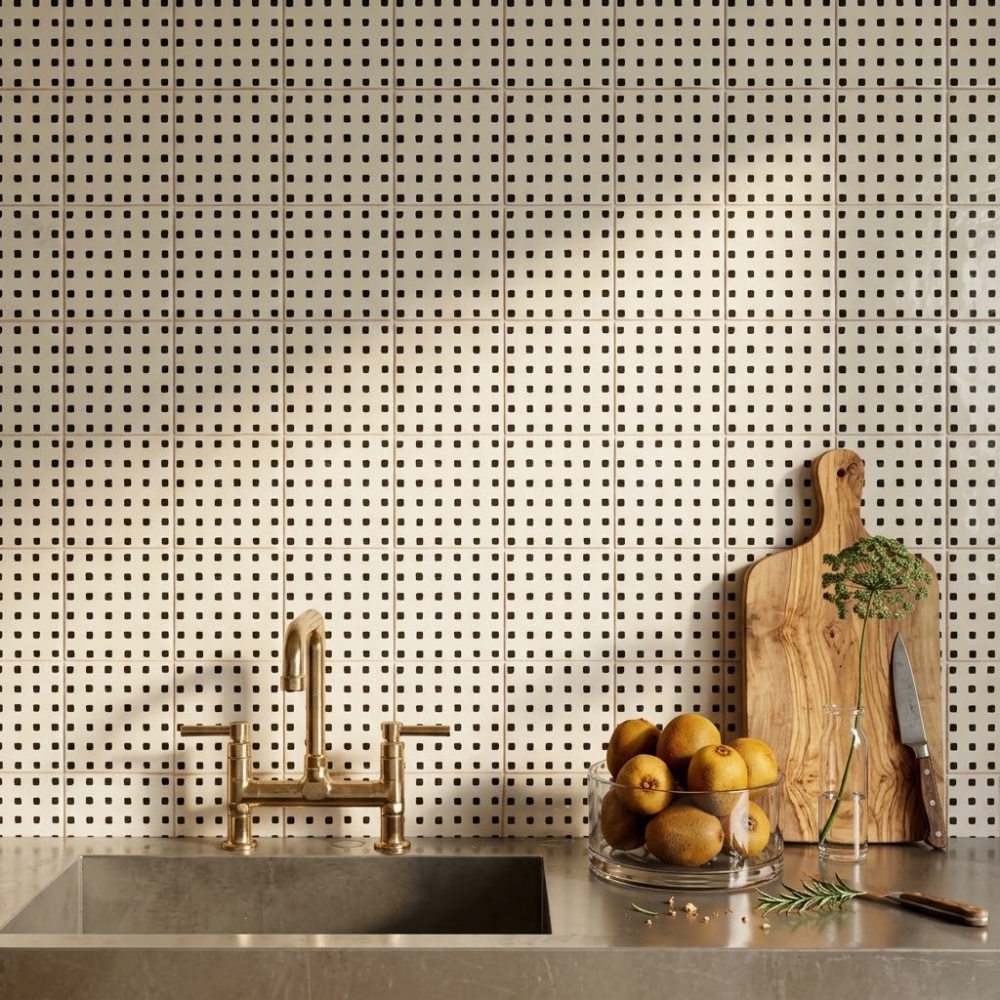
For clients who want something quieter, I’ll often suggest a tonal hand painted design in a single glaze color, which still carries that handmade texture without competing with cabinetry or stone countertops. If you’re working on a full kitchen refresh, our backsplash tile collection is a good starting point for pairing patterns with the rest of the space.
Small Kitchen, Big Statement
A huge share of San Francisco’s housing stock is compact, Victorian flats, converted railroad kitchens, apartments where square footage is precious. This is actually where hand painted kitchen tile earns its keep the most.
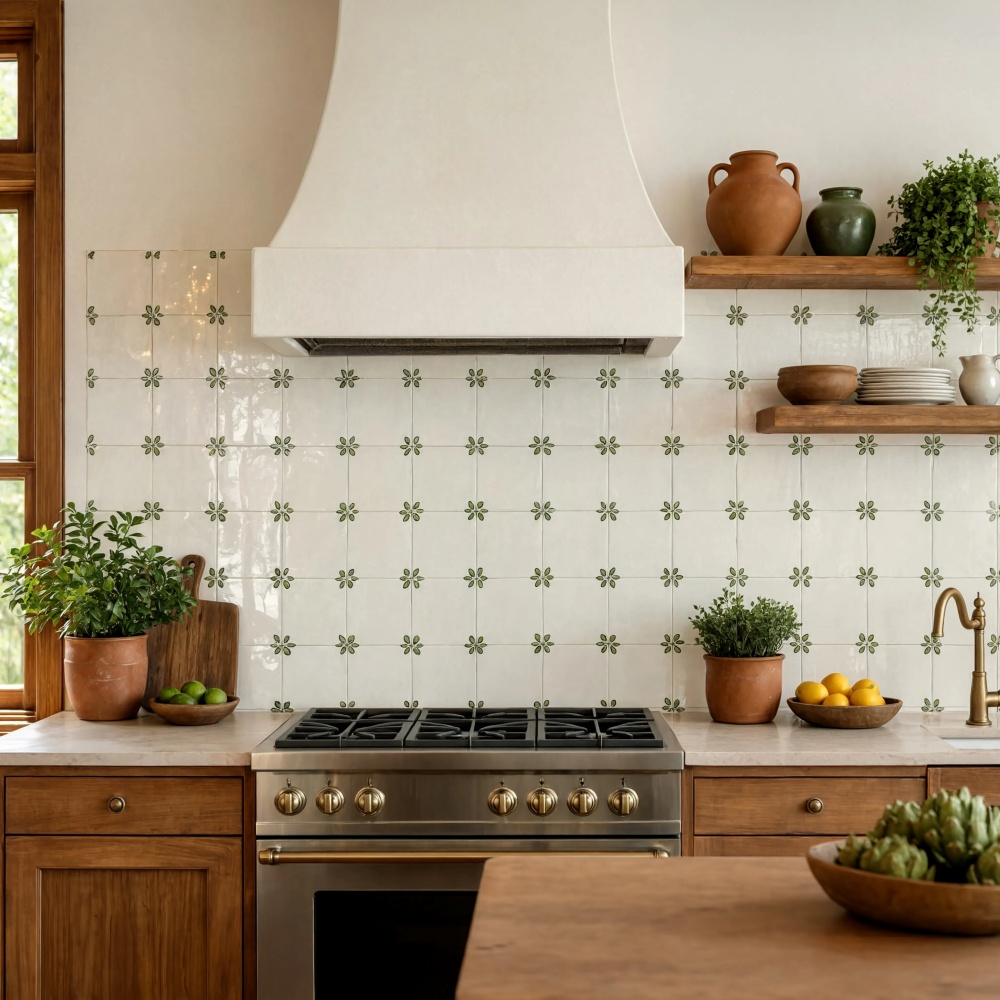
In a smaller kitchen, you don’t need to cover every surface to make an impression; a single accent wall or a framed strip above the stove does the job. I’ve watched clients transform a modest galley kitchen into the most memorable room in the house using nothing more than one well placed run of hand painted tile and a matching trim detail.
Beyond the Kitchen: Bathrooms and Entryways
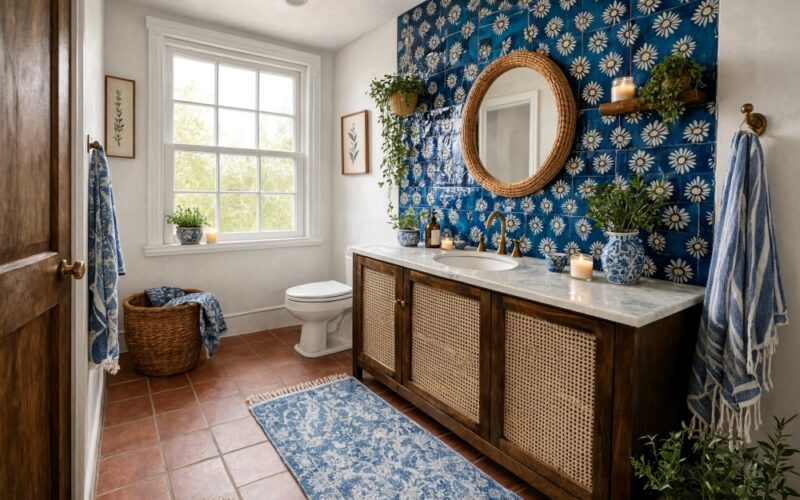
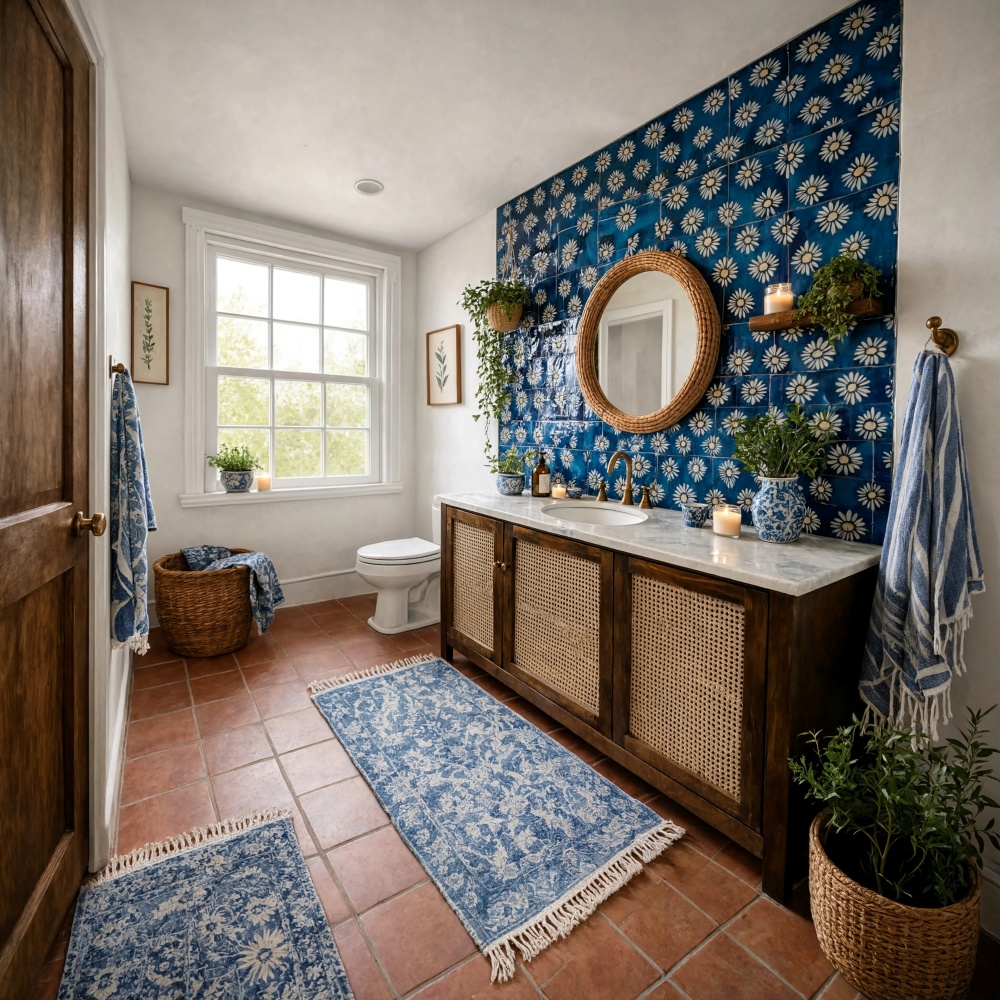
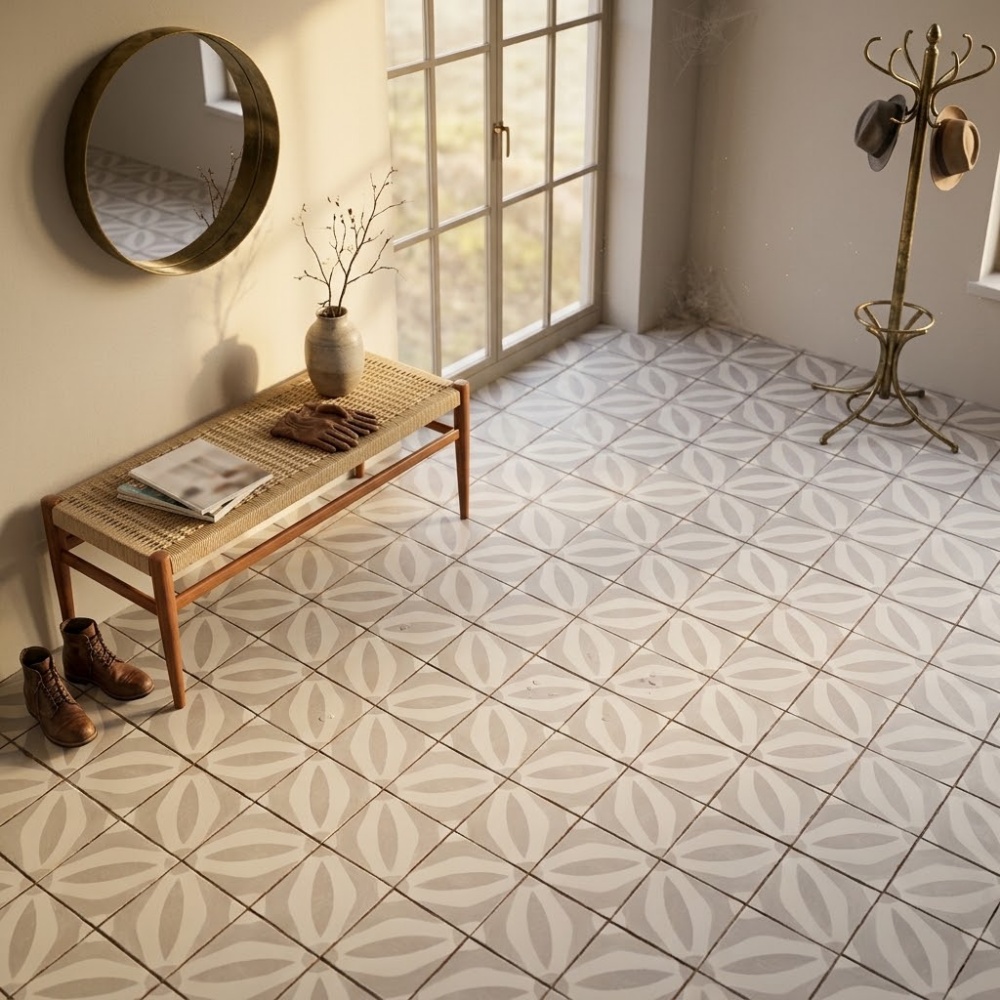
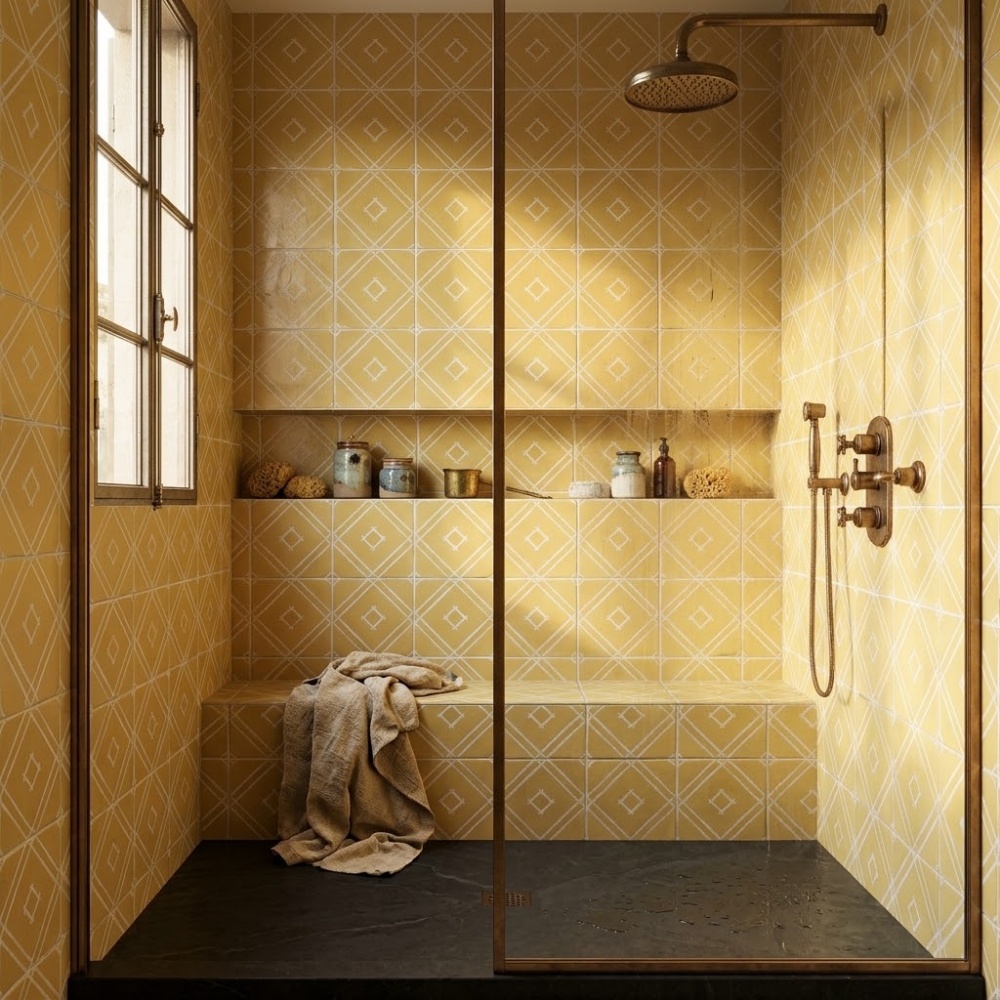
The trend doesn’t stop at the kitchen. Bathrooms are a natural extension, a shower niche or a half wall treatment in hand painted tile gives even a small bathroom a sense of craft that tile on tile monochrome simply can’t match. Entryways are the other space I’d point to. San Francisco homes often open straight into a narrow hallway or foyer, and a hand painted floor tile pattern right at the threshold sets the tone for the entire home before a guest has even taken off their coat.
Choosing the Right Pattern for Your Space
For architects and designers working on a full renovation, I always recommend starting with the room’s existing palette rather than the tile pattern itself. If you’re drawn to a Mediterranean sensibility, our mediterranean tile offerings pair beautifully with warm wood tones and brass fixtures common in this city’s older housing stock. San Francisco’s artisan tile design conversation right now is really about restraint paired with one confident gesture, a single wall, a single floor, one surface that does the talking.
Ordering and Installing Hand Painted Tile
Because every piece is slightly different, order 10 to 15 percent extra and ask your installer to blend tiles from several boxes before setting them, so no single color clusters in one corner. Handmade tile also has longer lead times than stock tile, so confirm timing before demolition starts.
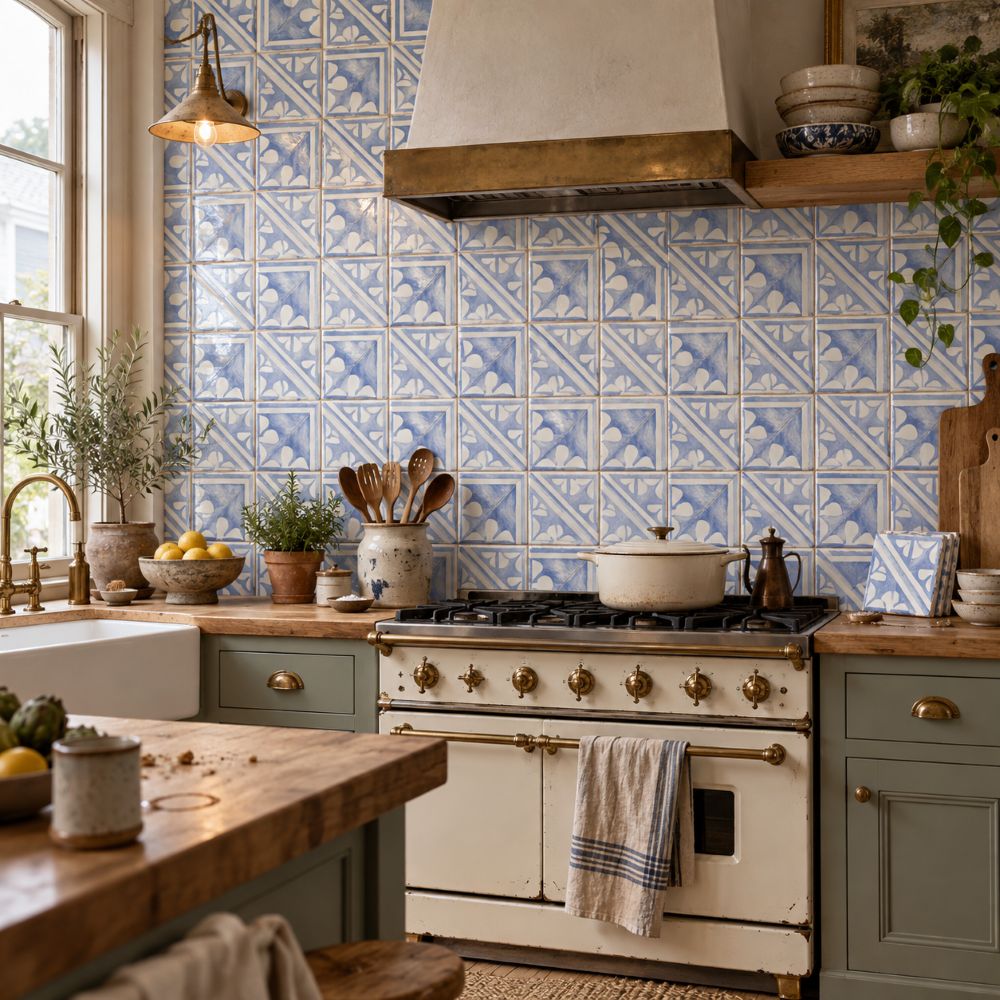
Glazed terracotta is softer than porcelain: it’s ideal on walls and backsplashes, but for a busy San Francisco entry that sees street grit every day, ask us which patterns are rated for floor use.
Visit Our San Francisco Showroom
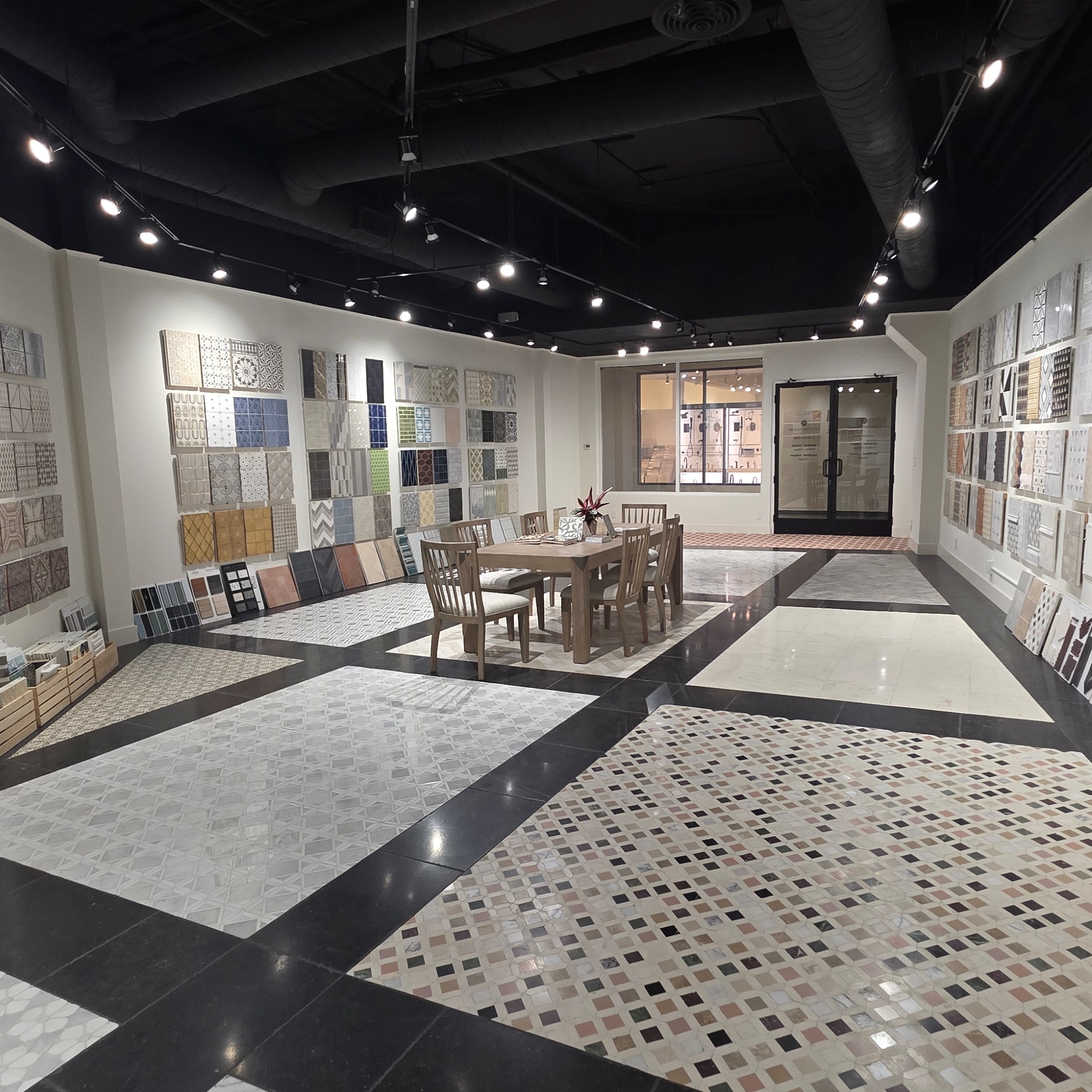
If you’re a homeowner, contractor, or designer working through what a hand painted tile installation could look like in your own project, the best next step is seeing and touching the material in person. Glaze depth and texture are genuinely hard to judge from a screen. Visit our San Francisco tile showroom and let’s talk through what would work best for your space.