
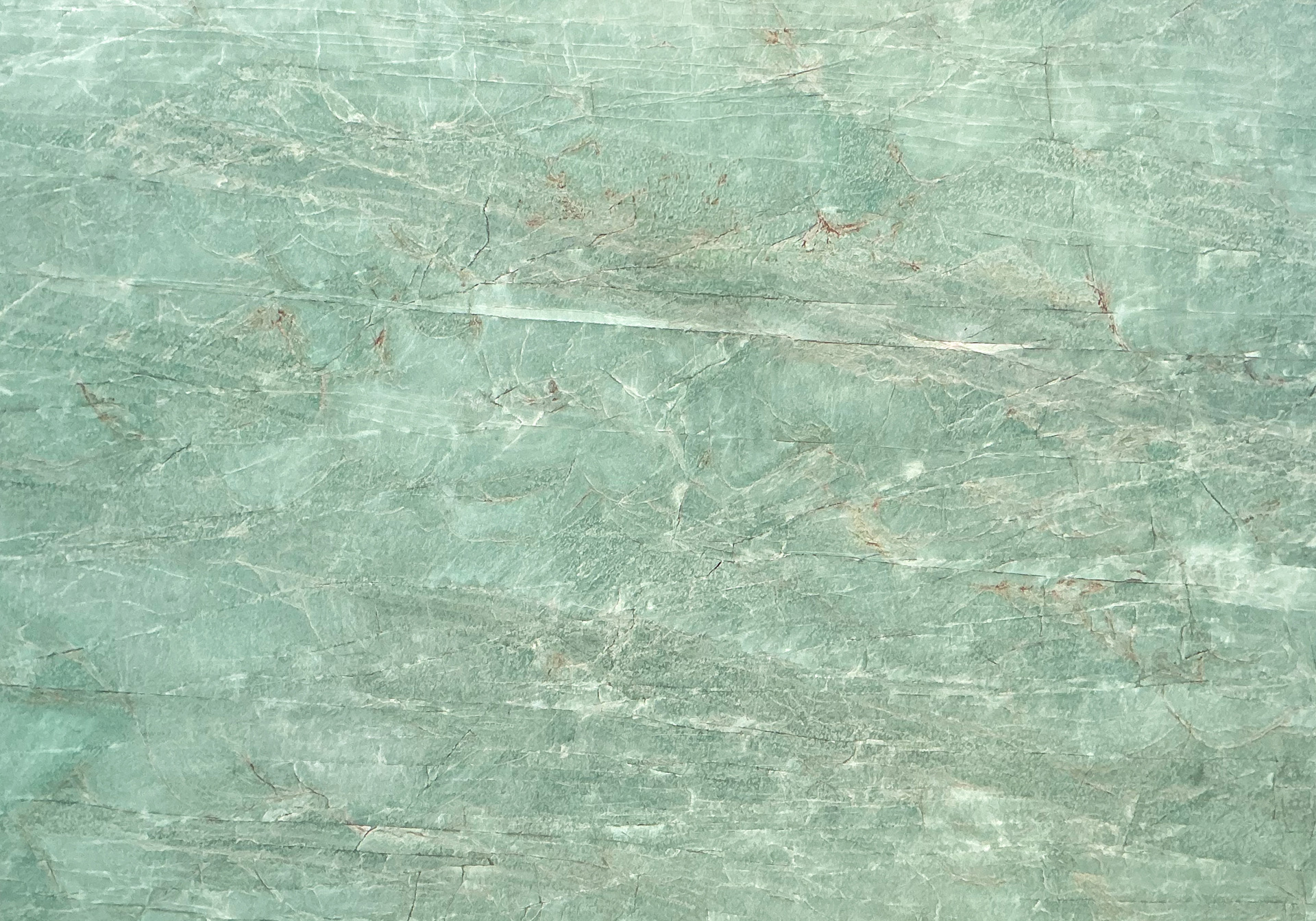
Emerald Green Honed Quartzite Slab 3/4" thick
Price Tier:
Slabs can only be shipped to a licensed fabricator for unloading. We don’t recommend shipping slabs to job sites, or non fabricators. Before buying samples, ensure you have selected a fabricator to handle slabs.
Slabs Are Heavy and DelicateSpecial care is required when shipping slabs. There are two shipping methods:
- Truck with an A-Frame - Check with your fabricator to see if they are equipped to pick up the slab from the Country Floors facility where it is located. Your fabricator should contact us to confirm availability and pricing before you purchase samples. Country Floors delivers within 50 miles of the warehouse directly to licensed fabricators only (no job site deliveries).
- LTL Shipments by Crate – If your fabricator is located more than 50 miles from a Country Floors slab warehouse, they should inquire about pricing for crating and shipping. Please contact us for crating charges. Please confirm freight costs before purchasing slab samples.
- Slabs should be handled only by people listed above. We are not responsible for any damage or liability by slab handling.
- Preparation and shipment of slab samples may take 6-9 business days.
Available Inventory
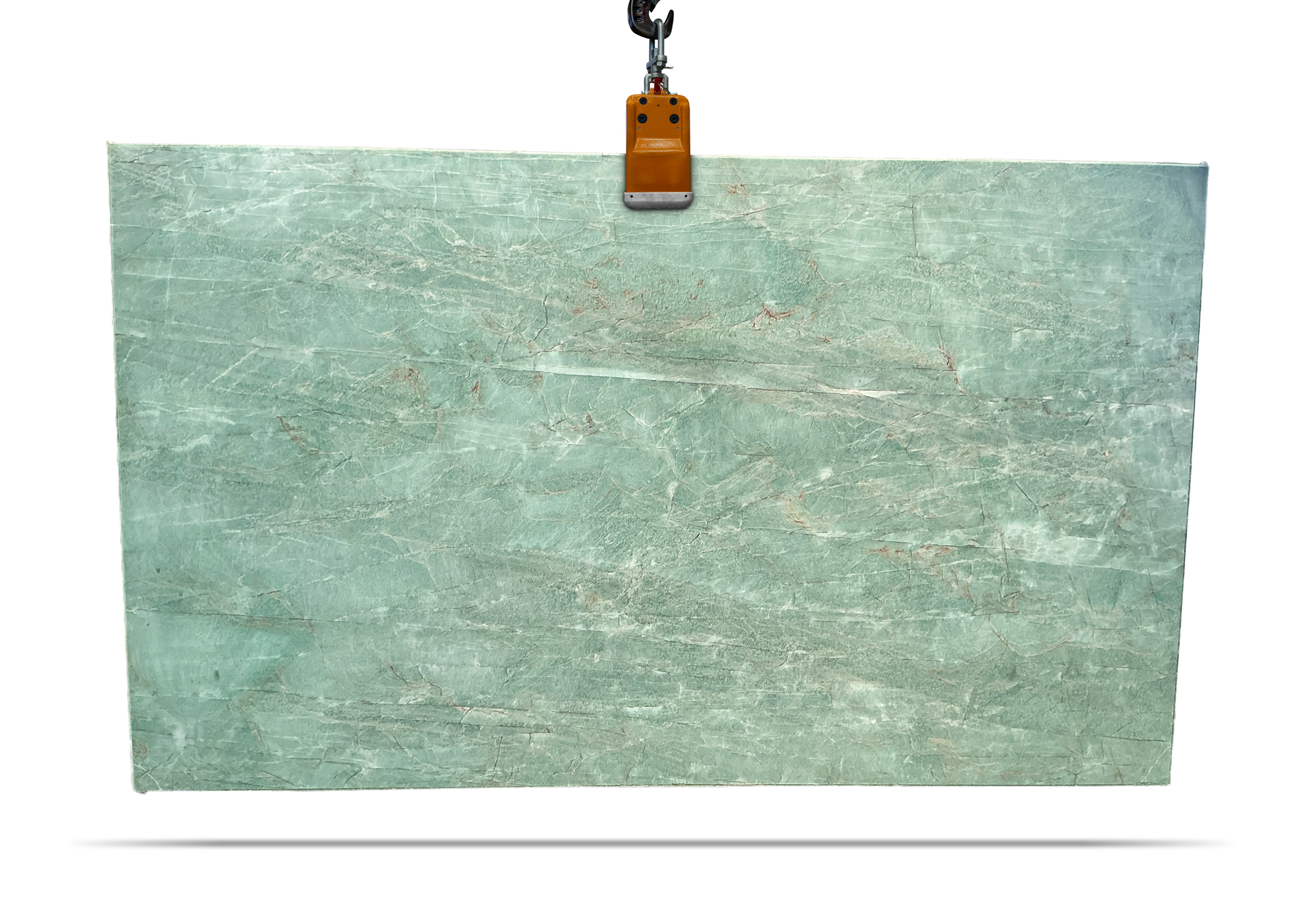
Product Specifications
About The Slab:
- Usage recommendation must be confirmed by your installer and depends on application, installation methods and general suitability. Country Floors assumes no liability from any installation and usage recommendations.
At Marble Systems, we pride ourselves on offering the highest-quality natural stone slabs, including marble, limestone, quartzite, and travertine. To ensure the beauty and durability of your stone investment, proper installation and ongoing maintenance are essential. Please review the following guidelines before handling or installing any Marble Systems slabs.
1. Slab Inspection & Fabrication
- All slabs must be inspected upon delivery for color variation, veining, structural soundness, and finish quality.
- Any cracks, fissures, or natural features should be reviewed with your fabricator prior to cutting.
- The final layout, cutting, and installation of the countertop or stone application must be determined by a licensed and experienced stone fabricator.
- Bookmatching and vein alignment must be planned prior to fabrication.
2. Installation Guidelines
- All substrates must be level, structurally sound, and properly reinforced for the weight of natural stone.
- Use appropriate backer boards, supports, and adhesive systems recommended for natural stone slabs.
- Expansion joints should be incorporated where applicable.
- Ensure all cutouts (sinks, cooktops, etc.) are properly supported.
- Avoid dragging heavy equipment or materials across the slab surface during install.
3. Sealing & Surface Protection
- All natural stone slabs must be sealed prior to or immediately after installation with a high-quality penetrating sealer appropriate for the stone type.
- Resealing should be performed every 6–12 months, depending on usage and exposure to moisture or staining agents.
- Acidic substances (e.g., citrus juice, vinegar) can etch marble and limestone. Clean spills promptly.
4. Sealing & Surface Protection
- Use pH-neutral, stone-safe cleaners only.
- Avoid abrasive scrubbers or harsh chemicals.
- Use coasters, trivets, and cutting boards to preserve the surface.
- Wipe down countertops daily with a soft cloth or sponge.
5. Disclaimer
- Natural stone is a product of nature and may feature inherent color and texture variations.
- Marble Systems is not responsible for wear and tear, etching, or staining on finished stone slabs once installed.
- All final fabrication, handling, and installation decisions must be made by a qualified stone professional or licensed fabricator.
For questions about sealers, fabrication techniques, or recommended care products, please contact our technical support team or visit your local Marble Systems showroom.
The History of Delft
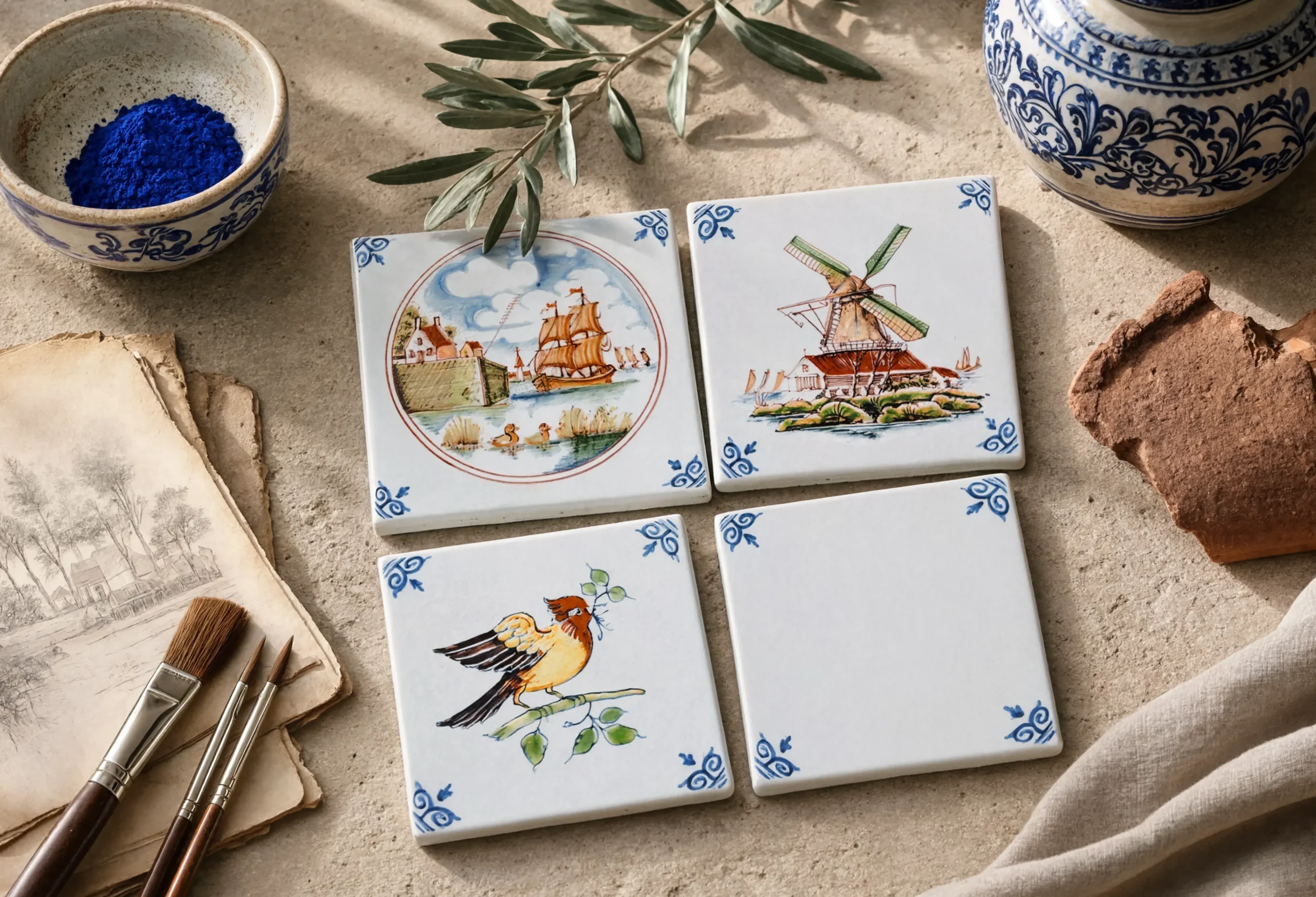
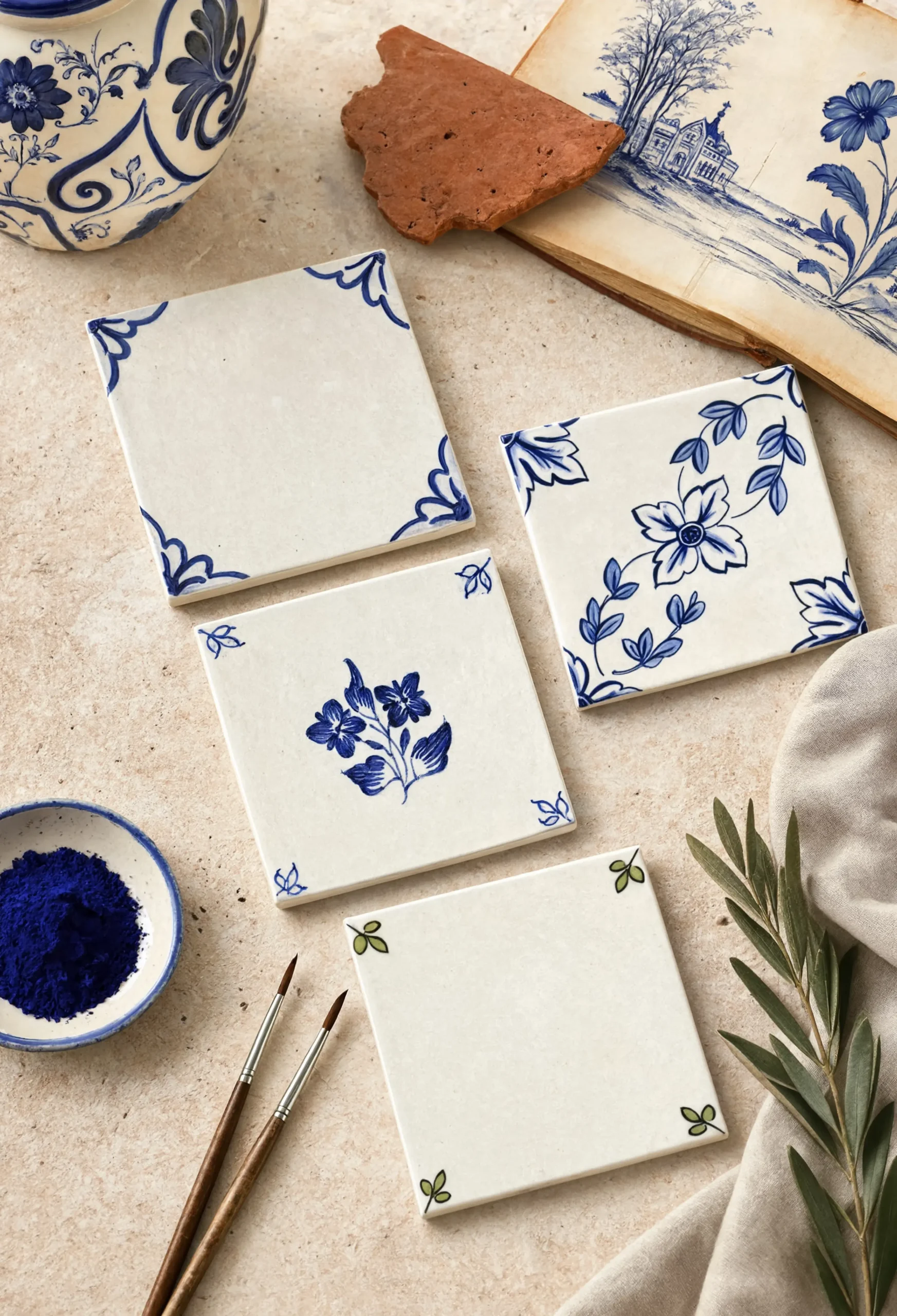
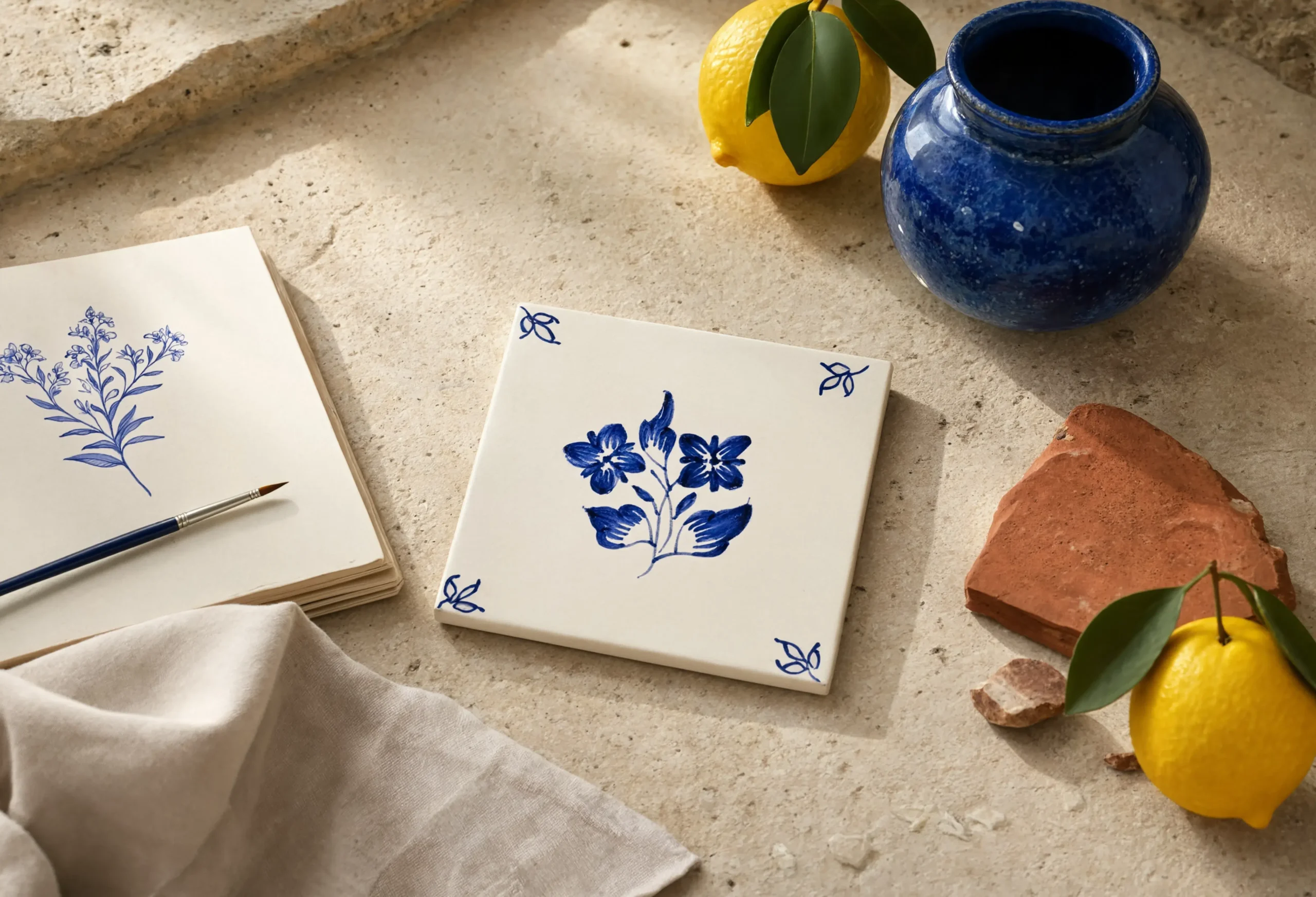
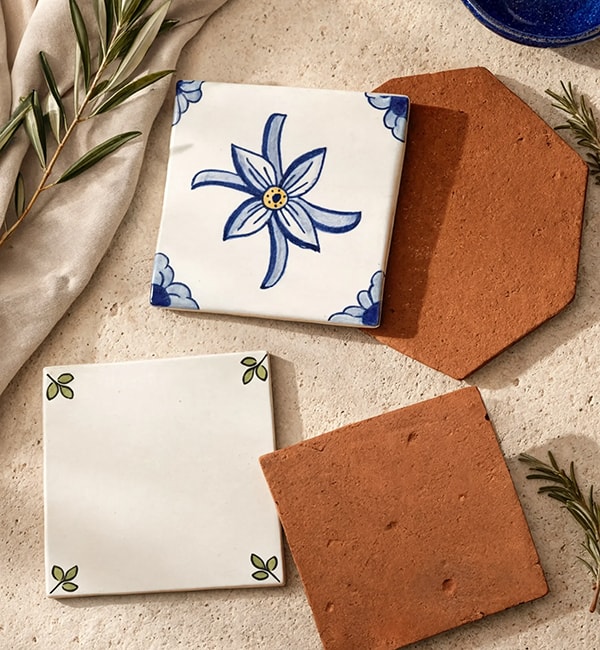
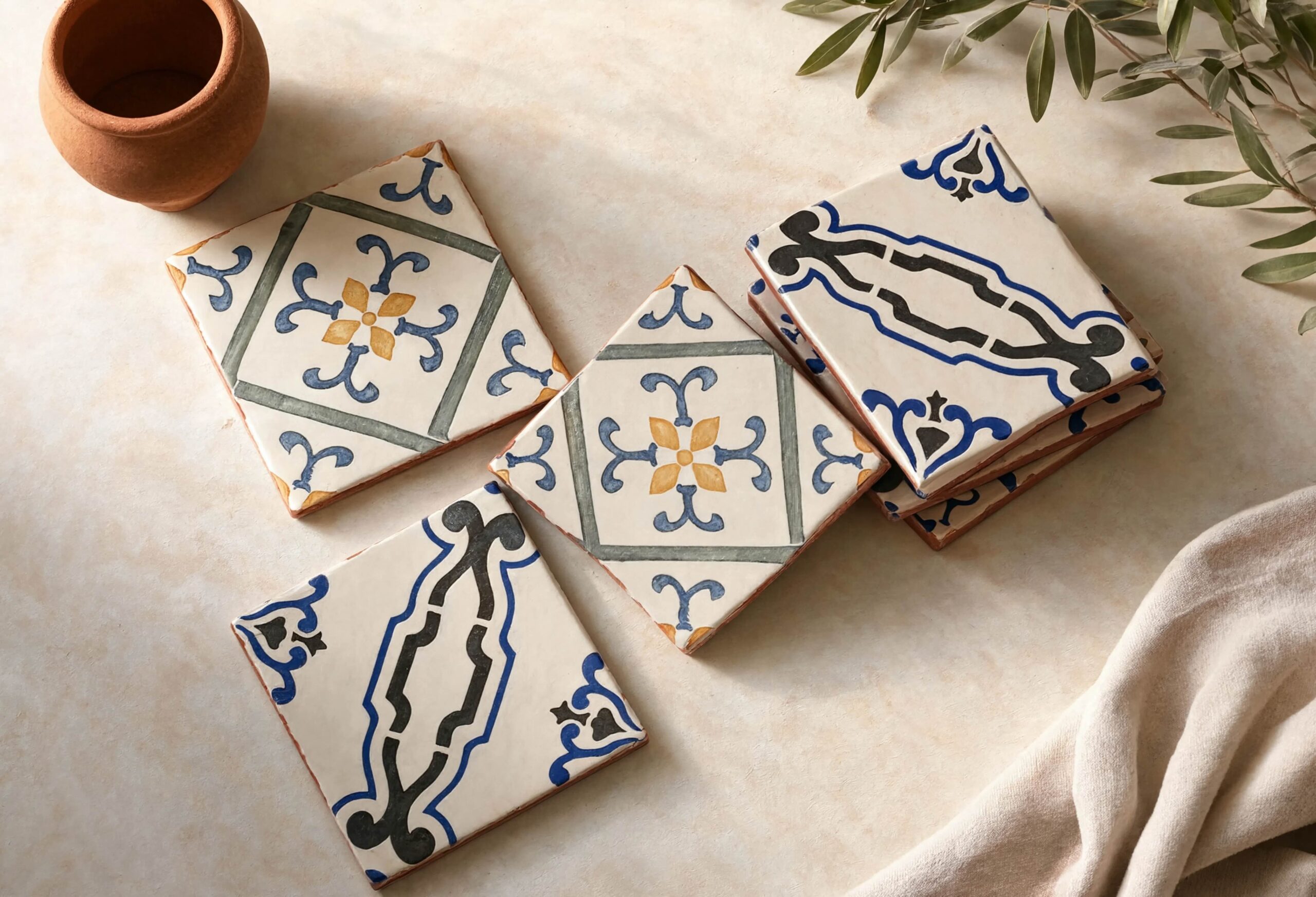
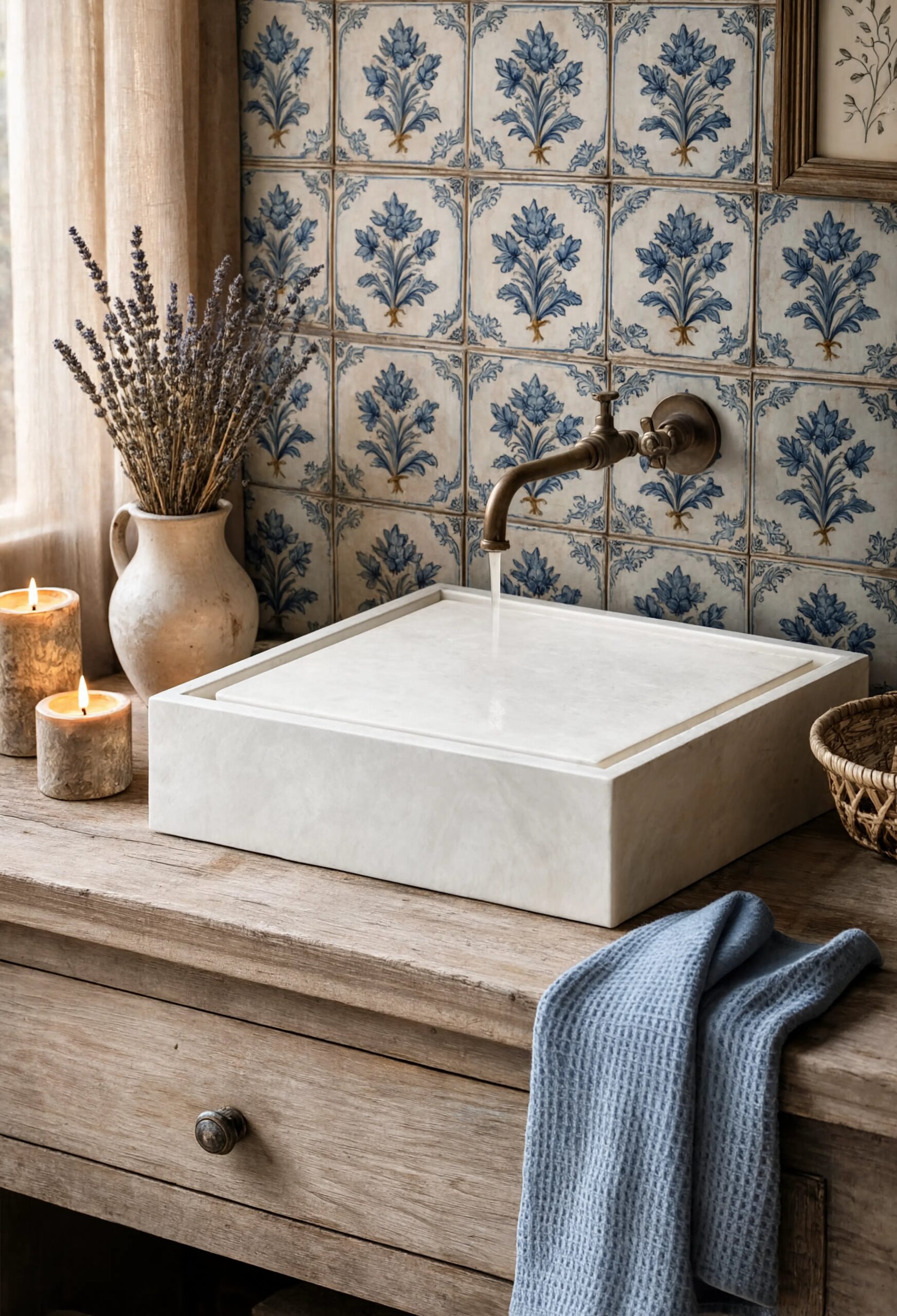
In the 17th century, Dutch potters in the city of Delft set out to answer the imported blue-and-white porcelain arriving from China. Working in tin-glazed earthenware, they painted cobalt motifs onto a bright white ground (florals, figures, landscapes, and the small corner ornaments that let tiles join into endless repeating fields across a wall.)
What began as imitation became a tradition of its own, and the hand-painted blue-and-white of Delft spread outward, echoing through Portuguese azulejos, Italian maiolica, and the tiled kitchens and courtyards of the Mediterranean.
Our Delft collection draws on that whole lineage: the brushwork, the corner-motif system, and the idea that a tile can be a small, painted thing made by a person, not a machine.
Why We Love Delft Tile
We keep returning to Delft because it does so much with so little. A single corner motif, repeated, turns a plain wall into a quiet diamond lattice; the same tile used sparingly becomes a discovered detail.
The palette is restrained enough to live with for years yet expressive enough to carry a room, cobalt for the classic note, soft green for something gentler and more unexpected.
Because the motifs sit in the corners, the tiles are built to connect: every piece is part of a system you control. It is decorative without shouting, historic without feeling heavy, and endlessly composable which is exactly why designers reach for it again and again.

Complete the Room: Terracotta Below, Delft Above
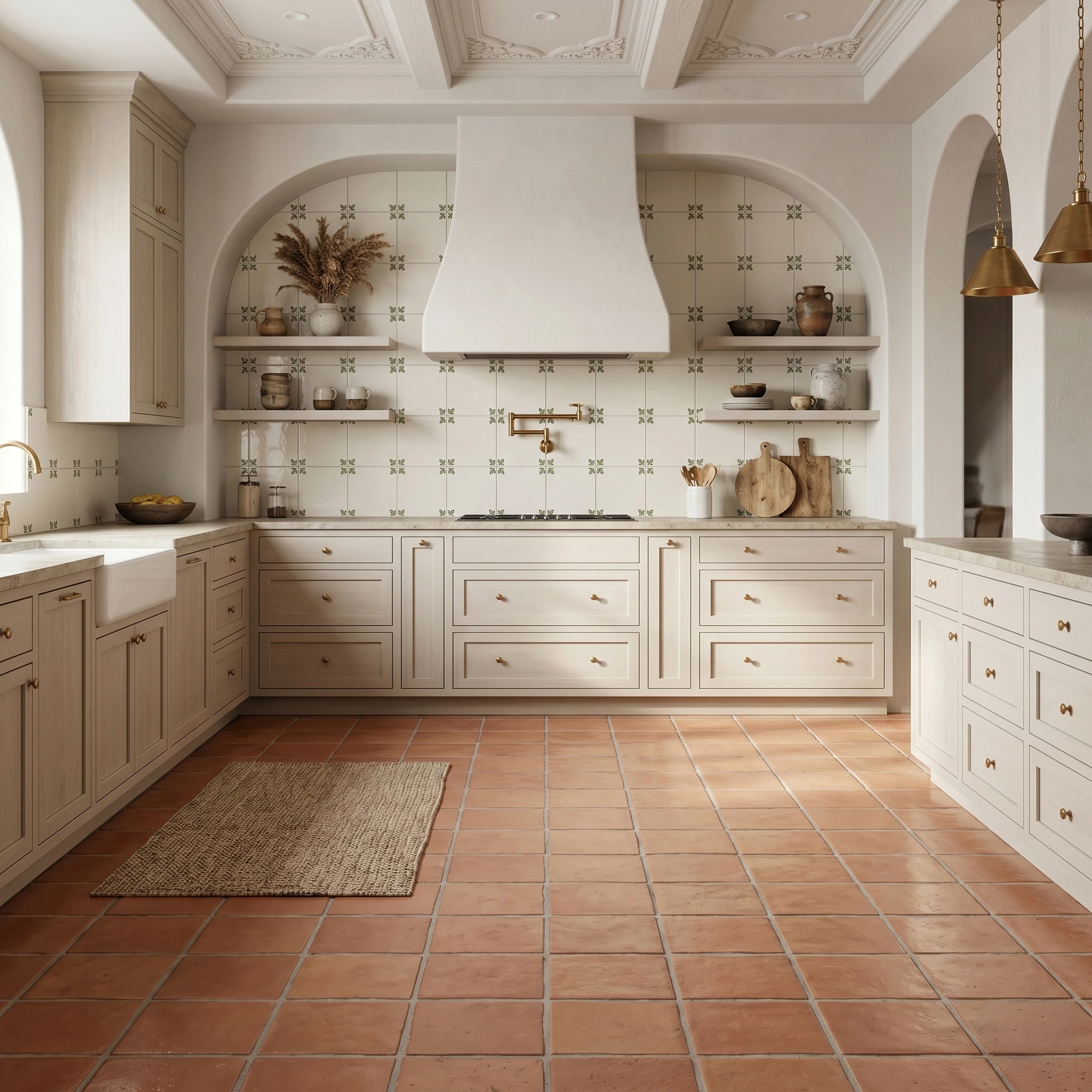
There's a reason this pairing keeps appearing in the most quietly beautiful Mediterranean rooms. Warm terracotta underfoot, hand-painted Delft climbing the wall above (earth and brushwork, floor and field, the two oldest gestures in southern European interiors.)
The terracotta tile brings heat and grounding; the Delft brings light and detail. Together they make a room feel as though it was assembled slowly, over years, by someone with an eye.
Start there, then let the rest of the room gather around it.


Where Marble Becomes Movement
There is a difference between a surface that simply covers a room and a surface that gives the room architecture.
Fluted natural stone does the second. Its carved ridges create a steady rhythm of light and shadow, while the marble or stone beneath adds veining, softness, and natural variation.
The result is quiet but never flat (a material that feels both ancient and completely current.)
Why We Love Fluted Tiles
We love fluted stone because it makes texture feel refined. The grooves catch light, the ridges create movement, and the natural stone keeps every installation from feeling too perfect or too manufactured.
It is a detail designers reach for when a room needs depth, but not noise (drama, but not decoration for its own sake.)


What Makes This Tile Worth It
This is real stone, carved, not a flat tile with a pattern printed on it. The value lives in the material itself and in what the carving does with it.
Dimensional grooves give the wall genuine relief, so it reads as architecture rather than finish. Light becomes part of the design: the surface shifts through the day, warm and graphic at a low angle, soft and even at noon.
Because it is natural stone, every piece carries its own veining and tone, so an installation never looks mechanical. It brings presence to a simple room without adding busy pattern (one decision that does the work of many.)

The Story Behind The Palazzo
Walk the back lanes of Rome and you'll feel it underfoot before you see it.
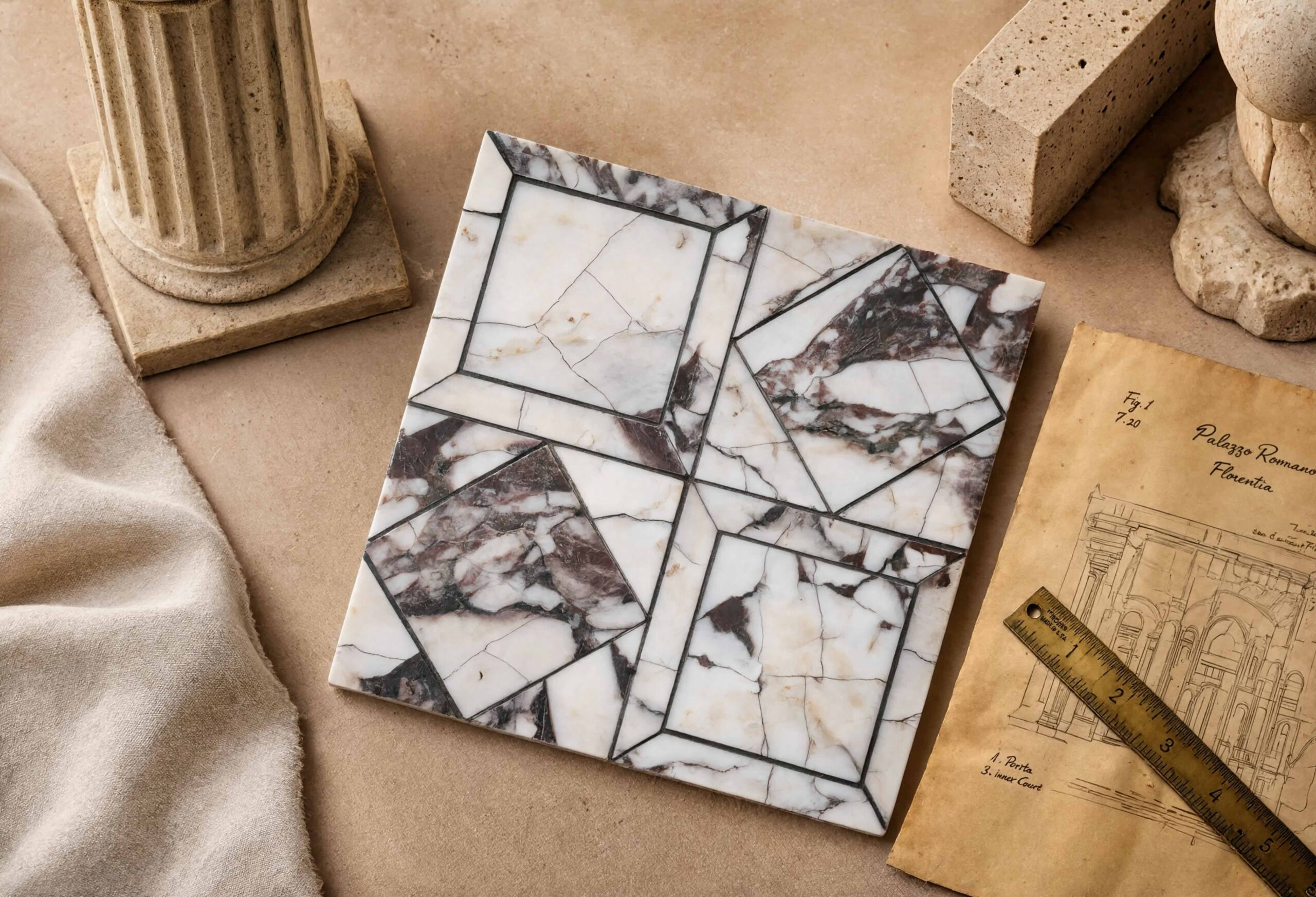
Stone polished by five hundred years of footsteps, fractured and refilled by season after season, each block holding a slightly different shade, a different scar, a different story.
Nothing matches. Everything belongs.Palazzo Li Antica was born from that feeling. Inspired by antique Mediterranean palazzos, sun-bleached courtyards, and the timeworn streets of old Europe, each tile is finished through a careful antiquing process that gives it the texture and soul of centuries-old stone.
Why We Love Palazzo Li Antica
Old-World Soul:The antiqued finish captures the grace of weathered European stone, bringing genuine age and atmosphere to modern interiors.
No Two Alike: Surface variation, tonal shifts, and worn edges mean every tile is singular. Your floor will never exist anywhere else.
Architectural Patina: Cracks, texture, and timeworn character give walls and floors the depth that designers spend years trying to fake.
Built for Romance: This is stone that pairs effortlessly with limewash, linen, and candlelight.
Earned Beauty: Imperfection here reads as authenticity. It's the difference between a costume and the real thing.

A Note on Handmade & Antiqued Character
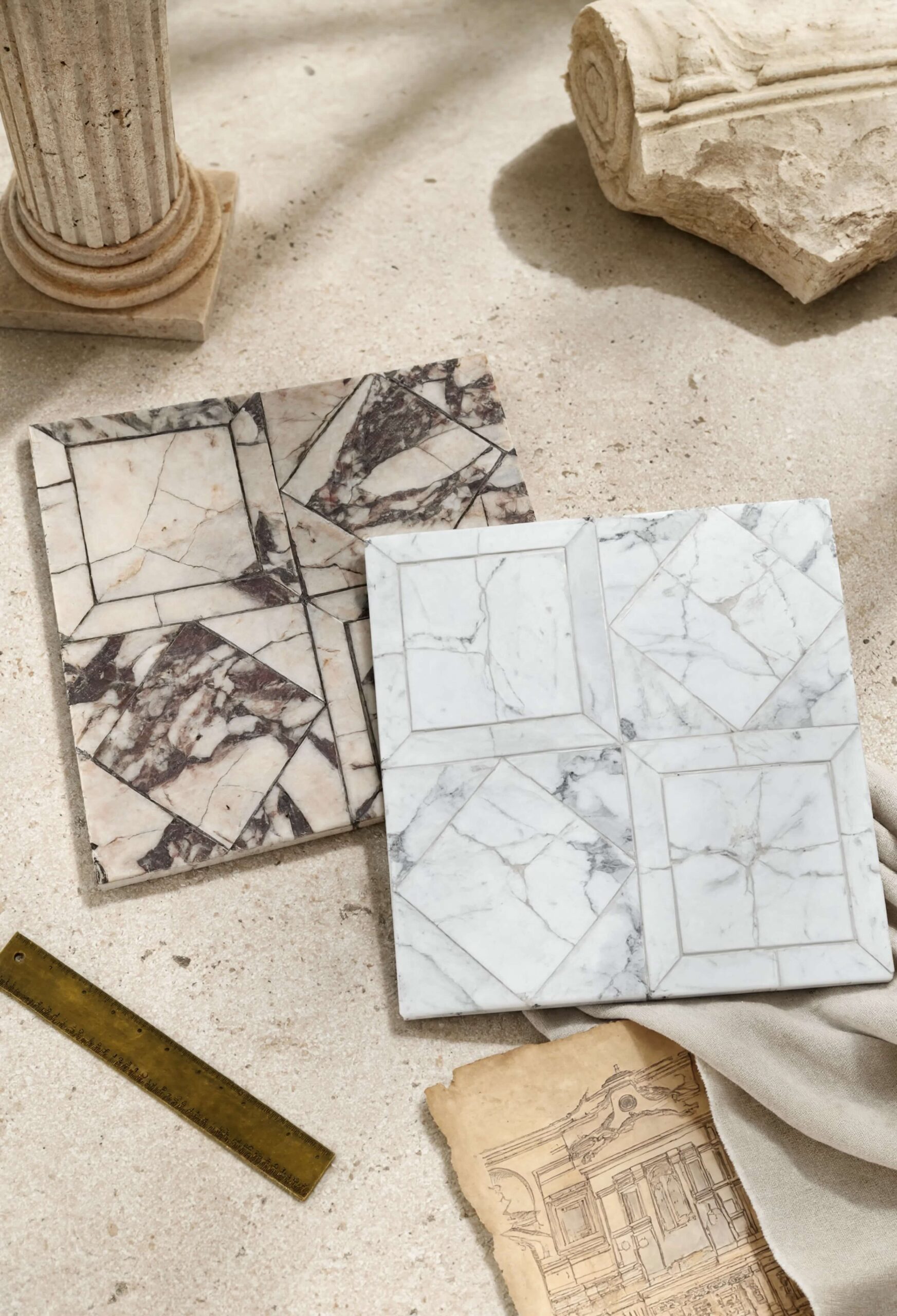

Palazzo Li Antica is a hand-finished, antiqued collection.
As with any artisanal material, visual variation from tile to tile is expected and intended (it is the signature of the craft, not a flaw in it.) We share this transparently so you know exactly what you're choosing.
Because the aged aesthetic is intentional, what one person might describe as "distressed" or "imperfect," another will recognize as authentic, characterful, and beautifully old-world.
This is by design. The antiquing process is what gives these tiles the feeling of 500-year-old Roman streets: imperfect, architectural, and full of history.
A perfectly uniform tile could never carry this character. The variation is the craftsmanship.

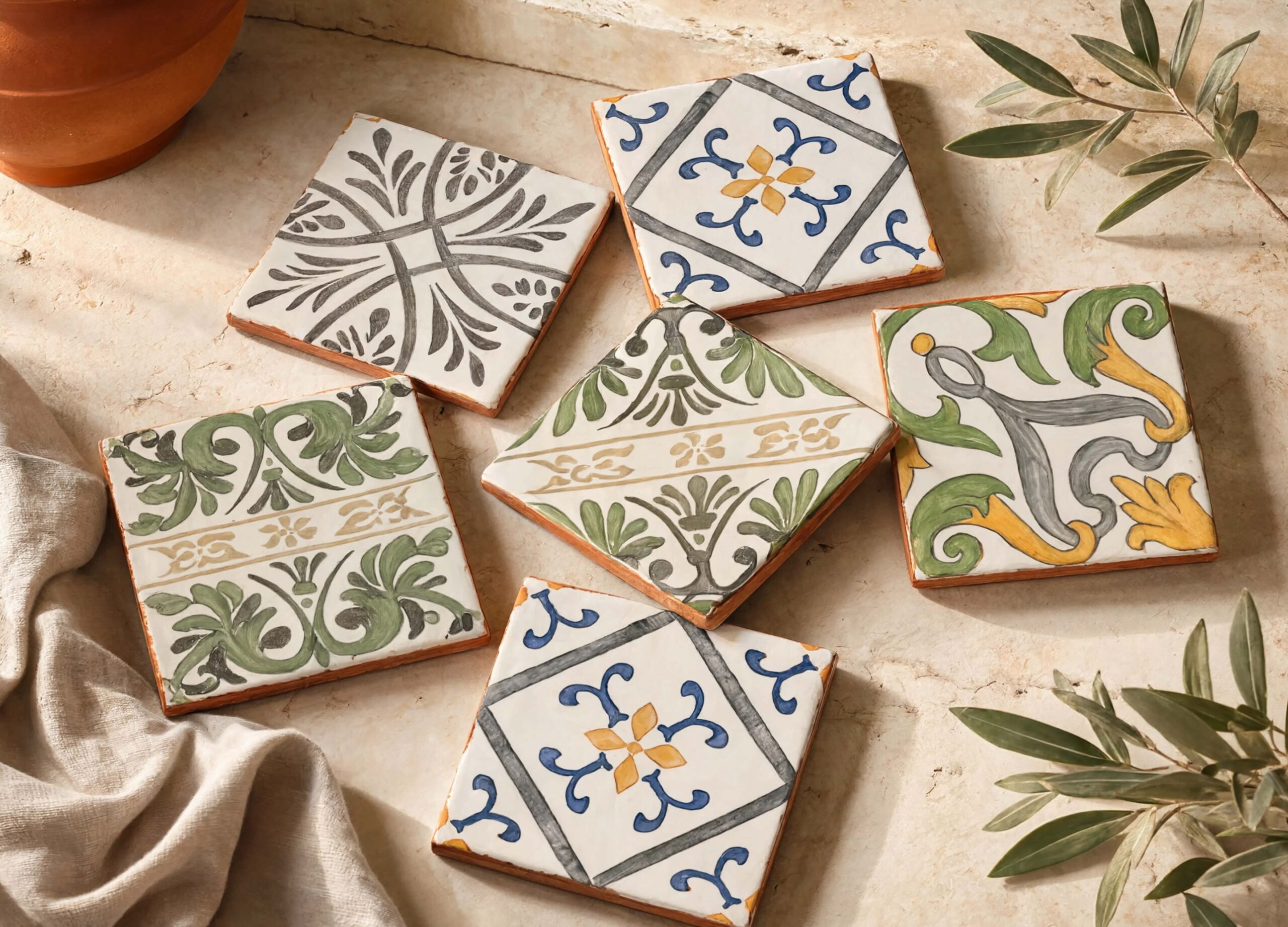
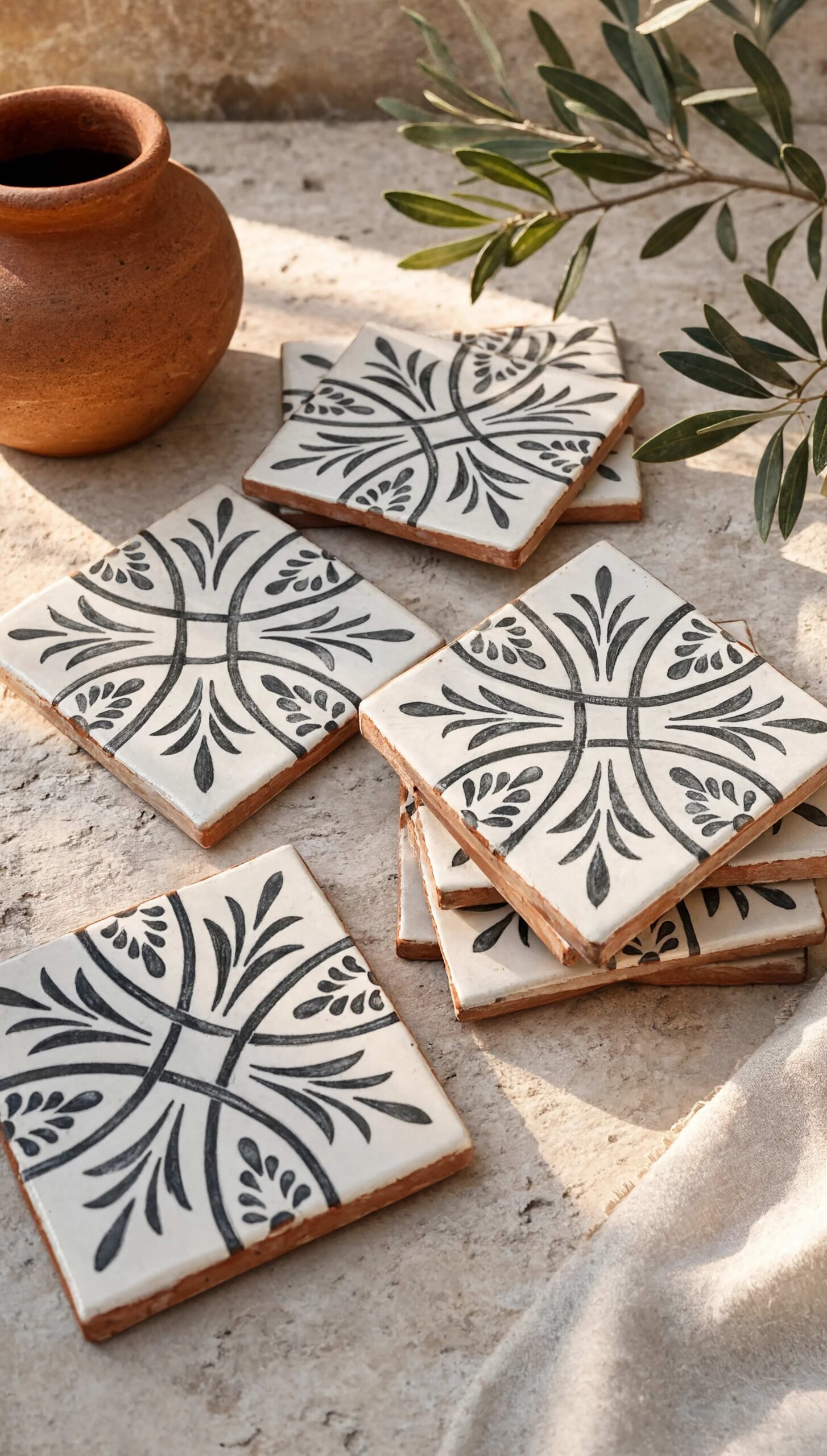
The Story Behind The Evora
There is a particular kind of beauty in Portugal's tiled streets, the way pattern repeats across a façade, the way terracotta holds the warmth of the afternoon long after the sun has moved on.
The Evora Collection was drawn from that world: the azulejo tradition, the patterned courtyards of the Alentejo, and the handcrafted ceramic culture that has shaped Iberian architecture for centuries.
Named for the historic walled city of Évora, this collection translates that heritage into terracotta (a material as old as Mediterranean building itself. The detailed patterns aren't decoration applied as an afterthought; they're the heart of each tile, designed to layer rhythm and artistry across a surface the way generations of artisans once did by hand.
The result feels collected over time rather than ordered from a catalog: warm, soulful, and unmistakably rooted in place.
Why We Love Evora
Pattern with a pulse. Each tile carries detail that gives walls and floors movement and life, never flat or anonymous.
Terracotta warmth. The earthen body brings a natural, sun-baked glow that synthetic surfaces simply can't imitate.
Authentic character. Subtle tonal shifts and handmade-look texture give every installation a one-of-a-kind quality.
Endlessly versatile. Equally at home as a statement floor, an intimate backsplash, or a decorative accent.
Timeless, not trendy. Grounded in Portuguese design heritage, it belongs to a space for decades (not a season.)
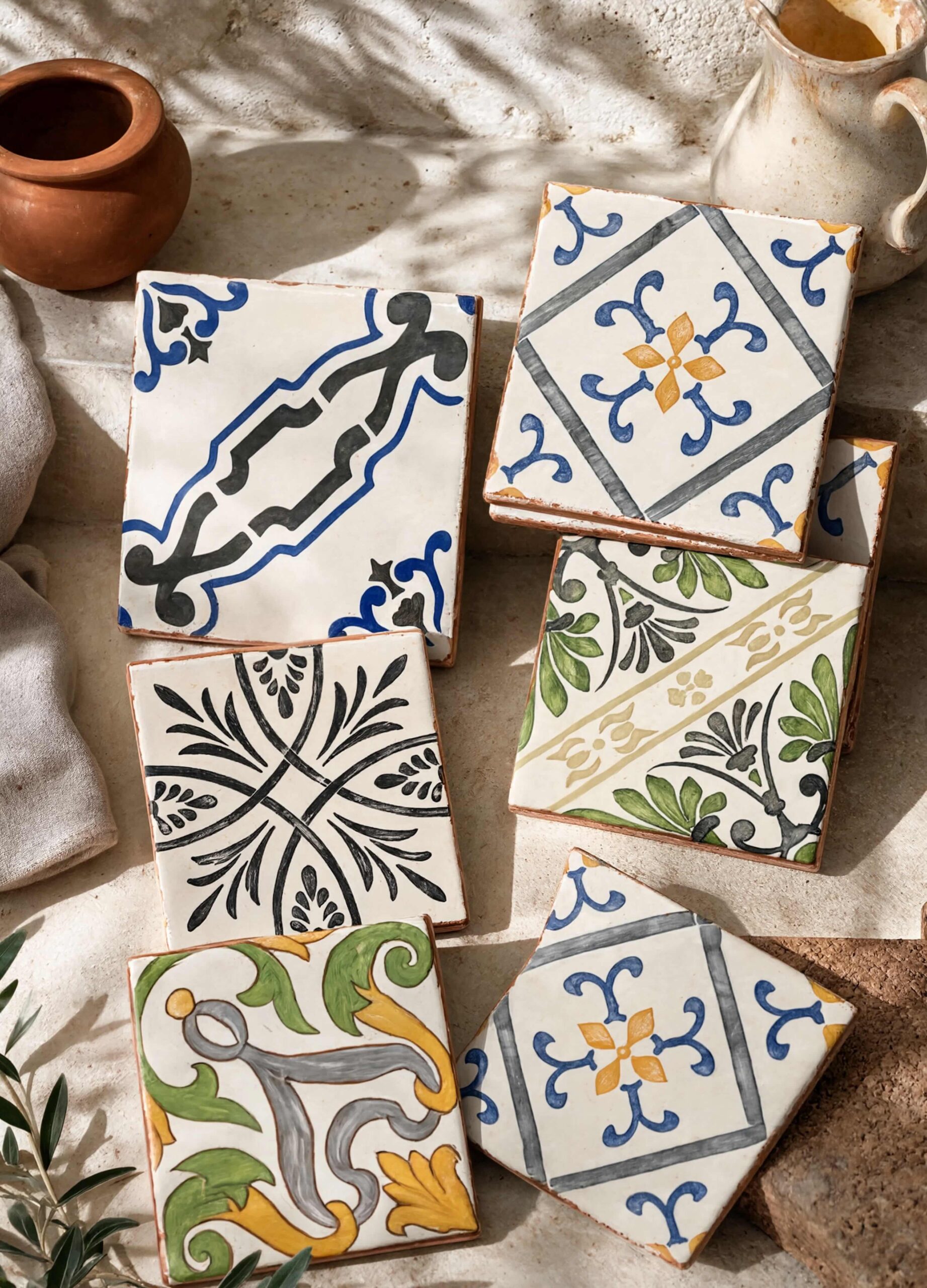
The Art of Patterned Glazed Terracotta
A single tile is quiet. Repeated across a surface, the Evora pattern becomes something else entirely a rhythm that carries the eye, a texture that catches light, a sense of intention in every square foot.
This is what patterned terracotta does best: it transforms an ordinary plane into a composition.
Laid across an entryway floor, the pattern reads like an antique rug worn smooth by footsteps.
Set behind a range, it becomes a painterly backdrop. Wrapped around a powder room, it makes a small space feel deliberate and richly considered. The geometry does the work that art does (giving a room focus, character, and a story worth pausing over.)


The Story Behind Antiqued Mallorca
Long before they became tile, these patterns lived in cloth.
The Lenguas Mallorquinas: the "tongues of Mallorca" are among the most recognizable woven fabrics of the Mediterranean.
Their distinctive blurred, flame-like motifs were crafted by Spanish textile weavers and refined by French artisans from the mid-1800s onward, using a painstaking dye-resist technique that gave each length of fabric its signature softness and movement.
Hung in island villas and draped across sun-warmed rooms, these textiles became part of the visual language of Mallorca itself.The Antiqued Mallorca Collection is our tribute to that heritage.
Rather than copy the cloth, we reinterpret its spirit (the rhythm of the weave, the gentle imperfection of hand-dyed pattern, the way color seems to fade and pool.)
Rendered on our own terracotta, the collection brings the warmth of woven fabric into architecture, where it can live on a wall for generations the way the original textiles lived in island homes.
Why We Love Antiqued Mallorca
Drawn from real textile heritage. Not a trend, a pattern language rooted in 19th-century Mediterranean weaving.
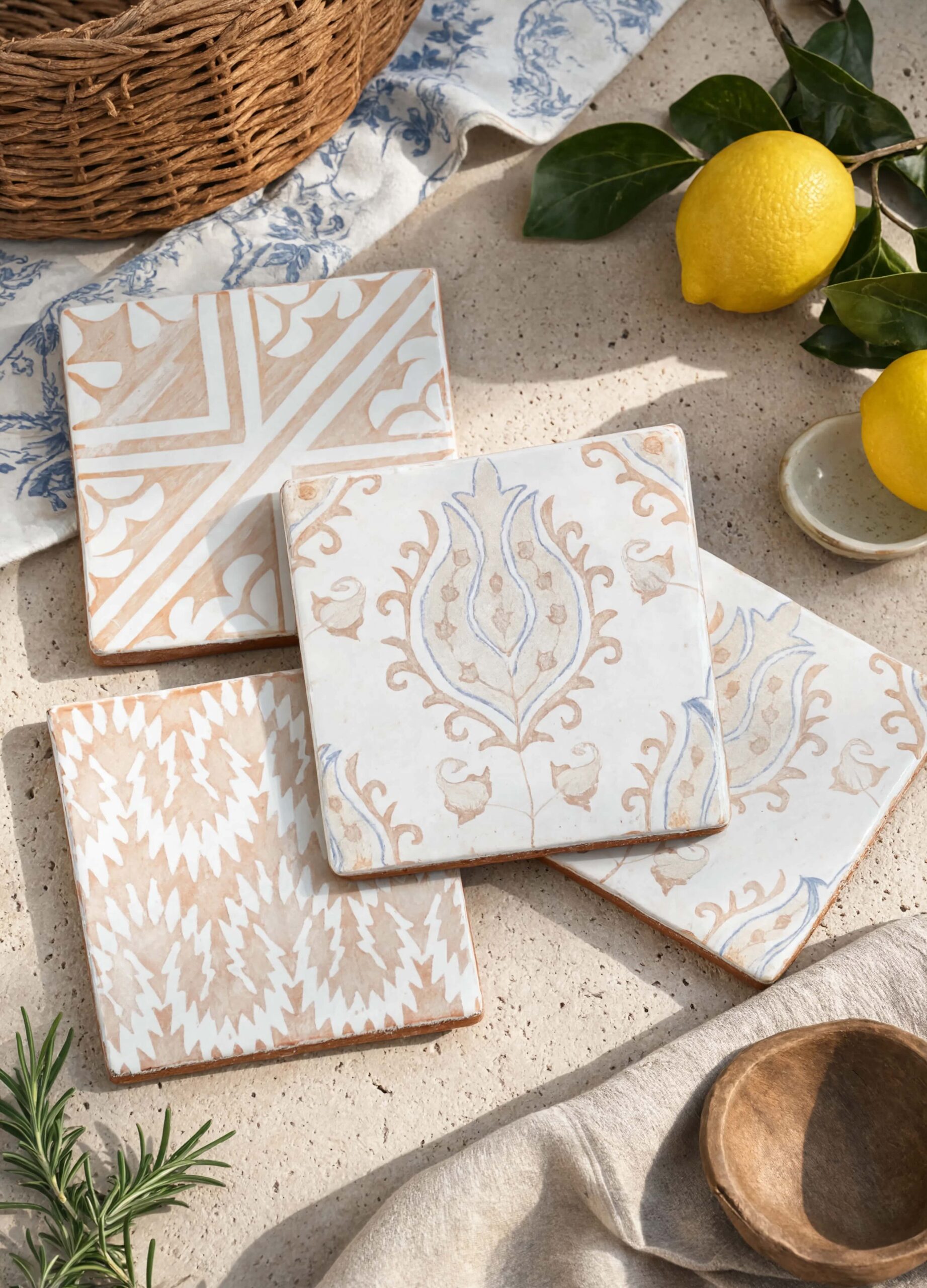
Six patterns, one mood. Each design stands alone or layers together, unified by the same faded, sun-washed palette.
Color that whispers. Warm beige, sand, and taupe meet faded blush and cool indigo for pattern that never overwhelms a room.
Terracotta warmth. A natural clay body brings depth and character no porcelain can imitate.
Imperfect on purpose. Soft irregularity and surface movement give every wall a handmade, collected-over-time feel.
Material Character
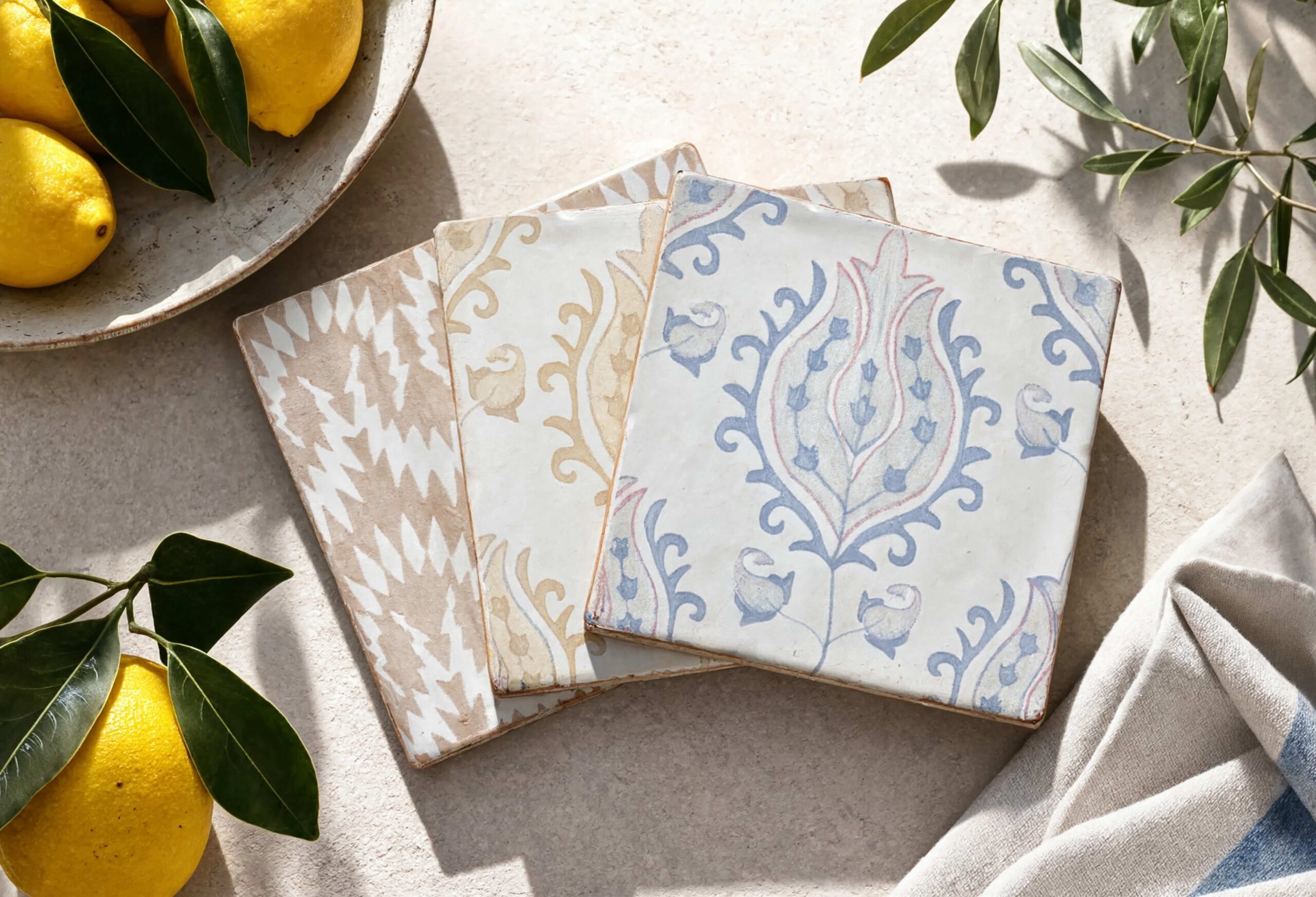
Every tile in the collection is produced on Country Floors' own 6" × 6" terracotta, a base chosen for its honesty and warmth.
Terracotta is one of the oldest architectural materials in the Mediterranean, and its appeal is elemental: a natural clay body with subtle tonal shifts and a grounded, earthen warmth.
Here, that body is finished with a white glaze that carries the pattern, while the exposed terracotta along each edge reveals the raw material beneath, a quiet reminder that this is real fired clay, not a printed imitation.
The handcrafted feel is part of the design: slight movement in the surface, gentle variation tile to tile, and the kind of tactile depth that only natural materials provide.

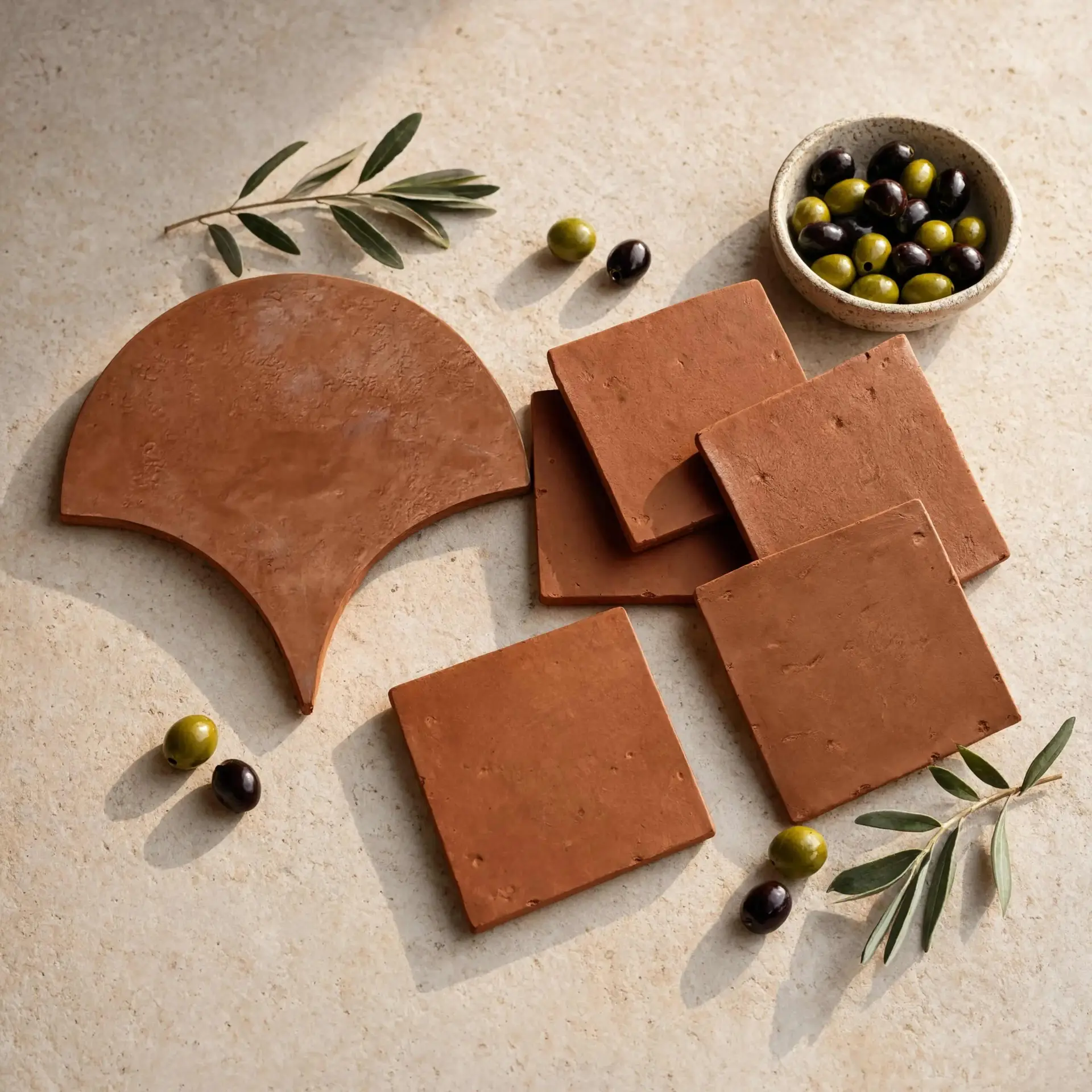
Earth, Fire, and the Light of the Mediterranean
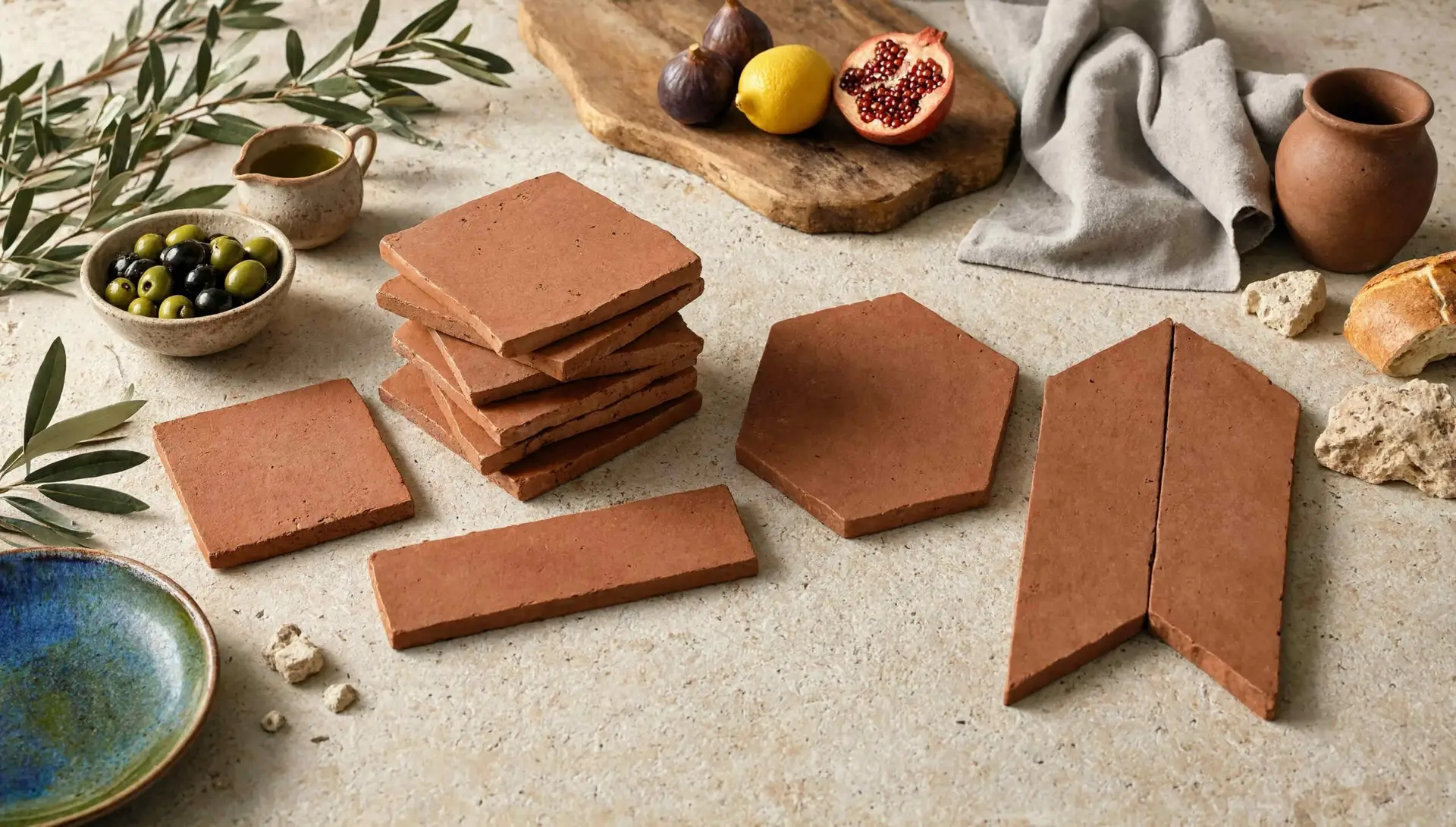
Some materials ask for attention. Terracotta simply belongs. Born of clay and shaped by hand, these matte, unglazed tiles carry the warmth of the Mediterranean into the home.
Offered in five classic shapes and two trims, the collection is a return to simplicity: natural material, honest texture, and a quieter rhythm of living.
A Material for Slower Rooms
Terracotta has always favored rooms built around light and time: the hacienda kitchen, the whitewashed coastal house, the pared-back modern interior where every material must earn its place.
In minimalist and organic modern spaces, its earthy palette grounds clean lines with warmth. In Mediterranean and traditional settings, it feels like a homecoming.
Suitable for interior walls and floors, including wet areas, it moves easily from entry to bath to kitchen so anywhere a room asks for something natural underfoot.

Why We Love Our Handmade Terracotta Tile
Terracotta tile has outlasted nearly every flooring trend for a reason and our handmade terracotta tiles show that reason at its best.
The color no factory can match. Unglazed, matte terracotta develops its warmth in the clay itself. Across a terracotta tile floor, tones shift naturally from soft ochre to deep earth, creating a surface with genuine depth rather than a printed pattern.
Shapes for every kind of room. From classic 6x6 squares and slender 2x8 formats to hexagon, chevron, and fan terracotta tiles, the collection covers everything from a traditional terracotta kitchen floor to a sculptural bathroom wall.
Made for real living. Handmade terracotta tile is suitable for interior walls and floors (including wet areas) which makes it as practical in a shower or kitchen as it is beautiful in an entryway.
A material that improves with time. Where many surfaces wear out, terracotta wears in. Its handmade texture and natural variation only grow more characterful as the years pass, which is why terracotta floor tiles remain a signature of Mediterranean, hacienda, and organic modern interiors alike.


A Piece Inspired by Sculptures: Inspiration Behind Stone Sinks
In the workshops of Pietrasanta, at the foot of the Apuan Alps, stone has been shaped by hand for over two thousand years. Now, sculptural stories are taking place in your bathroom, with the unique fingerprints of the Mediterranean.
Every block that arrives here carries a different history, some pressed into marble deep within the mountain, others formed slowly, mineral by mineral, around ancient springs. Different origins, the same patience and process: millions of years before a single tool ever touched them.
Once the natural stone reaches the atelier, the process doesn't change. A stonecutter doesn't impose a shape onto the block; it’s not a forced carving. The stonecutter studies it, turns it, waits to see the form already waiting inside. The chisel simply reveals the soul of the stone in the shape of a sink, vessel, pedestal, or any other form.
Every natural stone sink in this collection began this way, carved through its soul. Not drawn on a screen, not molded to a standard. Carved, by hand, until what remained was no longer raw material, but something closer to sculpture that happens to hold water.
Why You Should Choose Natural Stone Sinks?
Sculpture First: These pieces were never designed to look like an average sink design. Each one is carved the way a sculptor works, led by the stone's own veining, its own density, its own resistance to the chisel.
A Mountain's Signature: Natural stone carries its own map. The veining, tone, mineral movement, shaped over millions of years before it reached the workshop, that it’ll reflect its soul in a new form. No two blocks of natural stone are identical, so no two sinks are either.
Belongs Everywhere, Any Interior Design: A sculpture doesn't match a room; a room arranges itself around it. This is why the same piece feels at home in a sun bleached farmhouse and equally at home against blackened steel and concrete. It was never made to follow an interior design style. Choose the stone you love, and it will adapt to however your style evolves over the years.
Touched, Not Just Seen: Run a hand across the surface and feel what stonecutters have felt for centuries; cool, dense, quietly alive stone, not a fabricated basin pretending to be natural.

From Mediterranean Mountains to Your Project
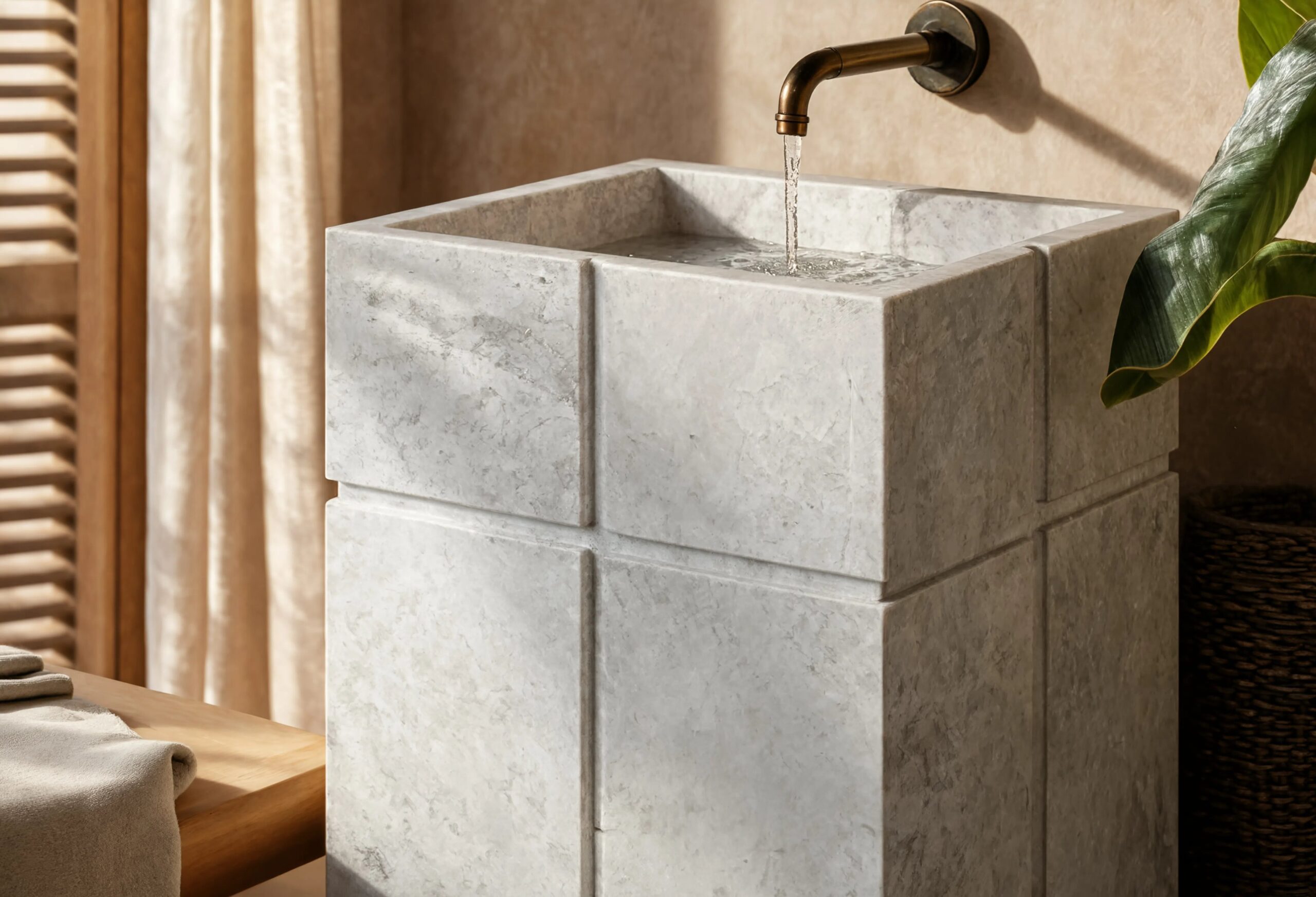
Every piece in this collection is carved from natural stone, and as with any material shaped by geology rather than a factory, visual variation from piece to piece is expected and intended. This isn't a flaw; that’s what makes natural stone sinks special.

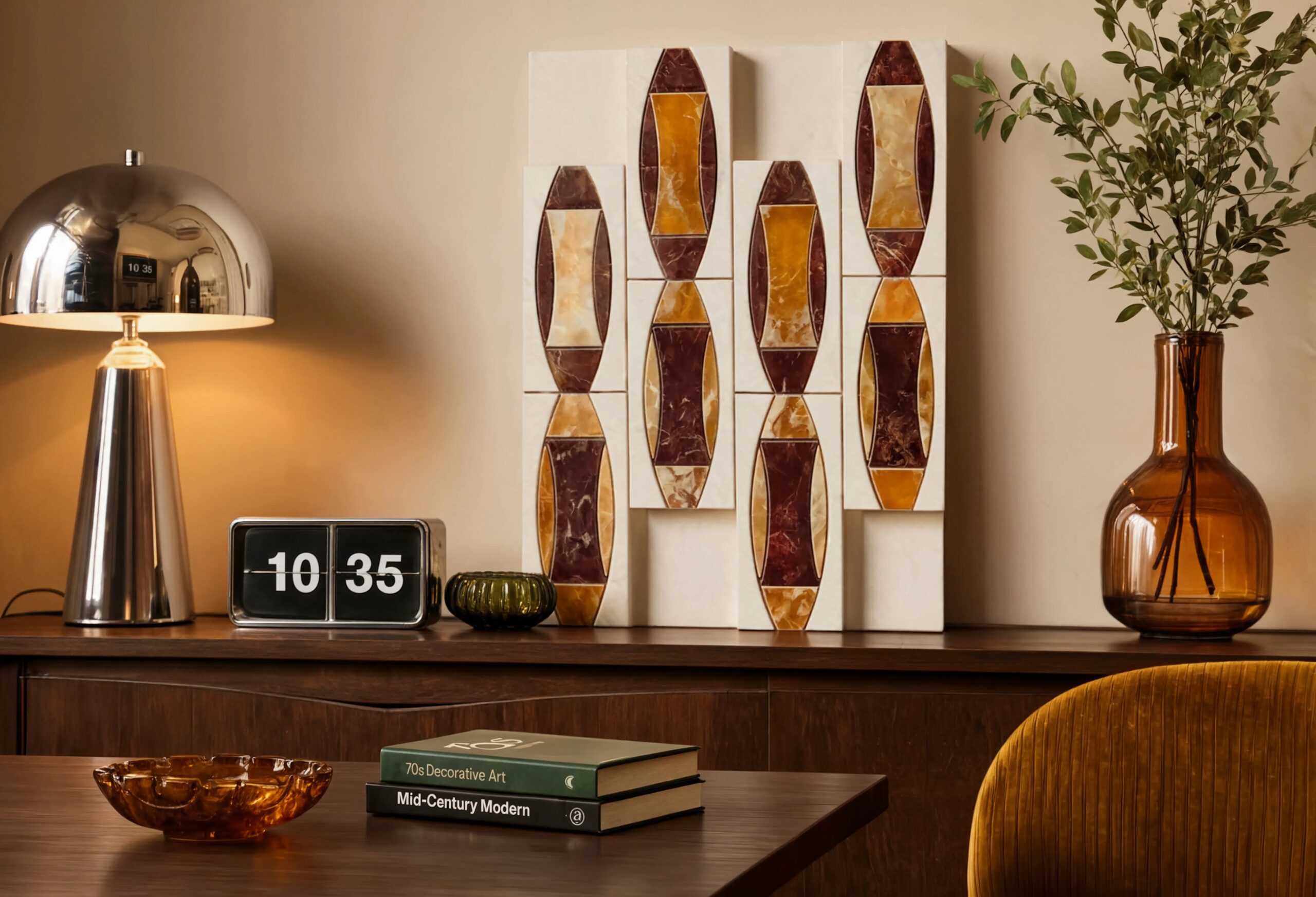
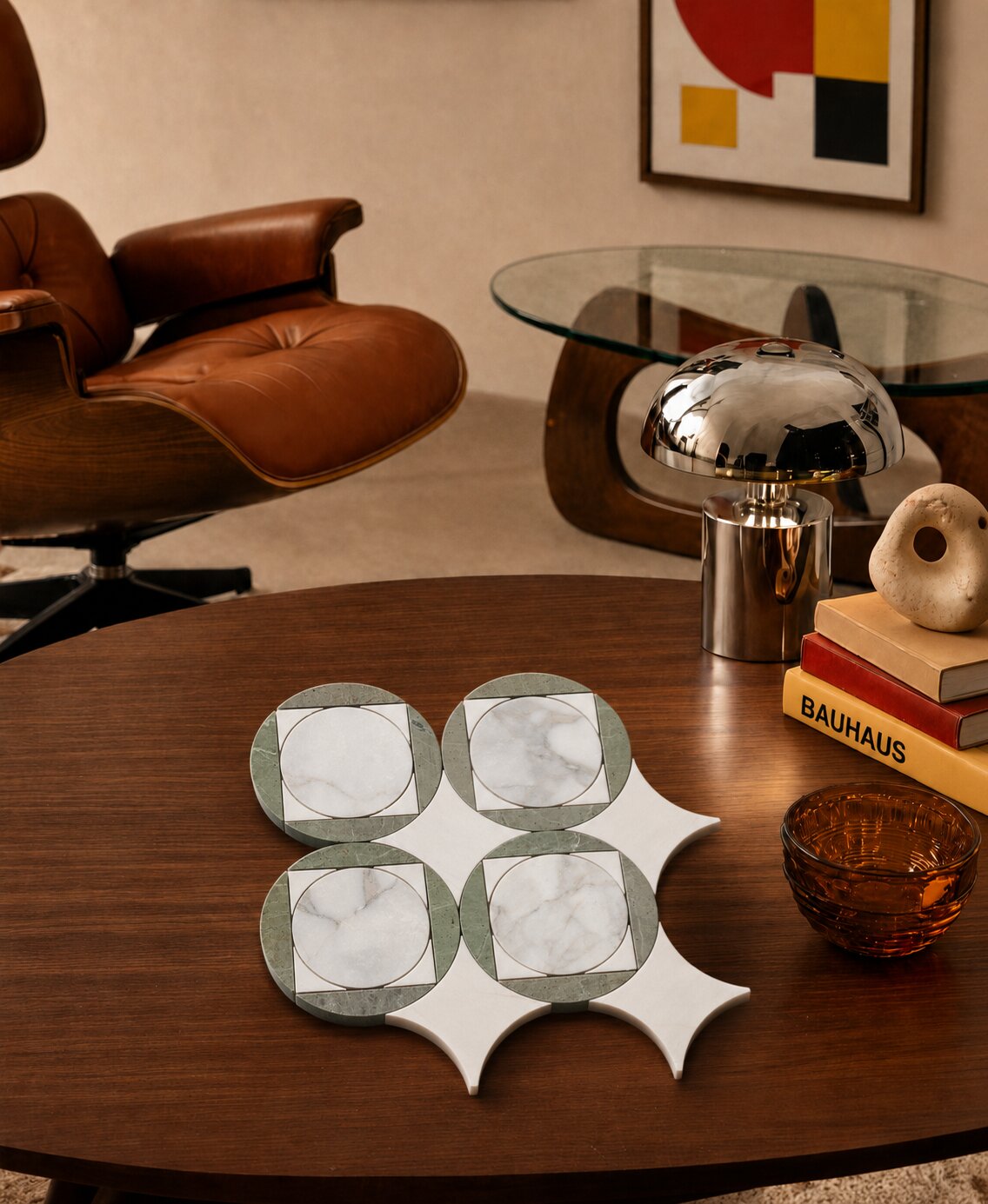
The 70s Were Always Neo Deco, Retro Groove Brought It Back
Art Deco interior design never really left. It just went to a party, and we’ve been waiting for it.
The 70s era didn't invent glamour; they inherited it.
When The Great Gatsby hit screens in 1974, and Studio 54 opened its doors three years later, a generation of designers took the hint that the 1920s already knew: that geometry is a form of self expression, that bold and characteristic colors belong on surfaces you touch, and that marble stone is the one material that can only reflect the sensation of luxury.
The decade became its own kind of Art Deco revival; louder, more colourful, and entirely unapologetic.
Hear us out, the movement is back! Interior designers are calling it Neo Deco, and it looks a lot like Retro Groove. So, if you’re planning to have the 70s sparkle back in your home, you’re in the right place. Choose your groove, put your jukebox on!
Why Is Neo Deco Tile Our Most Recommended 70s Design Inspiration?
Every aesthetic has its own reason to be chosen. What makes this marble tile collection work is the same thing that made 70s interior design work at its best: commitment. The geometric marble mosaic patterns don't hedge.
The jewel colored marble tiles, deep burgundies, amber yellows, and verdant greens, hold the room the way only natural stone tiles can, with variation built in and depth that changes with the lighting.
But Retro Groove doesn't ask you to go all the way in. The softer, more neutral pieces are also available in our collection to keep the same groovy tile pattern sensibility in a palette that works alongside the room rather than in front of it.
Maximalist interior design or something restrained, the design language is the same. The geometry connects everything; every shape feels like a note of a groove.
Every piece is cut from natural marble. That's not a small detail; it's the whole point of being luxurious and unique. At Country Floors, sourcing natural stone has been the foundation of what we do for over six decades. We know the difference, and so will your room.
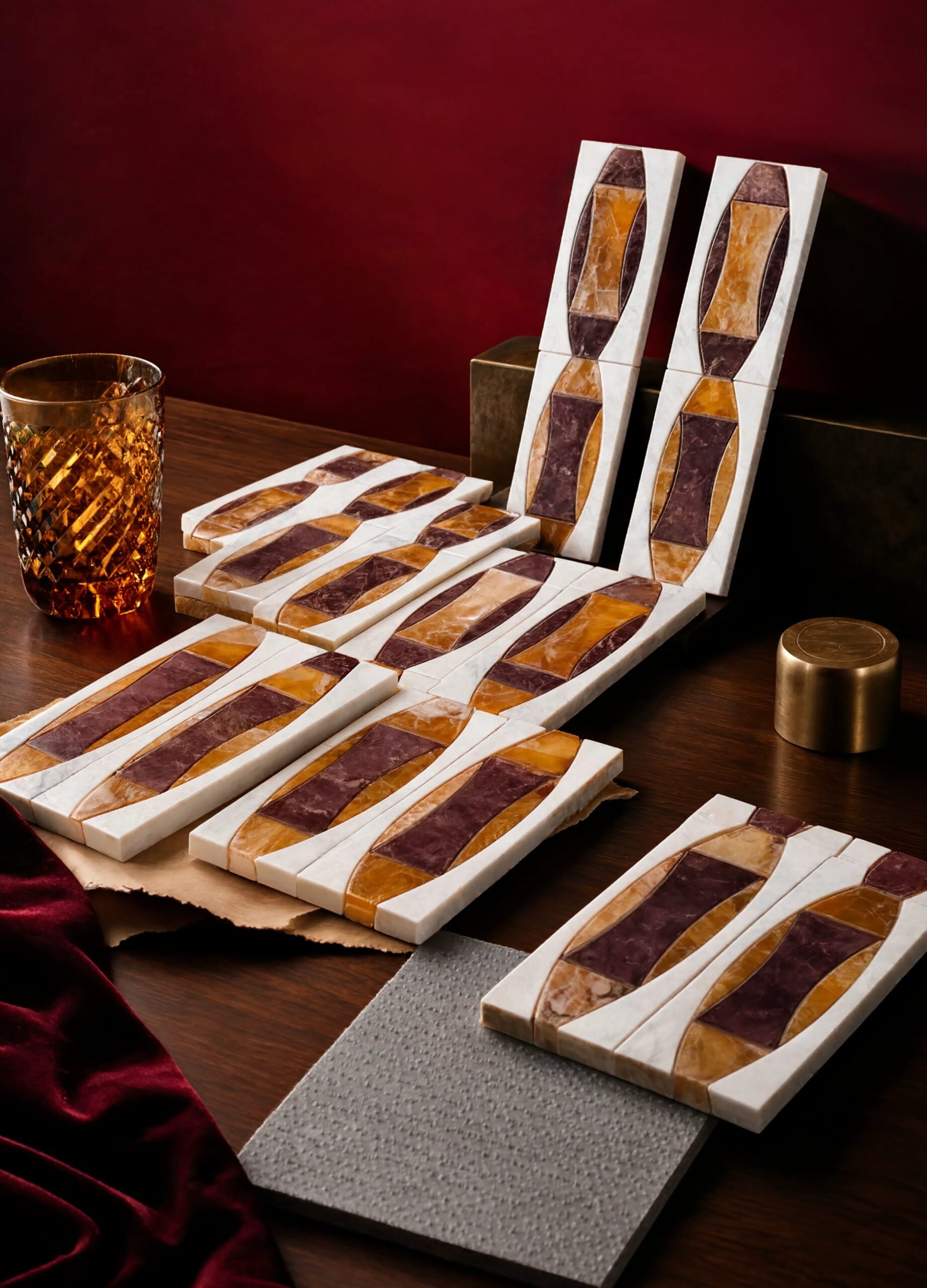
The Neo Deco Design Is Here, Feel the Grooves with It!
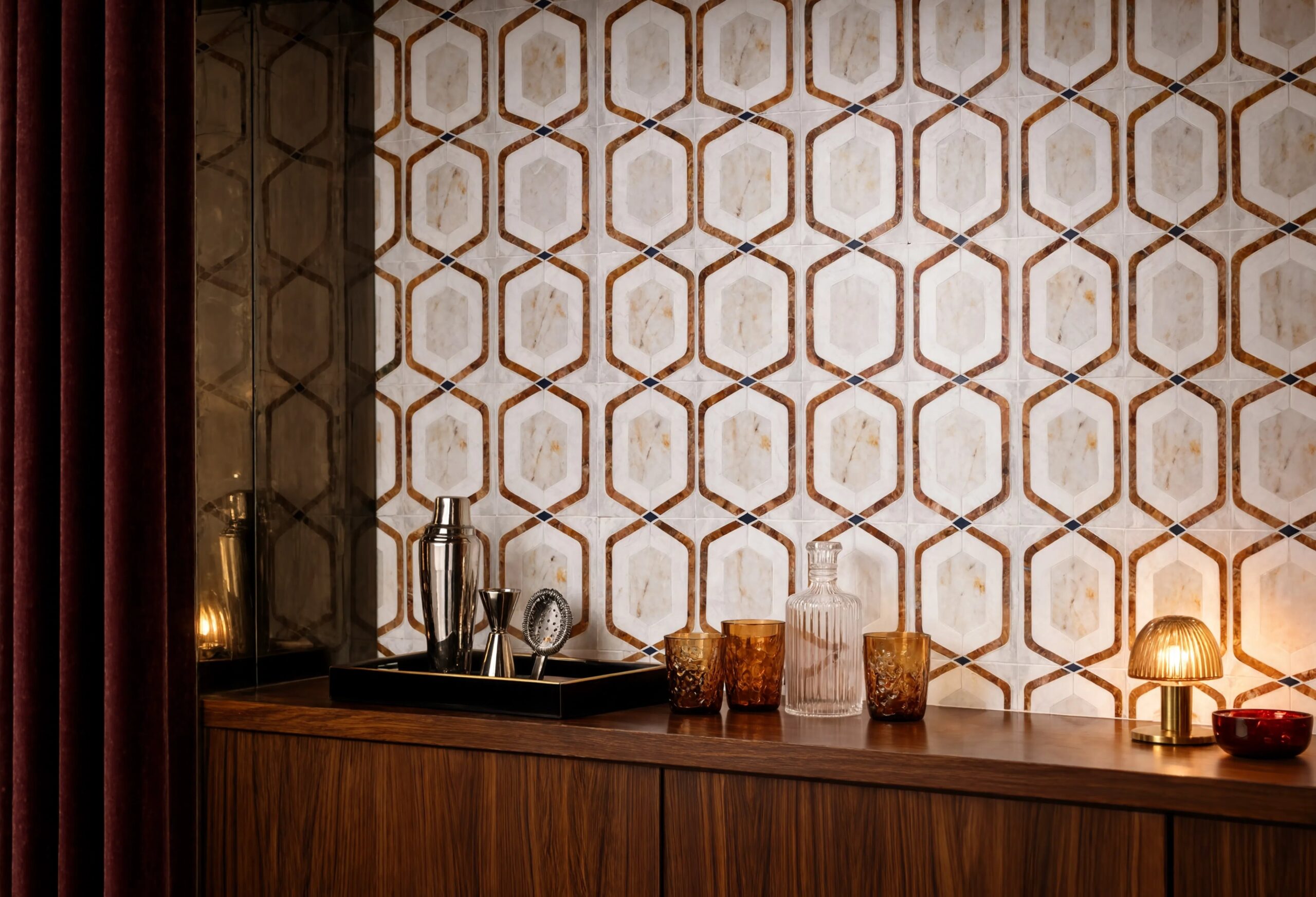
As a retro tile collection built on marble, Retro Groove is one of those rare things: a retro marble mosaic that works as hard in a Neo Deco interior as it would have in a 1970s penthouse.
There are some duos and design legends we keep using in every residential and commercial tile project, again and again. There's a reason this pairing keeps showing up in the most considered Neo Deco interiors. Checkerboard marble on the floor, a Retro Groove marble mosaic backsplash or feature wall above.
Pattern meets pattern, but in a language with sixty years of history behind it, two bold pieces come together to make your room feel like it’s alive. The geometry of the mosaic and the rhythm of the checkerboard come from the same design instinct.
Want to go bolder with the '70s sparkle? We know what you should do, then. Start with the floor tiles. Let the wall answer it in Neo Deco interior design.
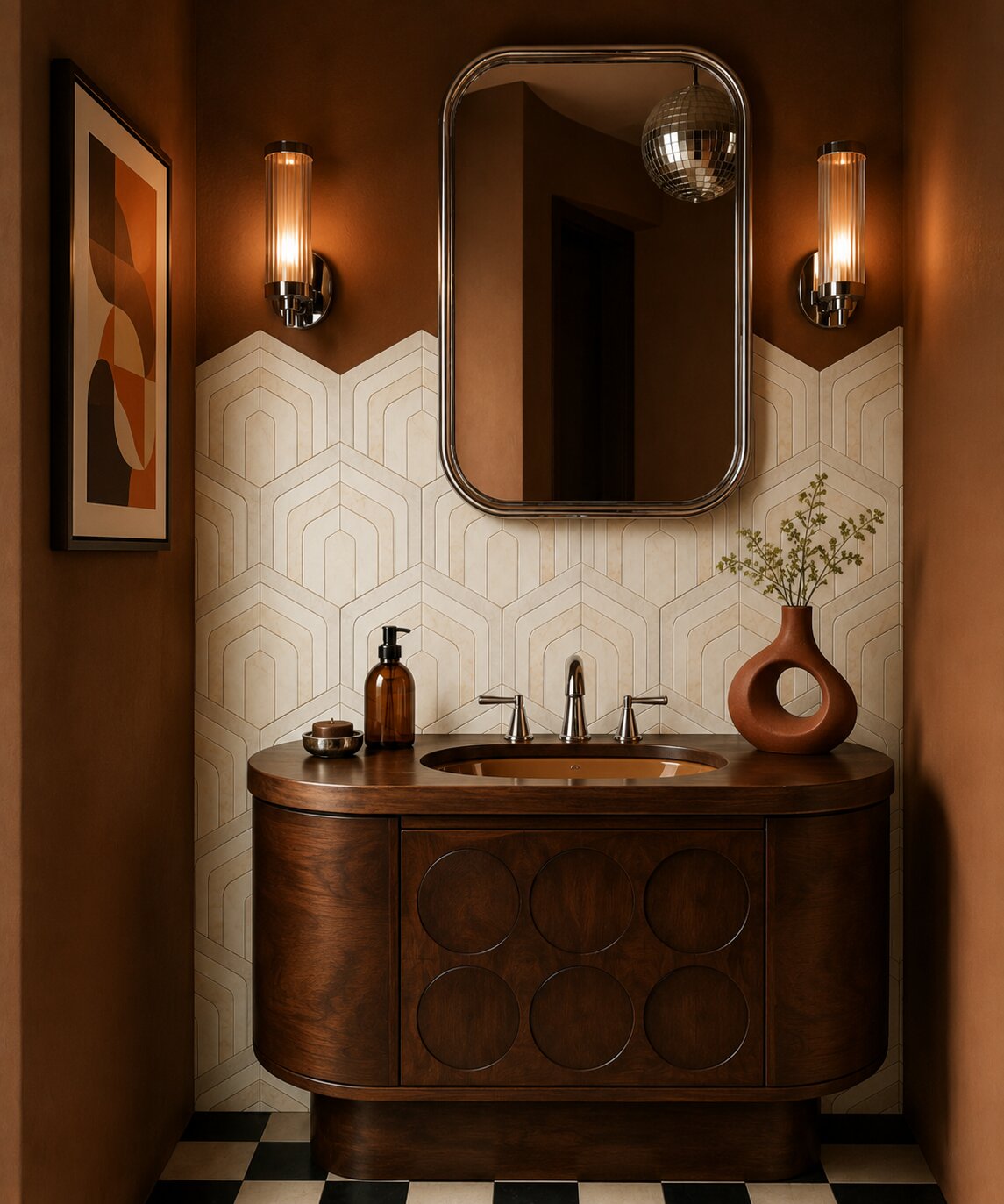
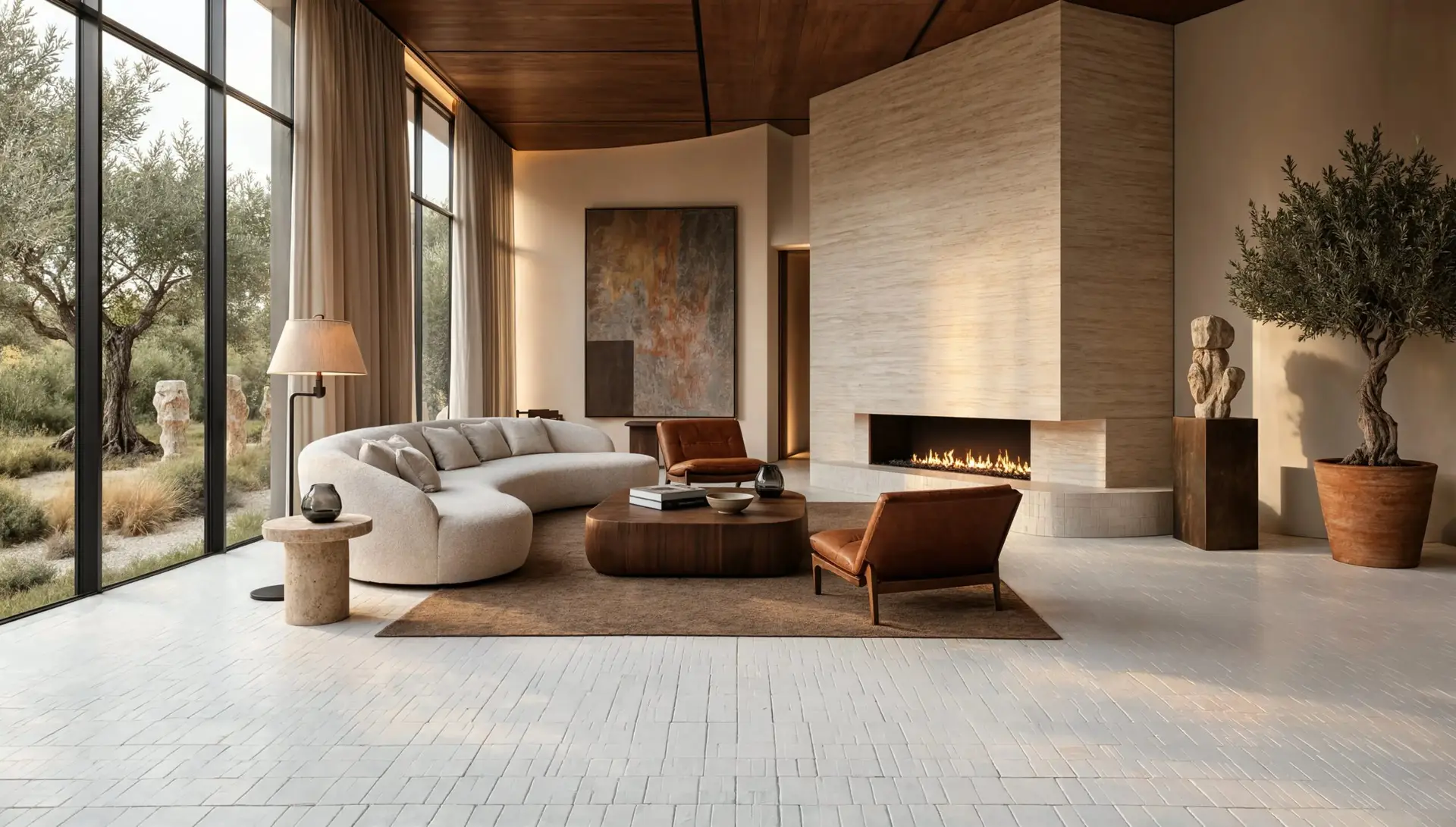
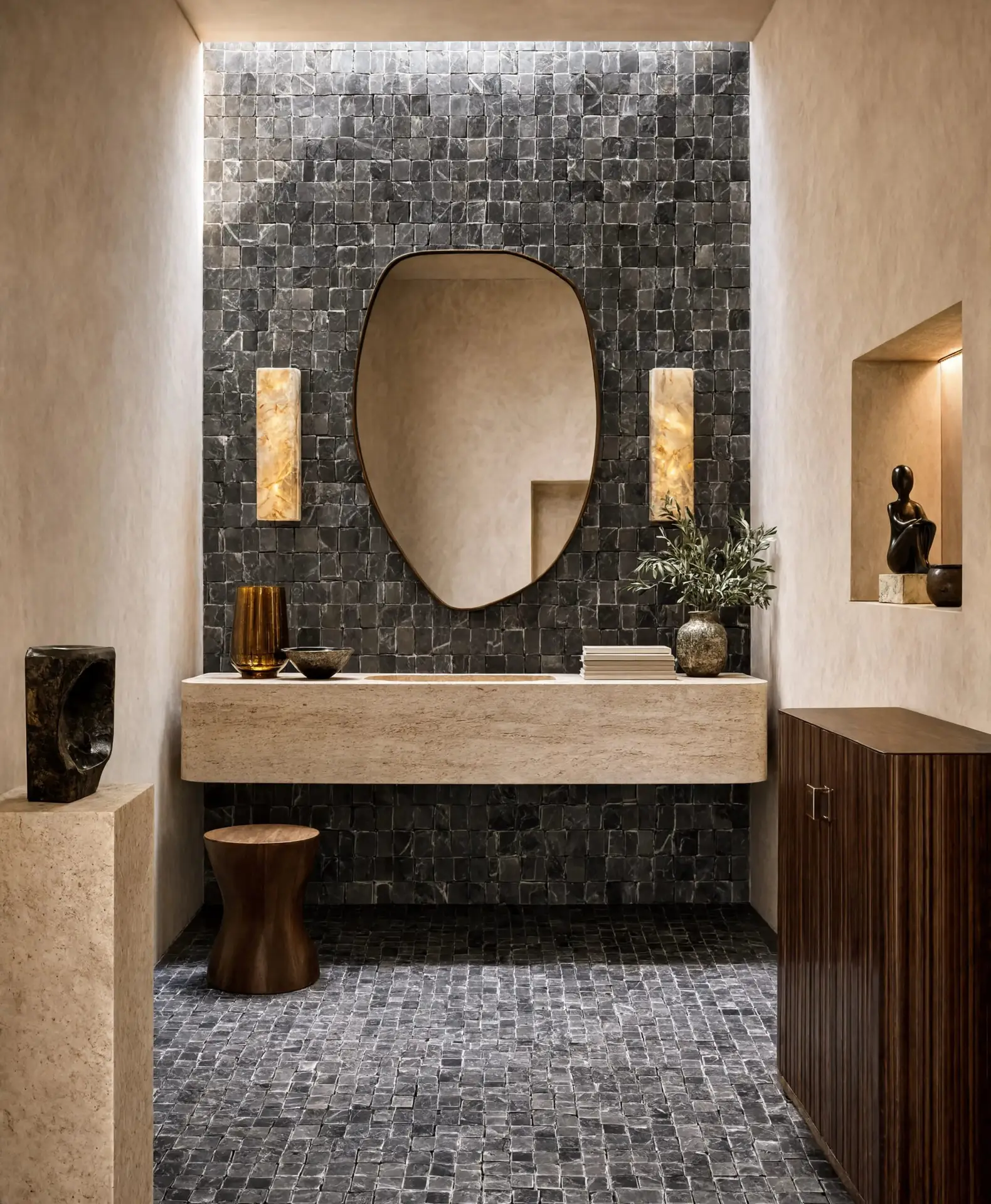
A Story Started in Venice, Became A Design Language Worldwide
Some tile collections take their name from a color palette, material’s veining details, or a technique. Ours takes its name from an architect who never lowered his standards, not even for flooring. The vision was beyond that, and that was the starting point for our story.
In 1957, Carlo Scarpa was asked by Adriano Olivetti to turn a narrow, dark storefront under the arcades of Venice's Piazza San Marco into a showroom for typewriters and calculators. What Scarpa built there became one of the most studied interiors in 20th century architecture, and it's the reason Scarpa mosaic tiles exist. He laid the ground in irregular tesserae of colored glass, each piece set slightly apart from its neighbors, catching light the way water does.
Also, a clever way of color customization is used: red marked the entrance, gray white the center, blue the side passage, yellow the back. That was a great move to avoid signage details and express it with architecture and aesthetics; the mosaic itself told you where you stood. The showroom still exists today, carefully restored and open to the public, and you have a chance to see what an architectural and design miracle looks like in real life in the streets of Venice.
Why Rough Cut Scarpa Continue That Tradition?
Our Rough Cut Scarpa Collection doesn't reproduce the floor tiles only; we aim to carry the tradition and logic behind it. Every Scarpa mosaic tile in the range is cut in irregular rectangular fragments, hand clipped so no two pieces are the same, then set in the same restless, interlocking rhythm Scarpa used to make stone feel almost typographic.
The rough cut surface keeps the hand of the material visible; nothing here is made for perfection, in fact, the imperfection brings the exact soul of what Scarpa tried to create. Color shifts subtly across the field the way it does in a real marble block, because that's exactly what it is.
Don’t think that we offer Scarpa mosaic tile in a limited design spectrum. You’ll find them across a wide range of natural stones, from the cool restraint of Bianco Dolomiti marble and Diana Royal to the depth and unique characteristics of Calacatta Green, Red Bordeaux, and Iris Black. Maximalist or restrained, the design language stays the same: the geometry connects everything, and every fragment holds its own edge.
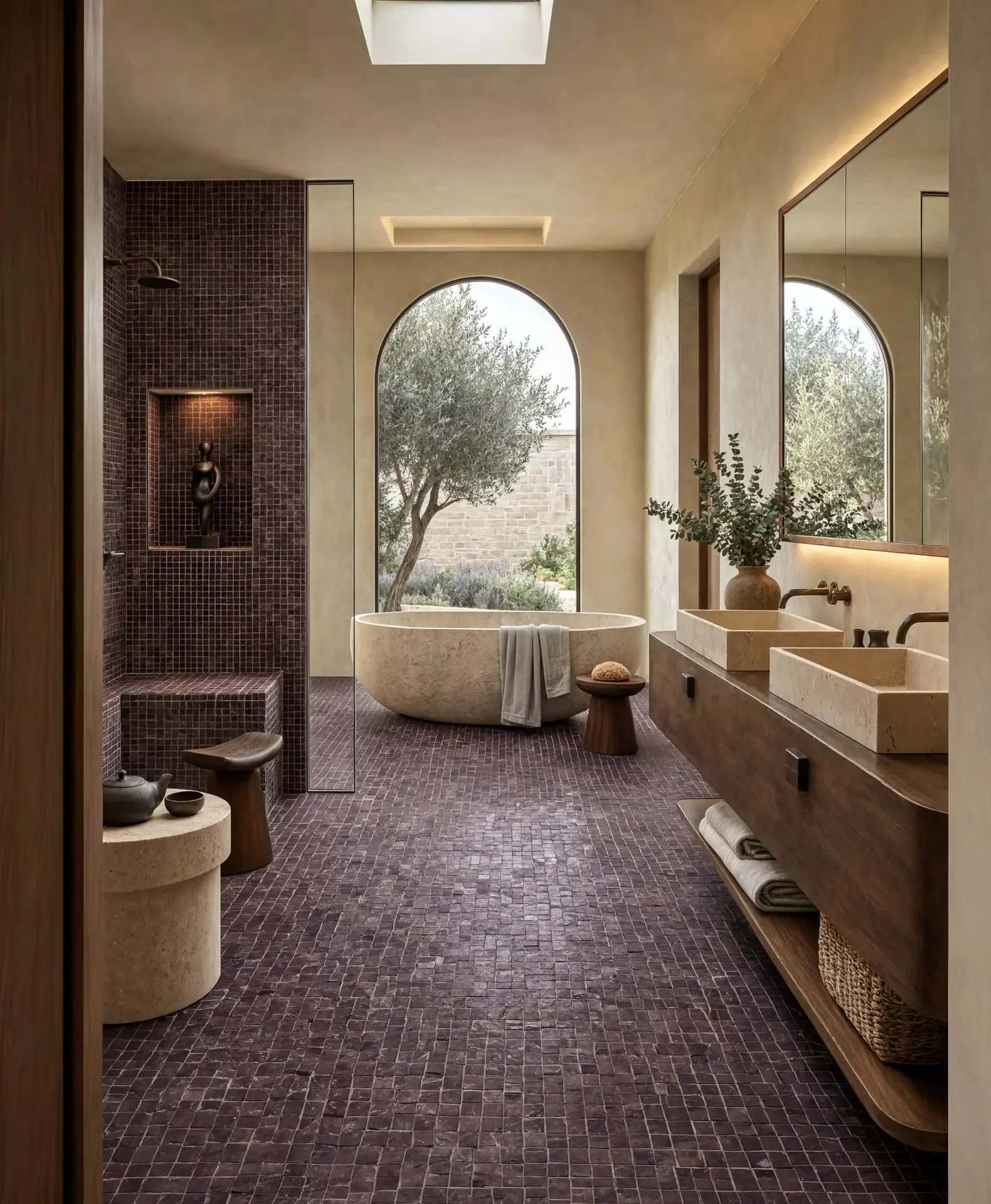
Where Scarpa Mosaic Tile Is Used In Our Projects?
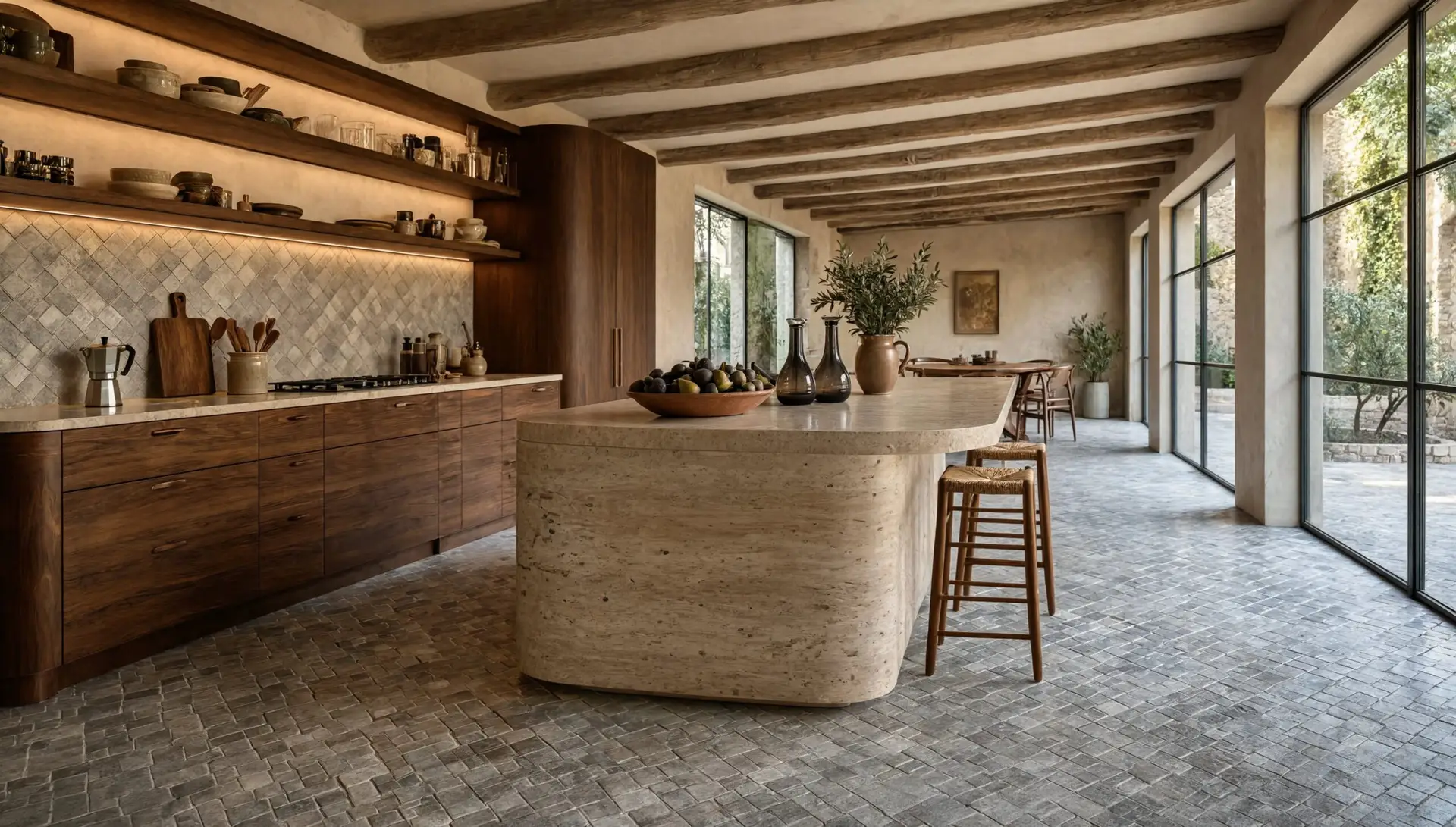
Use it where a floor is meant to express the background of a noble story of an architectural dream: an entry that sets the tone for the whole home, a powder room that becomes the story people tell about your house, a shower niche or kitchen backsplash that turns a utility surface into a focal point. As a designer mosaic, this Scarpa mosaic tile rewards close looking; the interlocking pattern reveals itself one piece at a time, the way Scarpa intended when he asked people to slow down and actually look at a floor. Because that was it, to be able to notice.
Most tile gets chosen once and stops being seen. A Scarpa mosaic tile floor will always remind you that it’s chosen for a reason.

