
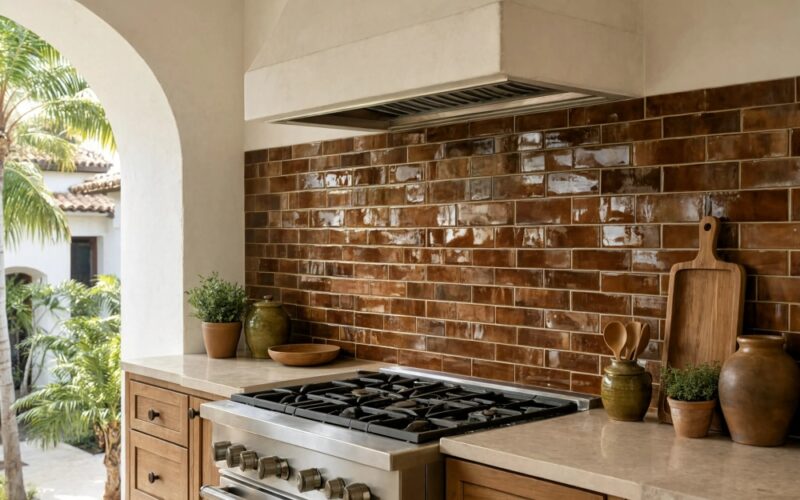
I’ve spent enough time walking through homes across San Juan to notice a pattern: the best interiors here never fight the island’s light, they work with it. Puerto Rico tile designs have a rhythm of their own, shaped by generations of Spanish colonial influence, tropical humidity, and a genuine love for craftsmanship visible in every archway and courtyard on the island. The tile you choose isn’t just a finish, it’s the detail that decides whether a home feels authentic or feels like it was dropped in from somewhere else.
This is the question I hear most from homeowners, architects, and contractors working across the island: how do you bring in a natural stone or handmade tile that respects that heritage without making a space feel dated? Let’s walk through it.
1. Why the Climate Should Drive Your Material Choice First
Before color or pattern, I always ask clients to think about what the tile will actually live through. High humidity, salt air, and intense UV exposure are genuinely tough on building materials, and tile is no exception. A slab that looks stunning in a mainland showroom can behave very differently once it’s absorbing moisture day after day near the coast.
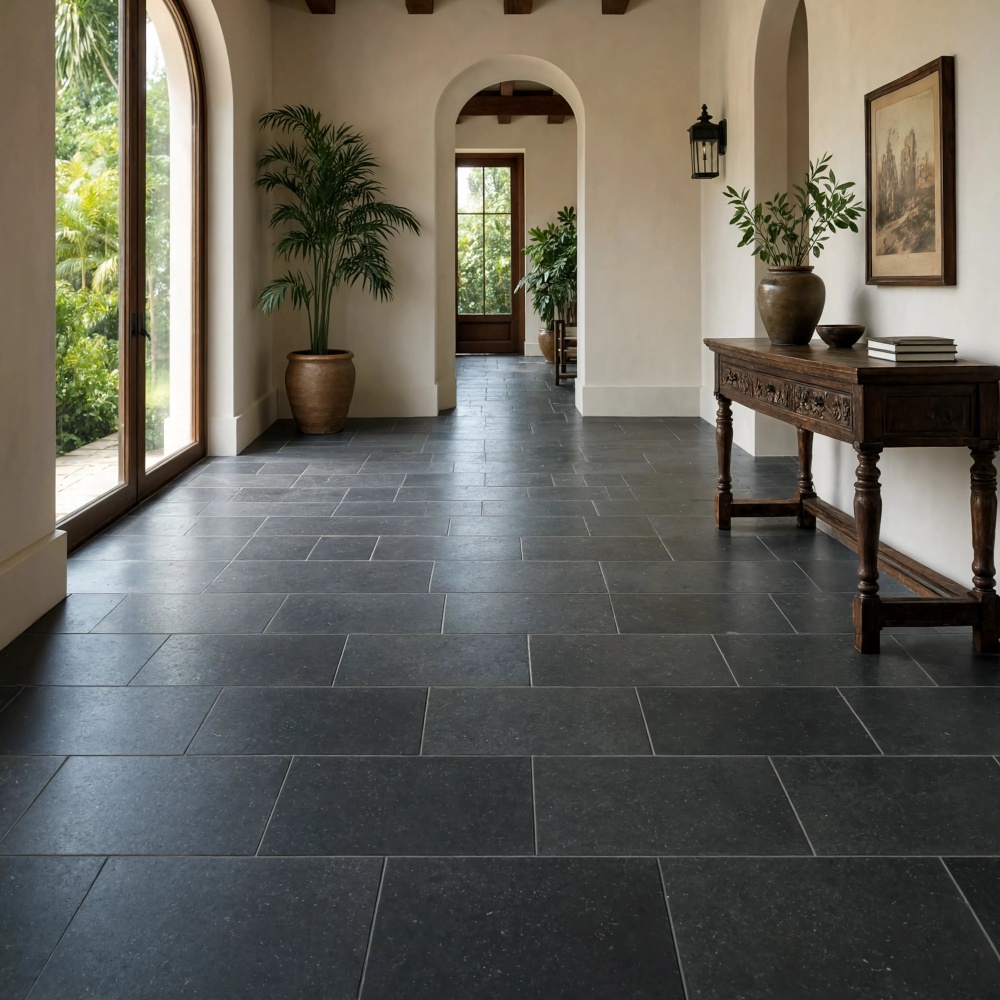
This is where natural stone flooring for humid climates matters more than people expect. Denser stones with lower porosity, along with properly sealed porcelain, hold up far better than softer, more porous options. It’s a conversation I have often with contractors used to specifying for drier climates who need to rethink their approach for island conditions.
2. Mediterranean and Spanish Colonial Roots
There’s a reason Mediterranean tile flooring feels so at home here. Puerto Rico’s architecture carries the same Spanish colonial DNA as Andalusia or coastal Portugal, arched doorways, thick plaster walls, courtyards built for shade. Hand glazed terracotta is one of my favorite starting points for this kind of project. A terracotta tile in Caribbean style brings warmth without weight, and it develops a genuine patina over the years that machine made tile can’t replicate. For clients wanting more movement and color, I bring in zellige, handmade, pleasantly imperfect, and it catches the island’s light in a way flat, uniform tile never will. Our glazed terracotta collections and zellige tiles are usually where I start these conversations with designers.
3. Kitchen Tile Ideas for Puerto Rico Homes
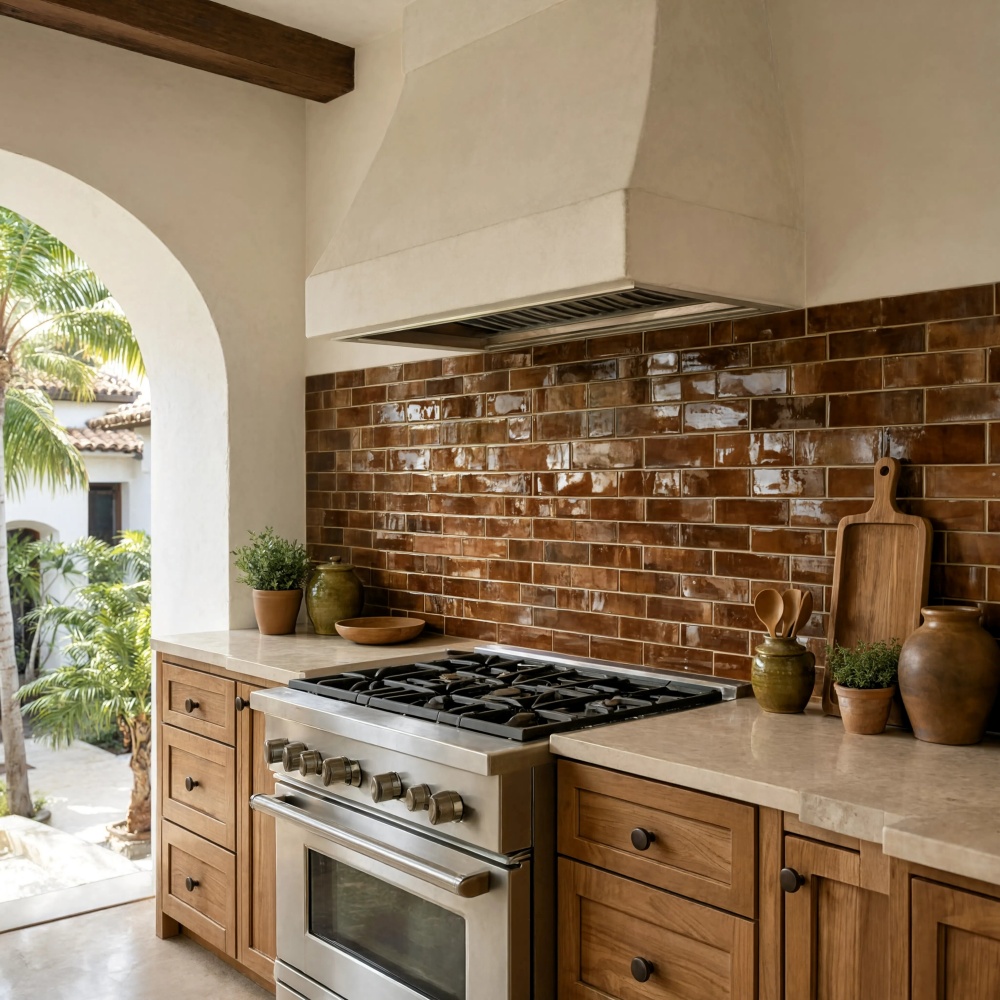
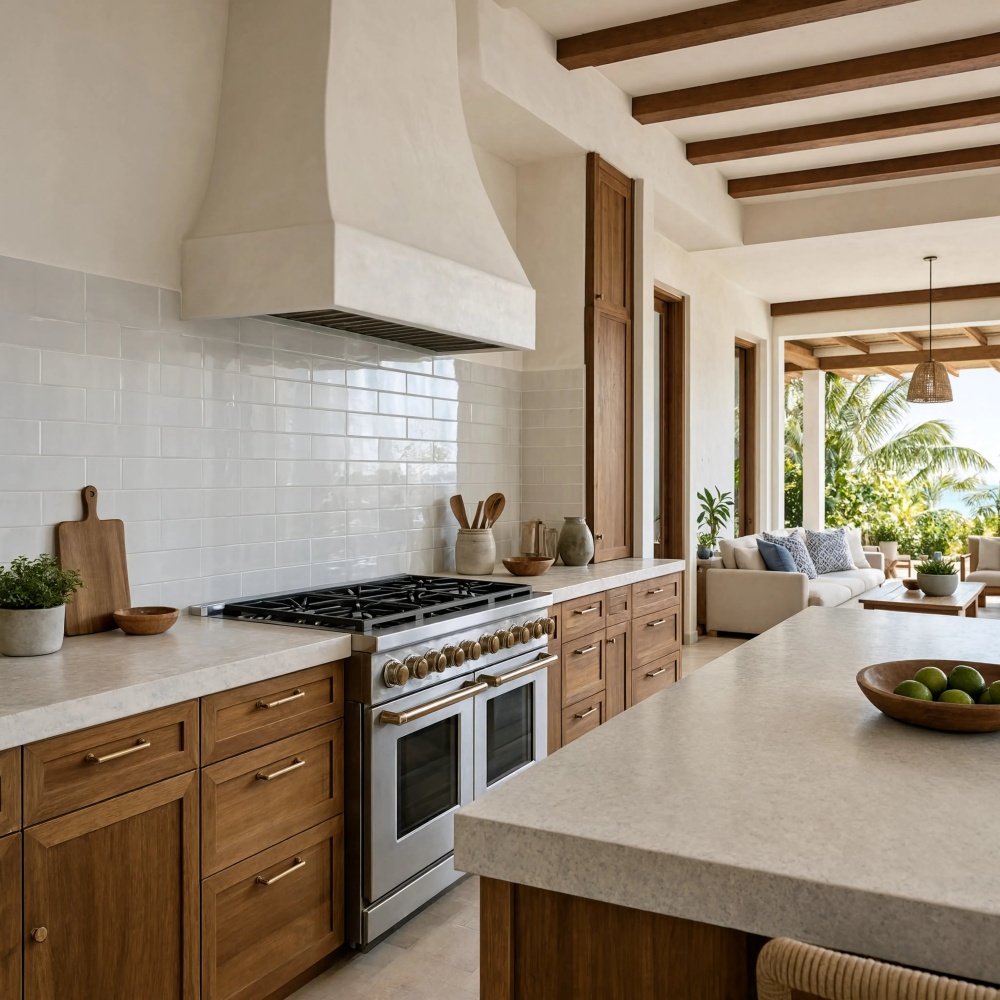
Kitchens here tend to open straight onto living spaces or terraces, so the tile has two jobs at once: handling daily heat and traffic, while still reading as part of the home’s overall design. I typically recommend a durable, low maintenance floor, porcelain or honed natural stone, paired with a more expressive backsplash where pattern and color can shine. A hand painted or patterned backsplash becomes the room’s visual anchor, the kind of detail that makes a kitchen feel considered rather than assembled off a floor plan.
4. Tile Trends for Coastal Design
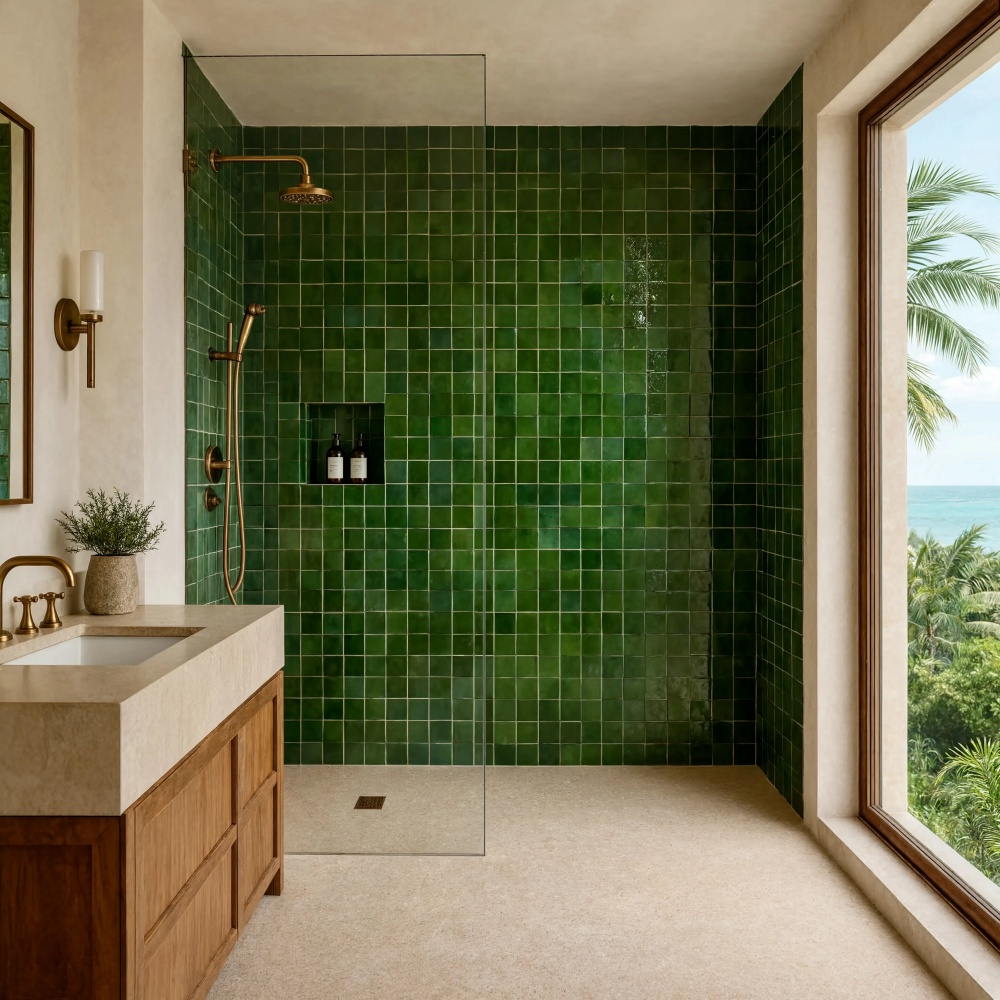
Bathrooms are where clients get the most adventurous, and they should. This room doesn’t need to compromise for foot traffic the way a kitchen does, so it’s a natural place for a bolder choice. Zellige tile coastal bathroom pairings remain some of the most requested designs I work on right now, the handmade texture and slight color variation give even a small room real depth. For showers, I steer clients toward tile with proper slip resistance and a glaze built for constant moisture, paired with a practical, textured floor. A puerto rico bathroom built this way ages far better than an all glossy, all uniform approach.
5. Outdoor Living and Pool Deck Inspiration
Given how much life happens outdoors here, outdoor tile for Puerto Rico patios carries as much weight as anything inside the house. I generally recommend a textured or tumbled finish, something with grip that stays safe when wet, which on this island is often. Natural stone pavers hold color and character longer outdoors than most assume, provided they’re rated for exterior use and sealed against salt exposure.
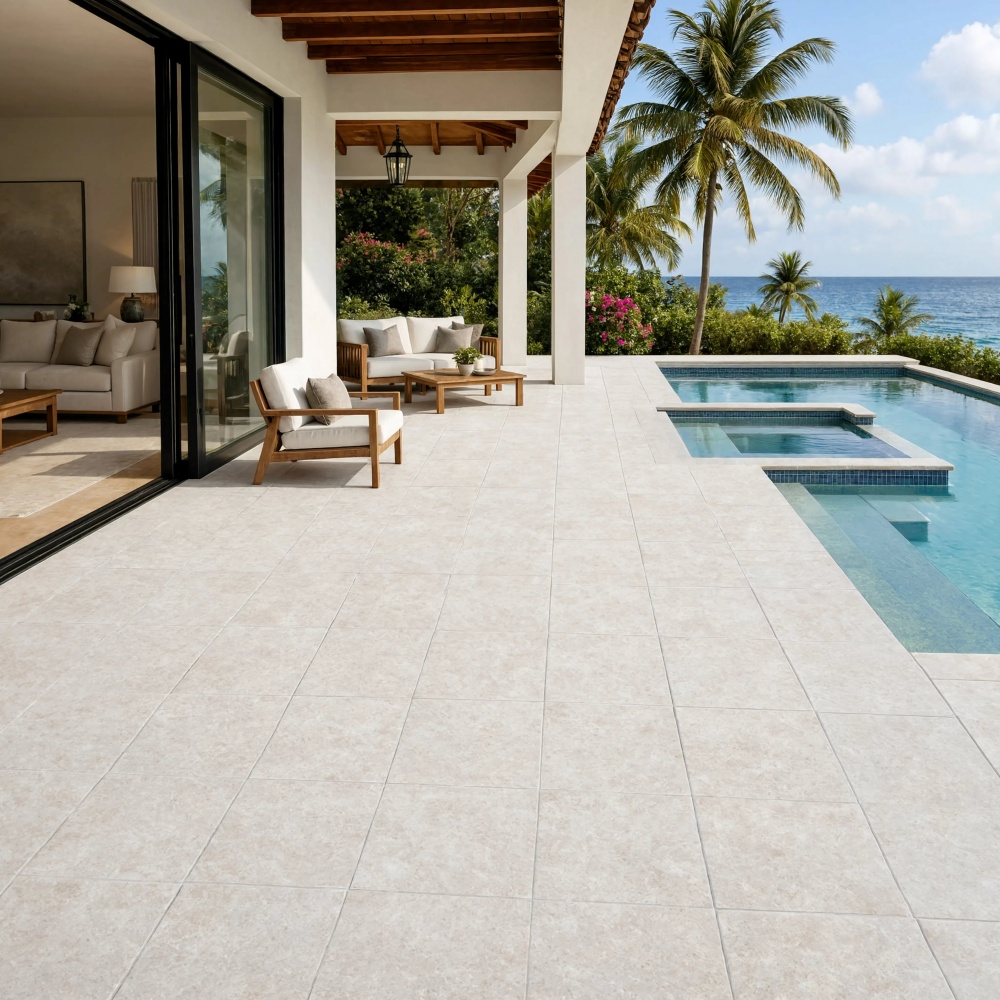
Natural stone pool deck tile needs an even more specific approach: a surface that stays cool underfoot, resists algae, and never turns slick when splashed. I’ve had great results pairing a stone pavers selection with a matching interior floor, so the transition to the SPA & Pool area feels seamless rather than like two separate decisions.
6. Open Concept Flooring That Flows Indoors to Out
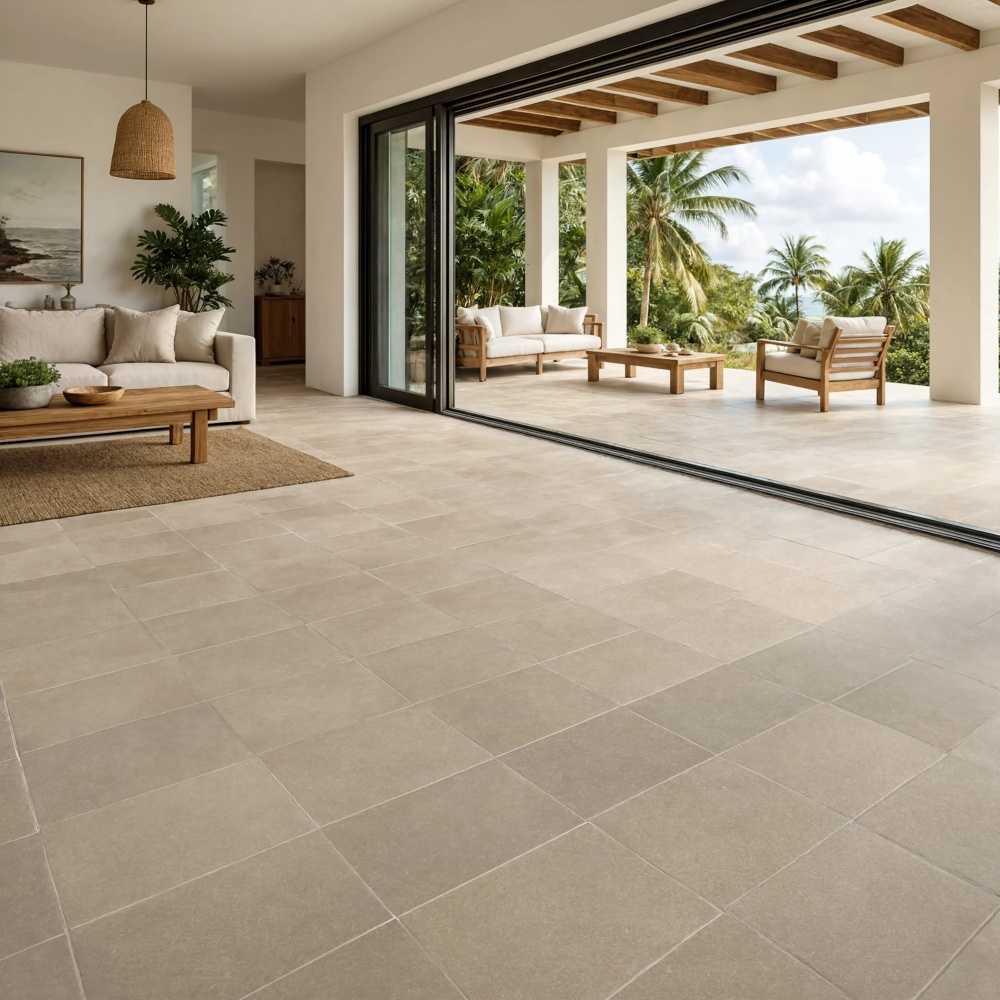
I consistently recommend that architects choose one flooring material, or a closely matched pair, that can run from the interior straight out to the terrace. It’s a detail that makes a home feel considerably larger and more intentional, and it suits the island’s indoor outdoor lifestyle perfectly. Porcelain tile has become a favorite here for exactly that reason, performing consistently whether it’s laid inside a living room or out on a covered lanai, without the upkeep that porous stones can demand outdoors. For clients chasing open concept home tile flooring ideas that actually hold up in a humid climate, this is usually where I point them.
Bring These Ideas Home
Puerto Rico tile designs work best when they honor where they are, the light, the humidity, the architectural history that shaped this island’s homes. Whether you’re a homeowner planning a renovation, a contractor sourcing for your next project, or an architect specifying finishes for a client, getting the material right from the start saves everyone time and money later. Visit our San Juan showroom and let’s find the right tile or natural stone for your project in person, there’s nothing quite like seeing the color, texture, and finish up close before you commit.