5121–5140 of 5414 results
The bathroom is where material decisions become permanent, because you can't just choose any random material or tile finish for a wet zone. Steam, standing water, daily thermal cycling, no other room asks this much of a surface while asking it to remain beautiful. Country Floors has specified bathroom tiles for over five decades, across small bathroom designs, renovations with heritage tiles, bespoke wet rooms, and period correct renovation projects. All of our residential and commercial tile project experience shapes a simple conviction: the right tile for a bathroom isn't just the one you're drawn to. It's the one that performs in the right way. And aesthetics are not the only decision factor that you should seek while choosing bathroom tiles.
A shower floor tile and a vanity backsplash share nothing except the room they occupy. One endures standing water, bare feet, and daily temperature swings. The other handles the occasional splash. Treating them as the same specification is where most bathroom tile projects go quietly wrong. From our hands on experience about bathroom renovations, sometimes our clients may not know the important differences between materials and how to choose the right finish according to the zone's needs.
| Zone | Finish | Performers | Avoid |
|---|---|---|---|
| Shower Floor | Matte / Honed | Marble mosaics, porcelain tiles | Polished marble |
| Shower Wall | Glazed / Honed | Glazed ceramic, marble, zellige tiles | Unglazed terracotta |
| Bathroom Floor | Honed / Textured | Marble, natural stone tiles, porcelain tiles | High gloss finishes |
| Vanity Splash | Glazed / Polished | Ceramic, marble, mosaic tiles | Porous stone |
| Feature Wall | Any Finish | Zellige, hand painted ceramic tiles | No restriction |
Here's an insider designer trick to use in your bathroom renovation: running the same bathroom tile continuously from the floor into the shower, with aligned grout joints, removes the visual break that makes a small bathroom design read as two separate spaces. The eye follows the unbroken line.
Architects frequently specify our marble bathroom tiles for flooring, but it's important to know that finish is not a cosmetic choice here; it's a safety decision. Polished marble on a wet floor is a slippery option, and it's not recommended to use it compared to honed marble or textured options. Steam showers introduce a separate consideration that rarely gets discussed at the point of sale. Marble and limestone are crystalline materials; repeated thermal cycling stresses their internal structure over time.
Don't forget that marble tiles are a beautiful choice for a steam shower, especially when aesthetics are your priority, but thermal shock is real. It expands and contracts with every cycle of heat and cold, and over time, that movement shows. If you're specifying a steam enclosure, confirm that both the stone and the setting materials beneath it are appropriate before any installation begins.
Most of our interior designer clients go for ceramics in the context of easy maintenance and, of course, aesthetics. A properly vitrified glaze is waterproof at the surface. What hand painted ceramic tiles bring to your design is beyond technical reliability, and historical accuracy, and for Victorian, Edwardian, or Art Deco bathroom restorations, that distinction matters enormously.
Our Delft, Miradouro, and other ceramic tile collections sit precisely in the gap between period correct aesthetics and specification grade performance. Architects working on landmarked properties source these collections because a comparable alternative, at this level of historical fidelity, simply doesn't exist elsewhere in the North American market commonly.
Ceramic backsplashes are one of the most common usages in bathroom designs. However, using glossy and glazed ceramic tiles as your bathroom flooring may cause slipping issues. So, you need to be really careful about using ceramic bathroom floor tiles.
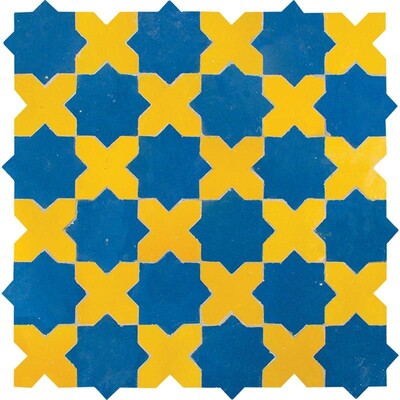
One of the most asked and required trends for bathroom is zellige tiles. Glazed zellige on a shower wall performs well and looks authentic in any kind of house aesthetics. The glaze does its job to protect; the surface variation does the rest. However, just like glazed ceramics, the surface variation may cause sensory difficulties, and the glazed surface of zellige tiles can cause slipping accidents in bathroom flooring usage.
Unglazed terracotta in a shower floor may not be a good option, even though it looks great aesthetically. The absorption rate is too high for continuous water exposure, and no sealing schedule compensates for this over the long term. Outside the shower, sealed terracotta on a bathroom floor is a different conversation, one worth having, because terracotta tiles are one of the warmest and most authentic designs you can get, especially if you're aiming to get a Mediterranean bathroom design.
Filled travertine, honed finish, that's the specification for a wet environment. Unfilled travertine tiles trap moisture in their natural voids, which leads to sealing failures and eventual cracking. The distinction is worth confirming before ordering.
Sealing is a real conversation you absolutely should not avoid in any scenario: shower floor stone requires attention twice a year, wall stone once. That's not a burden if you go in knowing it. It becomes one if nobody mentions it at the point of sale.
In our experience with most of our bathroom renovation projects, grout has always been a debatable issue. Grout is the component of a bathroom that fails most often and most visibly, and the last decision most people make.
In a shower, cementitious grout requires sealing every one to two years. Epoxy grout needs almost none, and resists moisture at a significantly higher level, but it demands skilled installation. The tile format you choose also determines how much grout surface your bathroom will carry: mosaic tiles have far more grout per square foot than large format tiles, which means more maintenance, but also more mechanical grip. More grout joints equal more traction. It's why mosaic tiles are the professional's first safe option for shower floors.
In our five decades of experience, we’ve seen that a tile’s beauty in a showroom doesn't always work well in the home, and it’s usually because of two things: lighting and technical ratings. Architects don’t just look at matte finishes; they look for a DCOF (Dynamic Coefficient of Friction) rating of 0.42 or higher. If a tile doesn't hit this number, it doesn't belong on a wet bathroom floor, no matter how good it looks. We make sure these numbers are part of the conversation early on so there are no slippery surprises later.
Another insider detail is metamerism. Your bathroom design is probably with a default artificial LED light, which can turn a neutral gray marble into something that looks slightly green or yellow once installed. We always tell our clients: never finalize a selection until you’ve seen the sample under your actual bathroom lighting. It’s a small step that prevents a very expensive mistake.
If you’re planning on underfloor heating, natural stone tile is a dream because of its thermal conductivity, but it requires the right preparation phase. You need flexible adhesives to handle the expansion, or you'll see grout cracks within the first year.
What we prioritize is your safety, your aesthetic needs, and all the details we can cover for you! Country Floors' bathroom tile showroom and trade teams are available to work through material selection, zone mapping, and finish decisions before the project goes to tender. Visit us before you specify, or please call us about getting more information on made to order tiles.