
Every brownstone has a floor that greets you before anyone says hello: the few square feet between the outer door and the inner door. In Park Slope, Fort Greene and the townhouse blocks of the Upper West Side, that floor is often more than a century old.
It is laid in encaustic tile or small marble mosaic, and by now it usually has a crack, a gap, or a patch someone once filled with grout. I have spent 30 years guiding homeowners, architects and contractors through brownstone vestibule tile repair. The good news is that most of these floors can be saved.
Why Brownstone Vestibule Floors Crack in New York
A vestibule works harder than any room in the house. It takes wet boots, sidewalk grit and the rock salt tracked in from December to March. Because it sits right behind the outer door, it also feels the coldest air in the building.
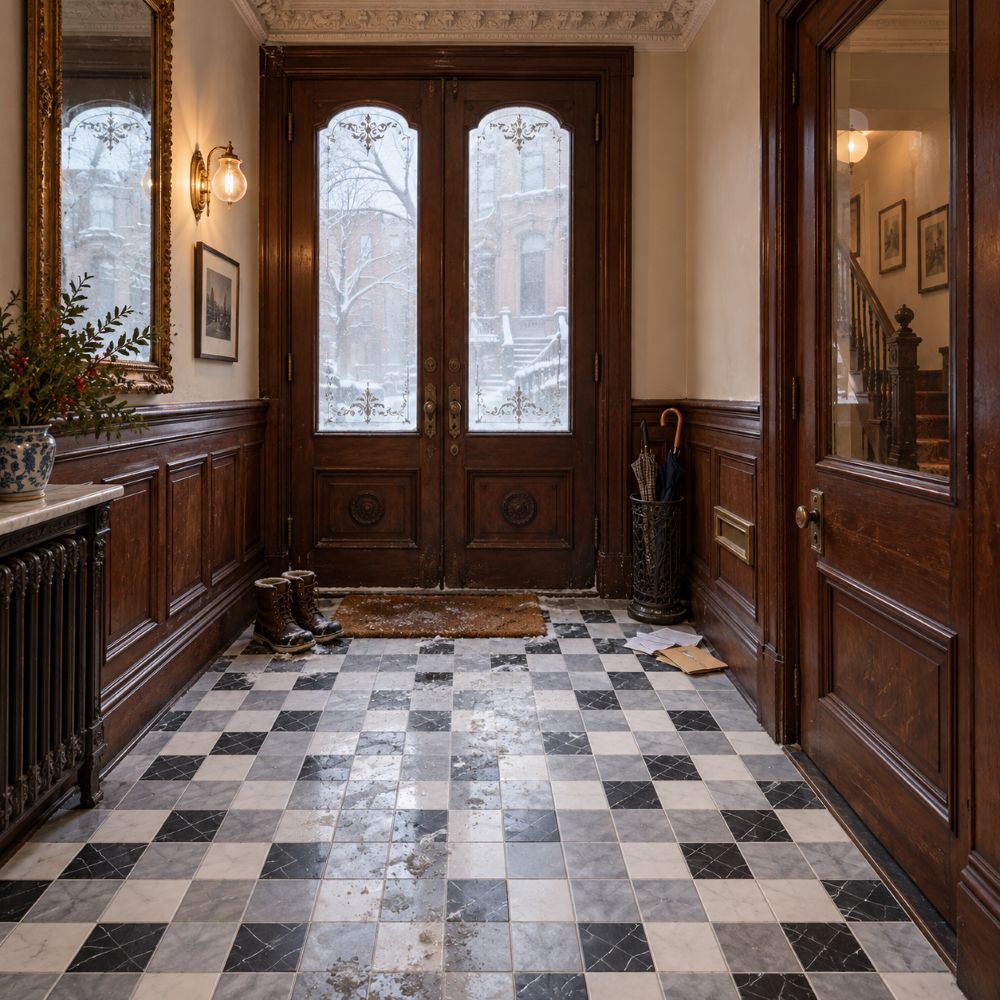
Over decades, that constant swing loosens the old mortar bed beneath the tile. Clients usually assume a cracked tile means the tile failed. In reality the tile is often fine; it is the bed underneath that has shifted or let go.
Step 1: Assess the Damage to Your Vestibule Floor
Before anyone orders a single piece, tap the floor gently with the handle of a screwdriver. A hollow sound tells you a tile has come loose from its bed. Loose tiles are the easiest repair, because they can be lifted, cleaned and reset.
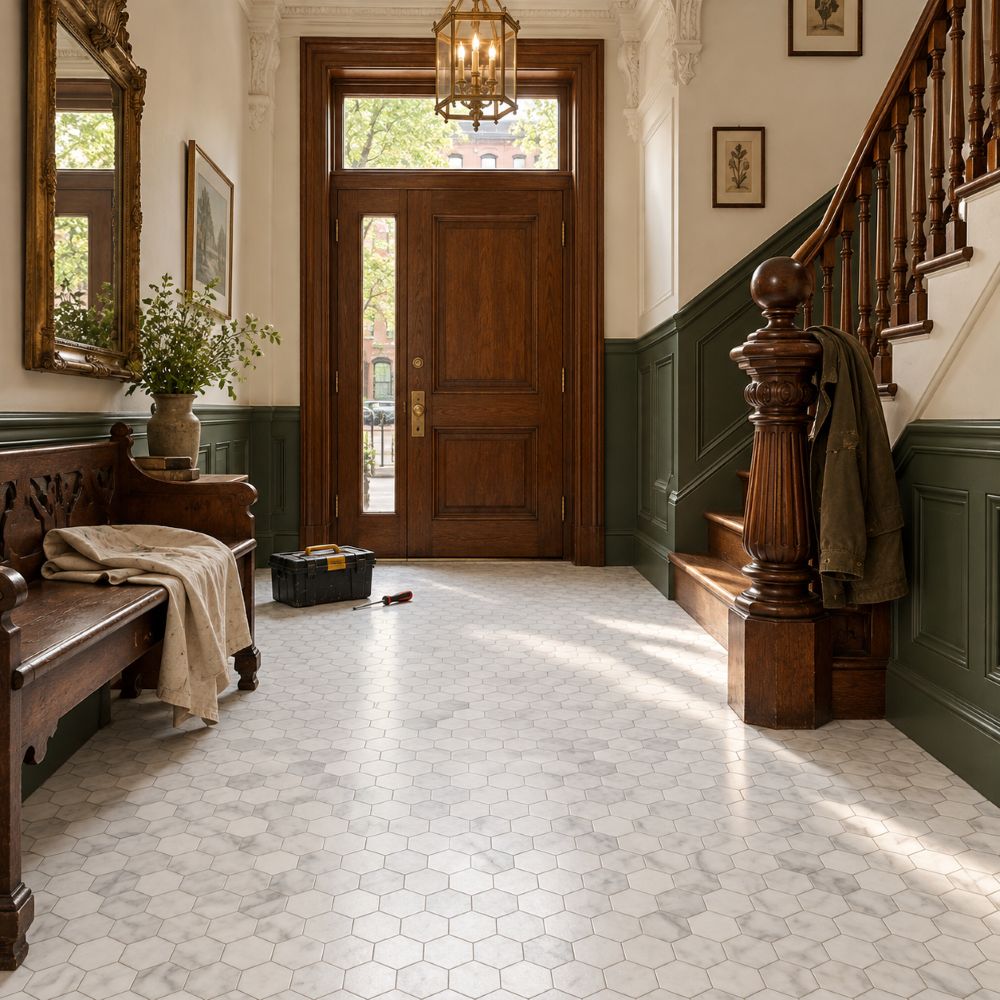
Hairline cracks running across several tiles in a line point to movement below, and a contractor should check that before any surface work begins. Photograph everything, including the edges under the door saddles. The most common mistake we see is starting at the visible hole while the real problem sits two feet away.
Step 2: Identify Your Original Brownstone Vestibule Tile
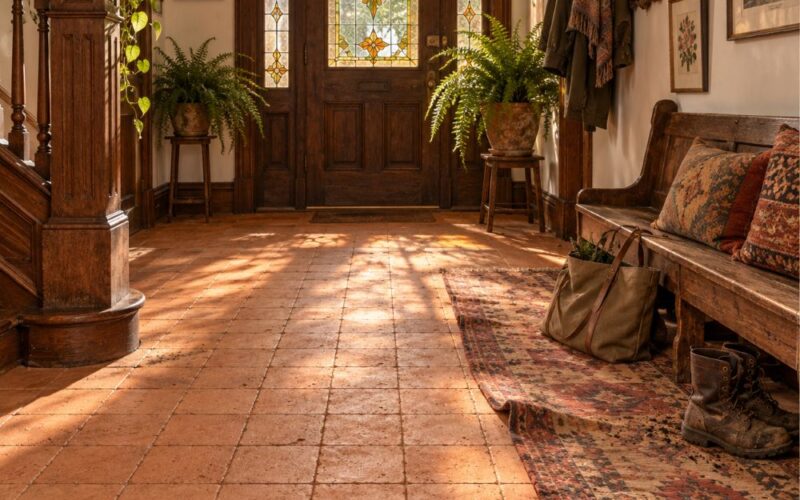
Many vestibules from the late 1800s were laid in encaustic tile. In encaustic tile the pattern is made of colored clay set into the body of the tile, not a glaze painted on top. Much of it came from American makers such as the American Encaustic Tiling Company of Zanesville, Ohio.
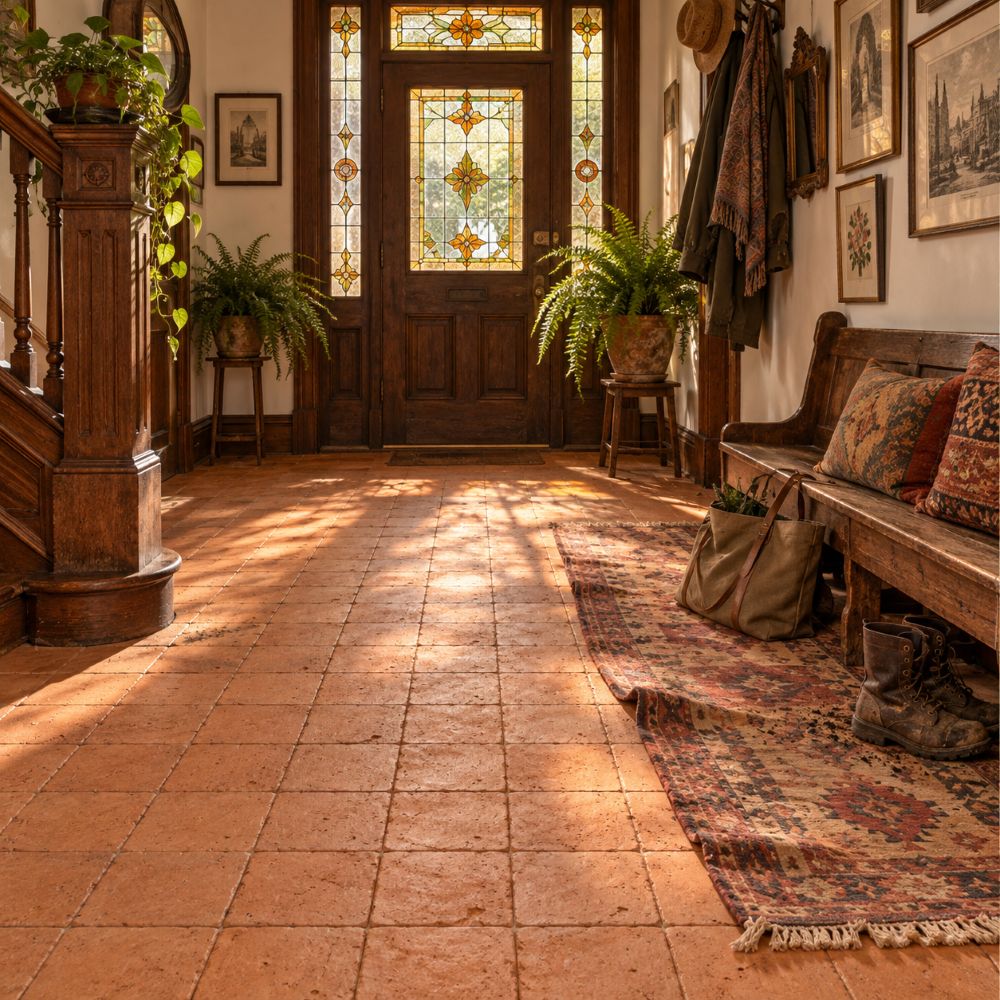
Later houses tend to have small unglazed hexagons, two tone marble tile inlay, or mosaic tiles in a border and field layout. Some 1910s and 1920s homes have plain squares that read much like natural terracotta tile. Knowing which you have matters, because each type ages, stains and repairs differently.
Step 3: Salvage Original Tiles Before You Buy New Ones
Most suppliers will hand you the closest stock tile and call it a match. We don’t, because one slightly off tile in the middle of a hundred year old pattern draws the eye more than the crack ever did. Instead, look for originals you can borrow.
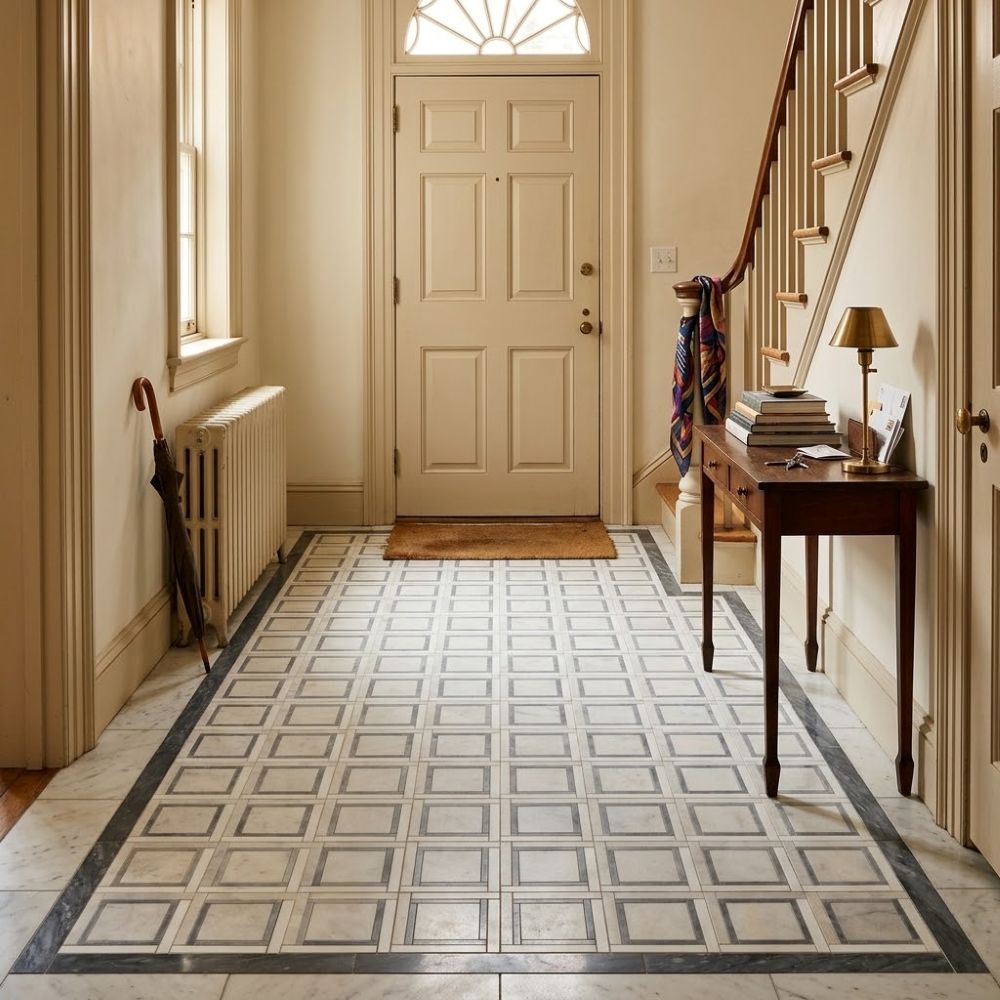
The strip under the inner door saddle, behind a radiator or beneath a built in mat well often holds perfectly sound pieces. Move those to the center, where people look, and place new tile at the edges, where small differences disappear.
Step 4: Match Missing Vestibule Tiles by Size, Thickness and Color
Color is the last thing we check, not the first. A replacement has to match size, thickness and edge profile, because old vestibule tile was often set with joints so tight they are barely visible.

For lost borders, our mosaic customization service can recolor patterns in natural stone, usually within four to six weeks. If the original is beyond saving, a marble checkerboard in honed floor tiles suits the period and stays safer underfoot in wet weather.
Step 5: Reset, Seal and Protect the Floor for NYC Winters
Once the tiles are set, sealing is what keeps them looking right. Encaustic and unglazed tile are porous, and salty slush left sitting on the floor will soak into tile and grout. Ask your installer for a penetrating sealer made for that specific tile, and reapply on the schedule its maker recommends.
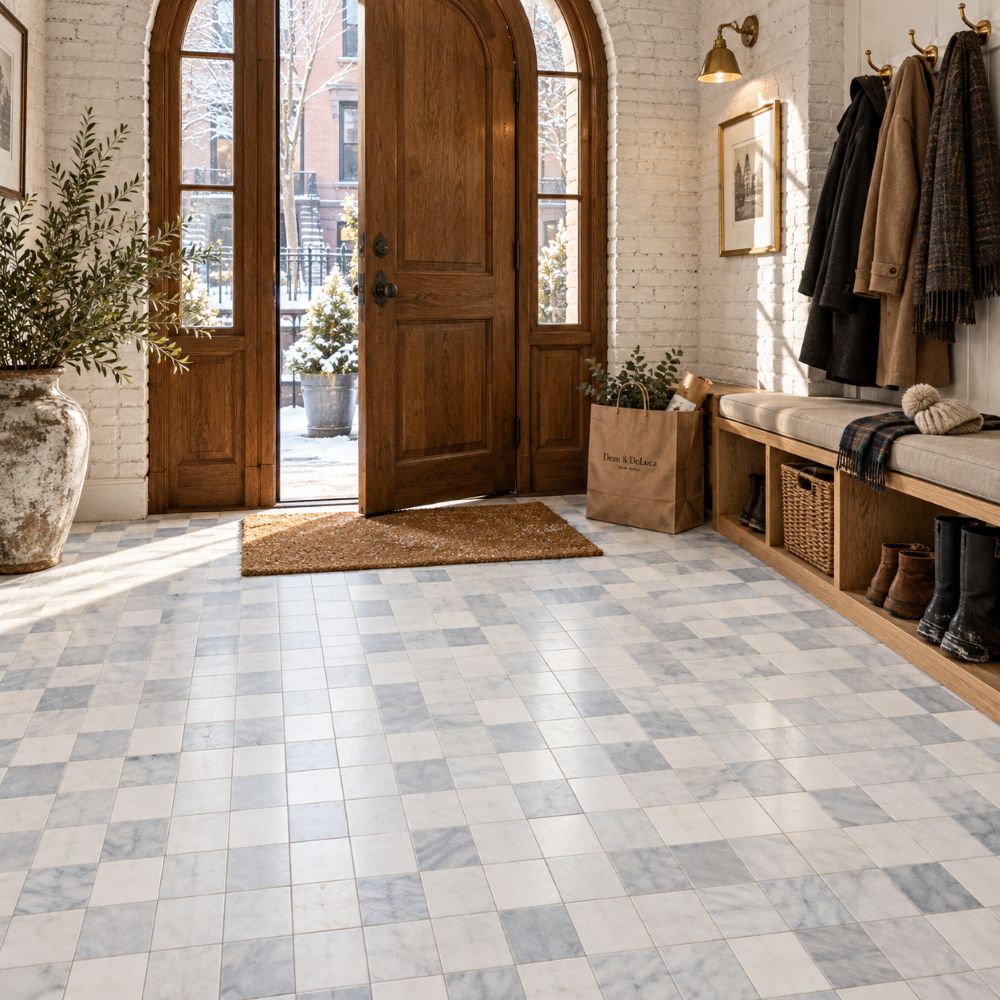
Finish the inner door with a matching stone or ceramic trim piece so the edge doesn’t chip. Clients often think sealer makes a floor maintenance free; in reality it only buys you time to wipe up what comes in. A good mat outside the outer door does more than any sealer.
Landmarks, Co-ops and Who Signs Off
In a historic district, the NYC Landmarks Preservation Commission generally reviews interior work only when a Department of Buildings permit is required, so a tile repair alone rarely triggers it.
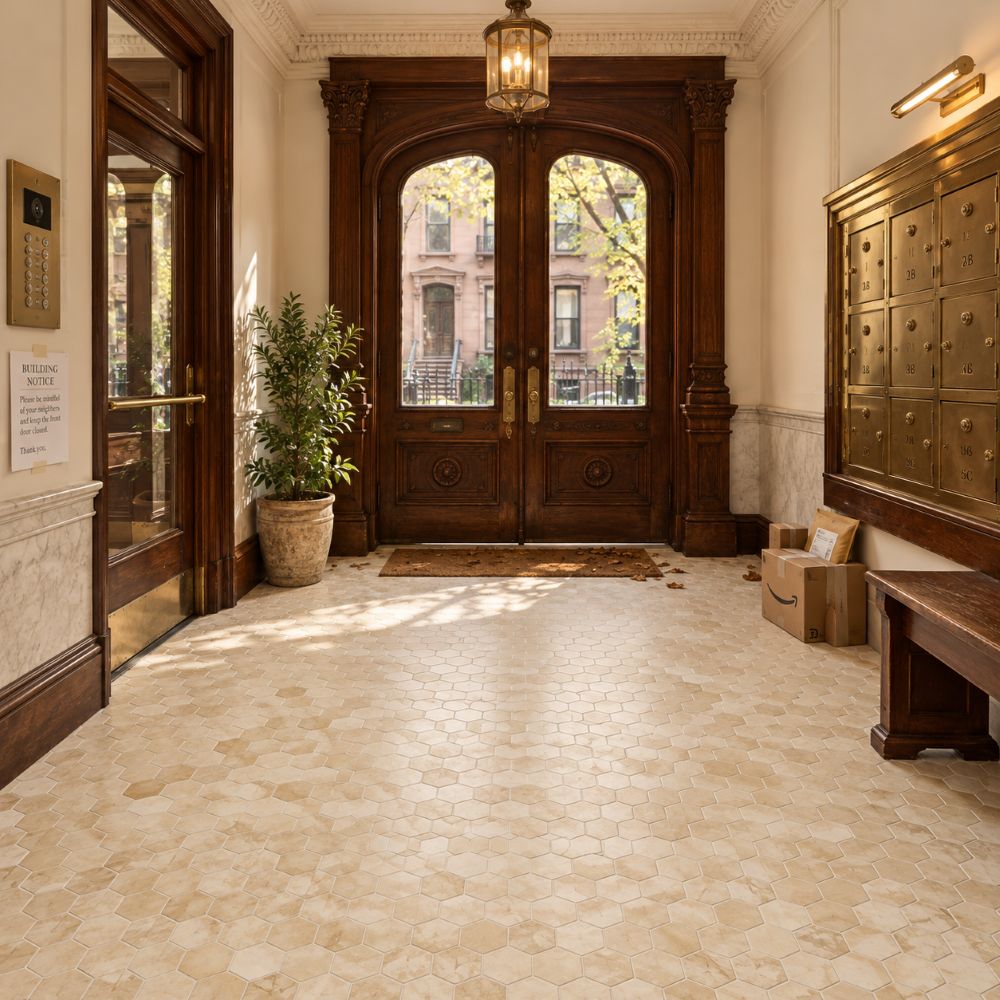
Replacing or moving the outer door is a different matter, because it changes the façade. In a brownstone co-op, the vestibule is shared space, and the board will want to approve the scope. Confirm with LPC and your board before any work starts.
Brownstone Vestibule Tile Repair FAQ
Q: Can I repair cracked vestibule tiles myself?
A: Resetting a single loose tile is a manageable DIY job, but cracks running across several tiles, hollow sounding areas or tight historic joints are best left to an experienced tile restoration contractor.
Q: How long does it take to repair a brownstone vestibule floor?
A: Resetting and sealing existing tiles often takes just a few days, while custom matched mosaics usually need four to six weeks of production before installation can begin.
Bring Your Vestibule Tile to Our Tile Store in NYC
The best repairs start with one loose tile and a few photos. Bring both to our tile store NYC designers and contractors have relied on since 1964, at 15 East 16th Street, for a free design consultation.

We will compare thickness, edge and color in person, and show you how handpainted tiles can carry the same heritage onto a wainscot above. Restoring the rest of the house too? Our guide to garden level kitchen design picks up where the vestibule ends.