A garden level kitchen is one of the best rooms in a New York brownstone, and one of the hardest to get right. It sits half a flight below the sidewalk, it opens onto the backyard, and it gets far less daylight than the parlor floor above it. Good garden level kitchen design starts with that fact. You can’t easily add windows, so your surfaces have to do the work. Here’s how we approach brownstone kitchen tile and stone when light is the real problem.
1. Why a Brownstone Garden Level Kitchen Feels Dark
The lowest floor of a brownstone was built as a working level, and daylight has to travel farther to reach it. Clients usually assume the fix is more recessed lighting. In practice, extra fixtures make the room brighter but also flatter and colder. What actually changes the feeling of the space is surfaces that catch the light you already have and move it around. That’s where tile earns its place.

2. A Glazed Tile Backsplash for Dark Kitchens
A glossy backsplash tile is the simplest move with the biggest payoff. The glaze throws light back into the room, so the wall behind your range stops reading as a dark rectangle. Most suppliers will point you to a perfectly flat, uniform tile.
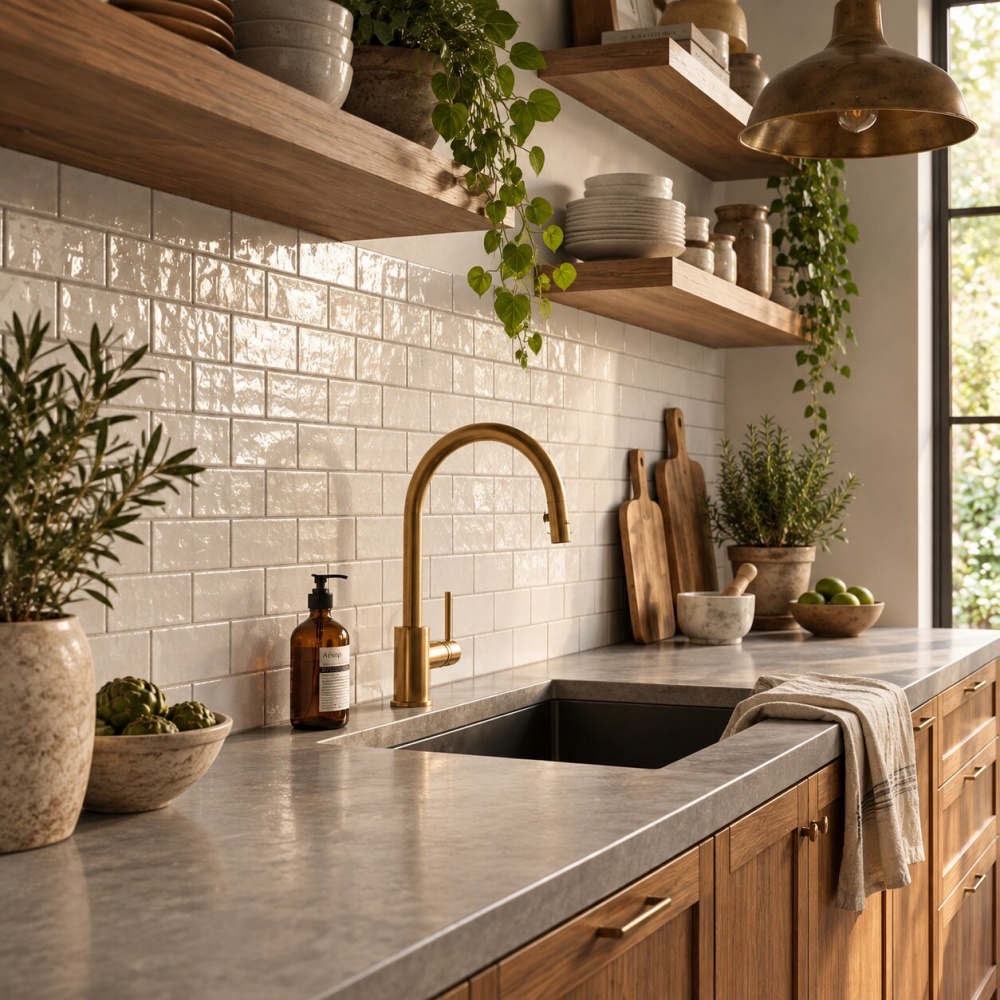
We steer clients toward glazed terracotta tile or another handmade glazed tile in the kitchen instead. A slightly uneven surface scatters light in many directions, so the wall feels warm rather than clinical.
3. Zellige Backsplash for Low Light
If you want the most glow per square foot, a zellige backsplash for low light is hard to beat. Each piece of Moroccan zellige tile is shaped and glazed by hand, so no two surfaces sit at the same angle. That’s exactly why it works downstairs: even a gray afternoon leaves a shimmer across the wall.

We usually suggest pale, solid and tonal colors here. Deep greens are beautiful, but in a room this dim they absorb more light than they return.
4. When a White Marble Backsplash Makes Sense
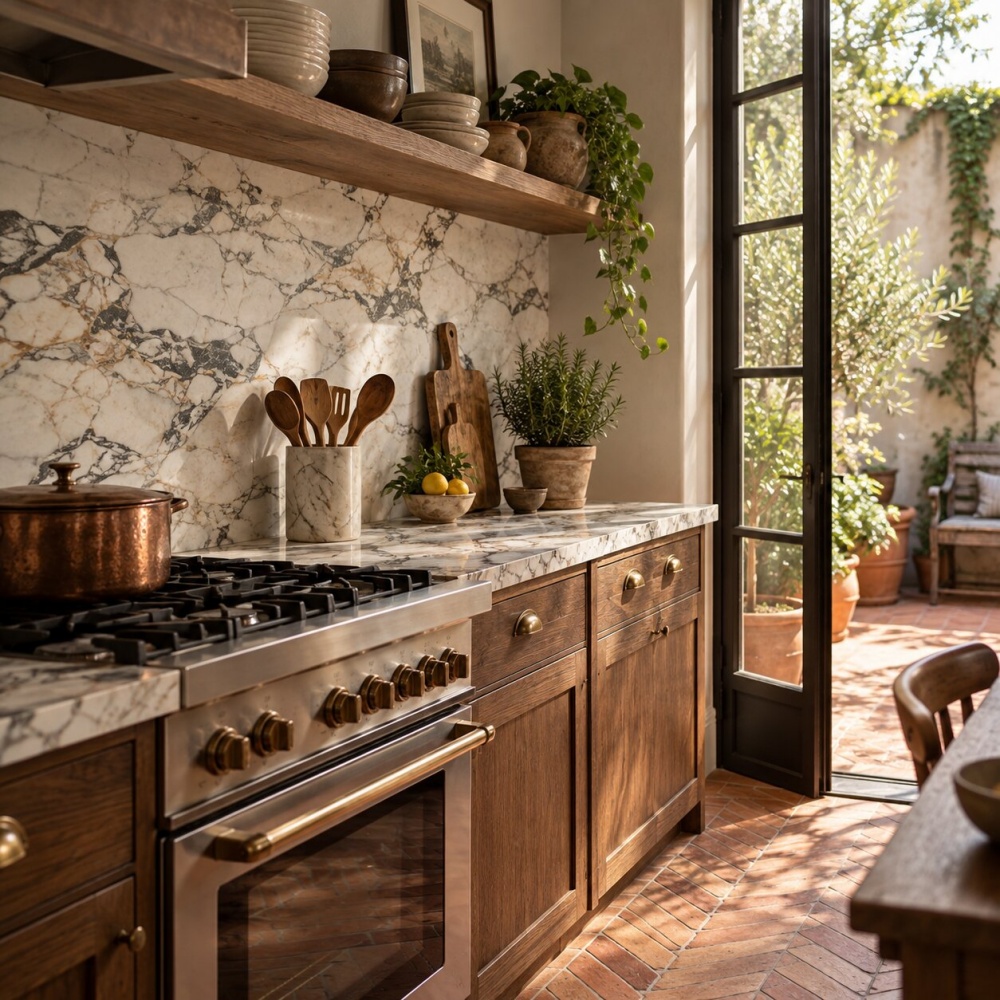
A white marble backsplash in a small kitchen can be stunning, especially polished marble that picks up light from your garden doors. But marble is softer than most people expect. Homeowners often think sealing protects it from everything.

In reality, a sealer slows stains but won’t stop lemon juice or wine from etching the surface. If you cook often, a full height natural stone slab with fewer seams is easier to keep clean.
5. Terracotta Kitchen Floor or Honed Limestone?
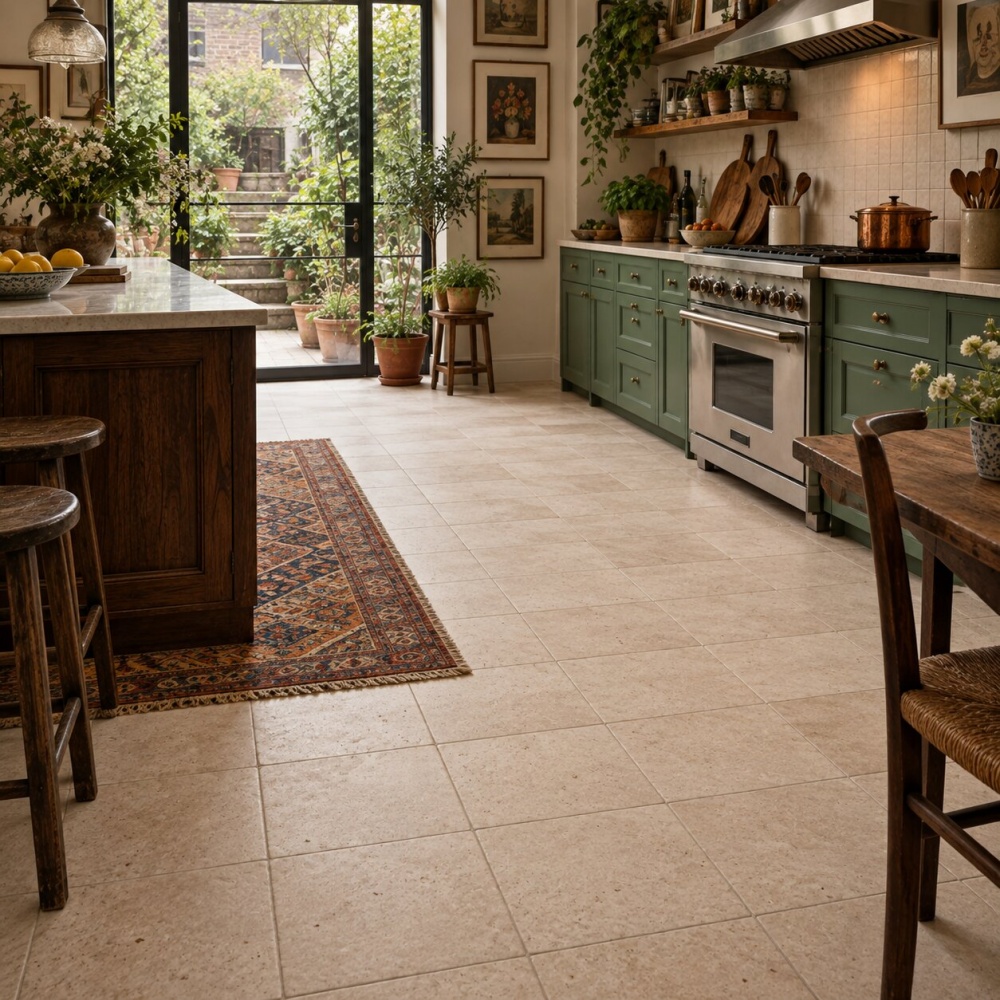
Your floor sets the mood for the whole level. A natural terracotta kitchen floor brings the warmth a dim room needs, and it only looks better with age.
A honed limestone kitchen floor is the quieter choice: its pale tone bounces light upward, and the matte finish hides footprints well. Both need proper sealing. Our rule is simple: keep the gloss on the walls and choose floor tiles with a matte finish underfoot.

6. Kitchen to Garden Flooring That Holds Up
Many garden level kitchens open straight onto the backyard, so it’s tempting to run one floor from the stove to the patio. Not every indoor tile belongs outside, though. New York winters freeze and thaw the ground again and again, and tile that isn’t rated for it will crack.
Most suppliers sell one product for both spaces. We match the look instead: stone or terracotta inside, paired with frost rated outdoor pavers in the same color family outside.
7. Heritage Details for a Brownstone Basement Kitchen
The best brownstone kitchen ideas often live in the details. A band of hand painted tiles inspired by Dutch Delft behind the sink, a small mosaic tile inset by the garden door, or a crisp run of subway tiles inside a pantry nook can tie the kitchen to the history of the house.
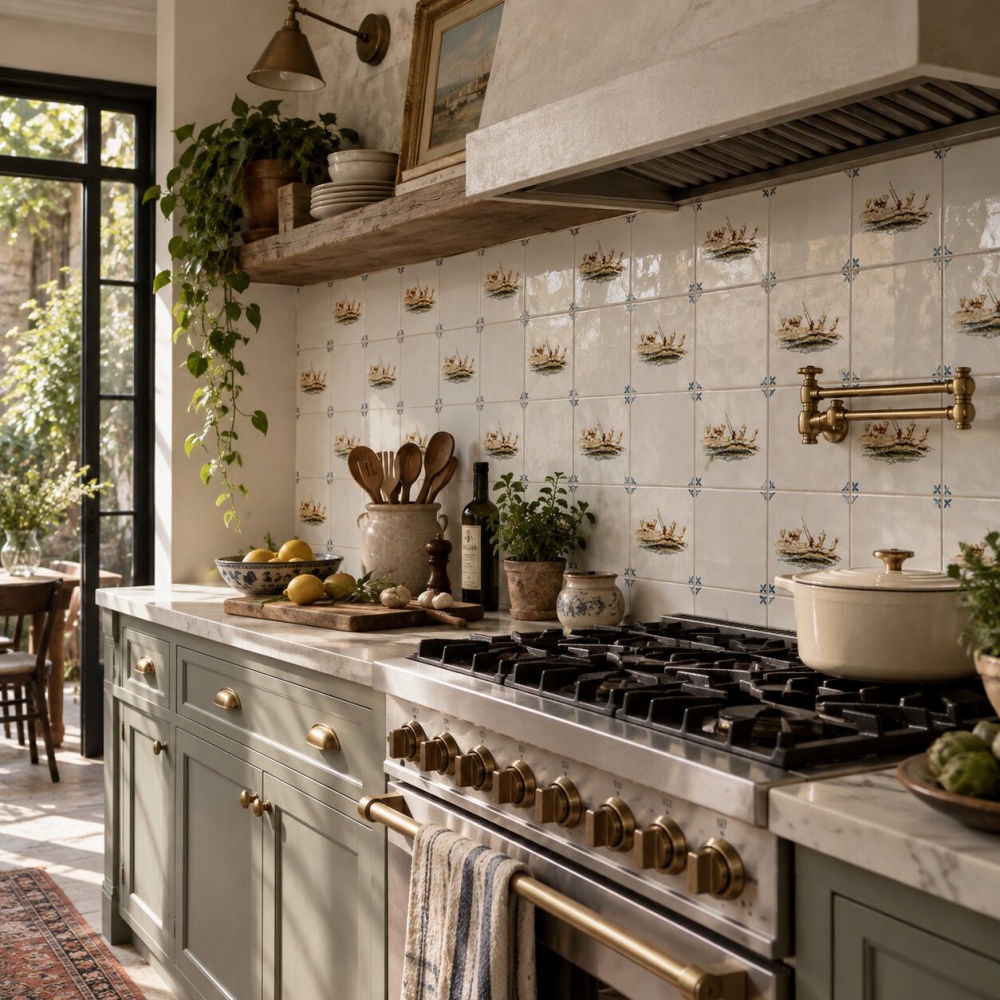
Keep these garden level kitchen ideas to one or two spots. In low light, too many patterns compete, and the room starts to feel smaller.
See It in the Light Your Kitchen Will Have
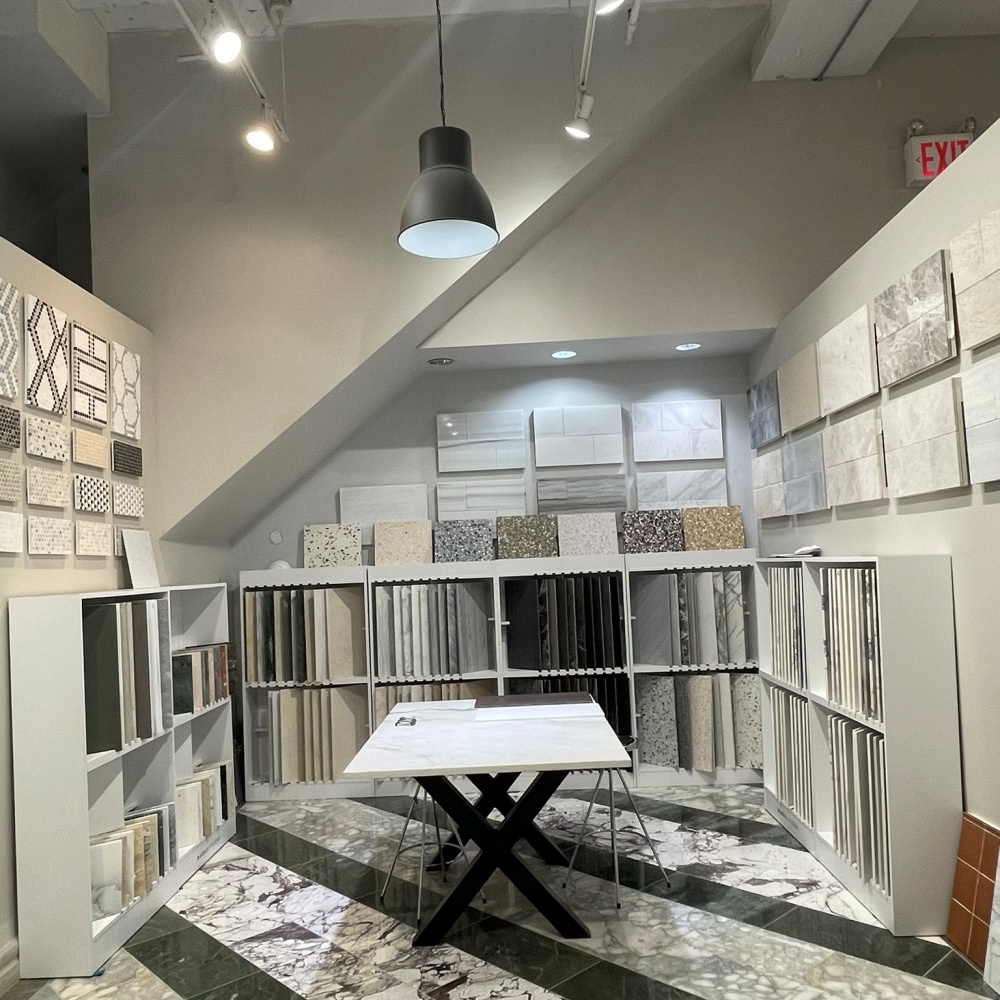
A photo can’t show you how a glaze behaves in a room that gets two hours of direct sun. That’s why we invite homeowners, designers, architects, and contractors to bring their plans to us. Visit our New York tile showroom on East 16th Street, hold samples near a window, and compare glazes, stone finishes, and pavers side by side.