all 5 results
Mother of pearl tiles are durable for interior wall tile use, backsplashes, and light foot traffic areas. While they aren't meant for heavy wear like porcelain or stone, they hold up well when installed properly. Their natural structure is harder than it looks and resists everyday humidity and temperature changes. They're especially suited for bathrooms and kitchens where moisture is present. To sum up, they are durable, but you need to take care of them, like a treasure.
Not under normal use. Mother of pearl tile doesn’t crack easily when installed over a stable, level surface with the right adhesive. However, it’s a natural shell material, so it can chip if dropped or struck during installation. A careful hand and the correct tools make all the difference. Your tile experts will be careful about it, but if it is a DIY project, ask an expert.
It’s more scratch-resistant than it looks, but not indestructible. Use soft cloths and non-abrasive cleaners to keep your mother of pearl tile looking sharp. Avoid metal scrubbers or gritty powders, especially on high-gloss finishes. In general, it’s great for vertical surfaces where contact is minimal.
Genuine mother of pearl tile has an organic shimmer that can’t be faked, look for subtle color shifts, uneven reflections, and slight natural imperfections. Run your fingers across the surface; real shell has a slightly cool, layered feel. Synthetic versions often look too perfect or too plasticky. If you're unsure, visit our mosaic tile showroom near you and compare side-by-side. And don't forget, you can't imitate an ocean magic.
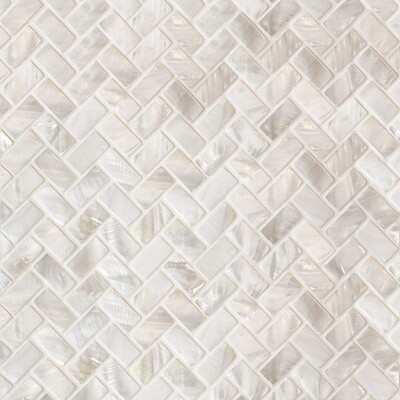
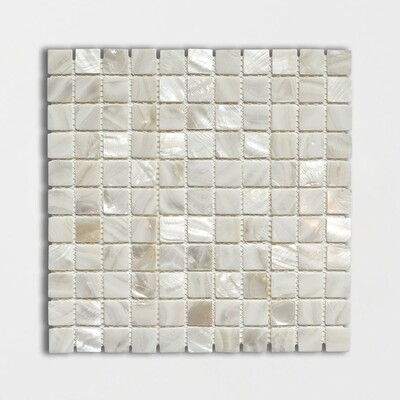
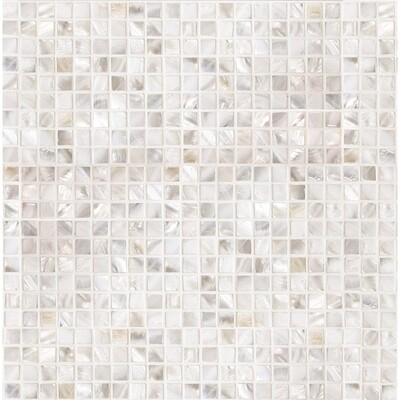
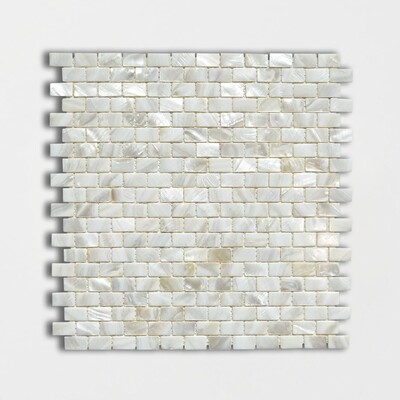
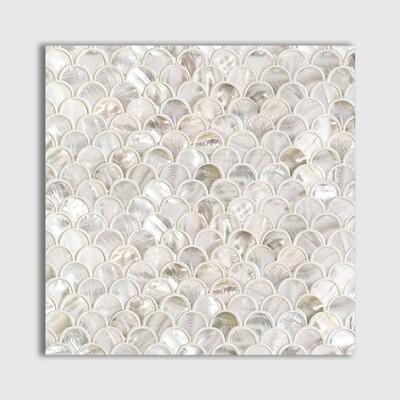
The sun beams are on their way to your backsplashes, and there’s nothing artificial about the shimmer of mother of pearl tile. It comes straight from the ocean. Specifically, the inner lining of mollusk shells, where light meets nacre and something magical happens. When cut and laid into tile, it doesn’t just reflect light. It bends it. Shifts it. Softens it. This isn’t surface-level beauty; it’s depth, hidden in plain sight. The iridescent tile texture will be your new favorite, both your favorite backsplash and lighting.
Iridescent tile is tile that plays with light. Unlike glass or ceramic tiles, it doesn’t just sit still under a spotlight; it moves. It gleams differently from every angle. Mother of pearl mosaic tile is one of the oldest natural examples of this effect. These aren’t just mosaic tiles; they’re shell-slices with attitude, laid in pattern to catch your eye when you least expect it. These are the light dances you can see all hours along, the shifts between pastel tones of nature.
The term mother of pearl refers to the nacre layer found inside shells, the same natural material that forms real pearls. It’s not something made. It’s not replicated. When used in tiles, it becomes part mirror, part mineral, hence the other name you’ll sometimes hear: iridescent shell. The name fits because no other material looks or behaves like this.
Mother of Pearl Tile Backsplash
You don’t need much to make an impact. A mother of pearl tile backsplash behind a stove or sink isn’t loud; it’s an elegant show-off. It reflects its magic from under-cabinet lights, and it lifts even the simplest kitchen layout into something more curated.
Use it behind a mirror as a bathroom backsplash, inside a shower niche, or as an all-over mother of pearl tile bathroom wall. These tiles don’t overpower. They glow with a naive attitude.
Want an ocean feel without faux wood or faux stone? Try mother of pearl shower tile. Water enhances the shimmer. Steam deepens the tone. And you get a space that doesn’t just feel clean, it feels rare. Feel like one of the mermaids that are singing.
Yes, you can walk on it. Select mother of pearl floor tile styles are rated for light foot traffic and used in powder rooms, master baths, and inlaid foyer borders. It’s not a workhorse, it’s a punctuation mark.
Beyond backsplashes, mother of pearl kitchen tile makes stunning cabinet inlays or range hoods. Pair it with natural stone tiles or dark cabinetry for contrast that feels confident, not trendy.
Yes, and no. Mother of pearl tile is durable but prefers gentle treatment. Skip the bleach and vinegar. Use a pH-neutral cleaner and a soft cloth. These are shell fragments, not synthetic slabs. Treat them like what they are: natural, storied, and worth a little extra attention.
Some materials don’t translate through a screen. This is one of them. Visit our mosaic tile showroom near you to run your fingers across a sheet of mother of pearl tile, hold it to the light, and see what your walls might look like when the sun hits just right.