

If you have just pulled up old vinyl in a house in Santurce or Miramar, you have probably met the losas criollas Puerto Rico grew up walking on. The first instinct is often to call a contractor and start over. Please wait a week.
I have spent 30 years helping homeowners, architects and contractors decide what to do with historic floors, and the honest answer is that most of these floors can be saved, some need careful repair, and only a few truly need replacing. Here is how to tell which one you have, and when it makes sense to visit our San Juan showroom.
1. What Are Losas Criollas? Puerto Rico’s Historic Cement Tiles
Losas criollas, also called losas hidráulicas or mosaicos hidráulicos, are encaustic cement tiles, and they are never fired in a kiln. Colored cement is poured into a metal mold and pressed hydraulically, so the pattern is a layer of pigment a few millimeters deep rather than a glaze sitting on top.

They spread across the island from the late 1800s through the first half of the twentieth century, in greens, yellows, sepias and reds over white, and fell out of fashion in the 1960s. People often confuse them with terrazzo or with the glazed wall tiles I described in our history of Old San Juan’s handpainted tiles. Look at a chipped edge: if the color runs down into the body of the tile, you have a losa.
2. Is Your Original Tile Floor Worth Saving?
Before anyone brings in a grinder, I walk the floor and tap each tile with a coin. A clear click means the tile is bonded; a hollow sound means the mortar bed underneath has let go. Hairline cracks, a dull surface and darkened grout are cosmetic.
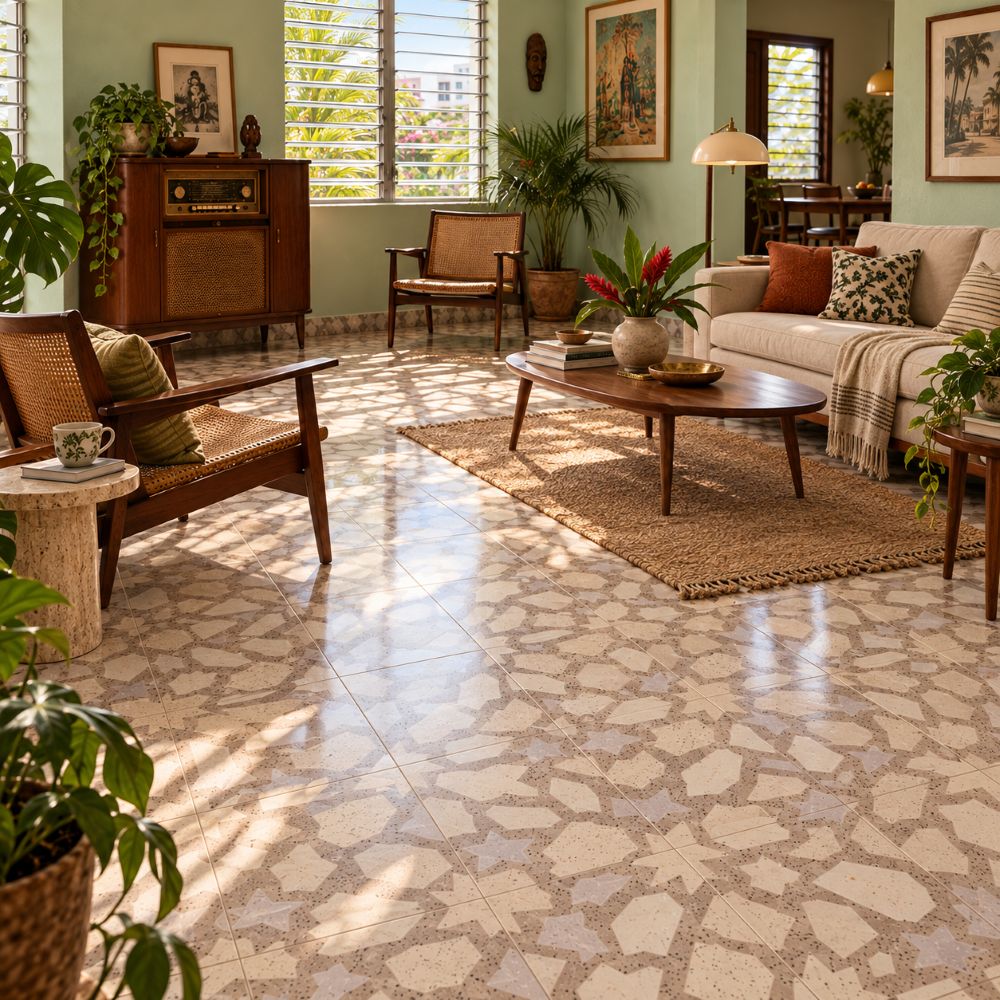
Missing corners along the main walking path and large hollow patches are structural, and they are what decide the budget. Homeowners usually assume a faded floor is worn out, but in reality what they are looking at is often fifty years of wax and soap film sitting on top of perfectly good color. In the older houses of Miramar and San Germán, the pattern is usually still there underneath.
3. Save: How to Clean Losas Criollas Without Damaging Them
Cement tile has one real enemy in the cleaning cabinet, and that is acid. Vinegar, lemon and many “natural” cleaners etch the surface and pull color out of the pigment layer. Use a pH neutral cleaner, warm water and a soft pad, and test any wax stripper in a closet corner before you go near the center of the room.

Most suppliers will sell you a polishing machine and a jug of stripper; we send people home with a test patch plan instead, because once the pigment layer is ground thin, it does not come back. If the floor needs honing, hire someone who has worked on cement tile, not only on marble.
4. Sealing Cement Tile Floors in Puerto Rico’s Humidity
In San Juan, relative humidity stays in the mid to high 70s for most of the year, and that changes how you seal. Cement tile has to be completely dry before a penetrating sealer goes down; seal it damp and you lock moisture in, which leaves a cloudy, blotchy finish that is hard to undo.

Run fans or air conditioning for a few days first, and if you can choose your timing, February and March are usually the driest stretch of the year in San Juan. On balconies facing the sea in Ocean Park or Condado, salt air and wet feet mean those tiles will need fresh sealer sooner than the ones in the sala.
5. Repair: How to Replace a Cracked Cement Tile and Match Old Patterns
No supplier stocks your grandmother’s exact pattern, and anyone who promises a perfect match from a catalog is guessing. The best replacement tiles are already in the house.
I tell clients to take tiles from under the kitchen cabinets, inside closets or behind the refrigerator, move those originals to the spots everyone sees, and fill the hidden gaps with a solid color tile in the background shade.
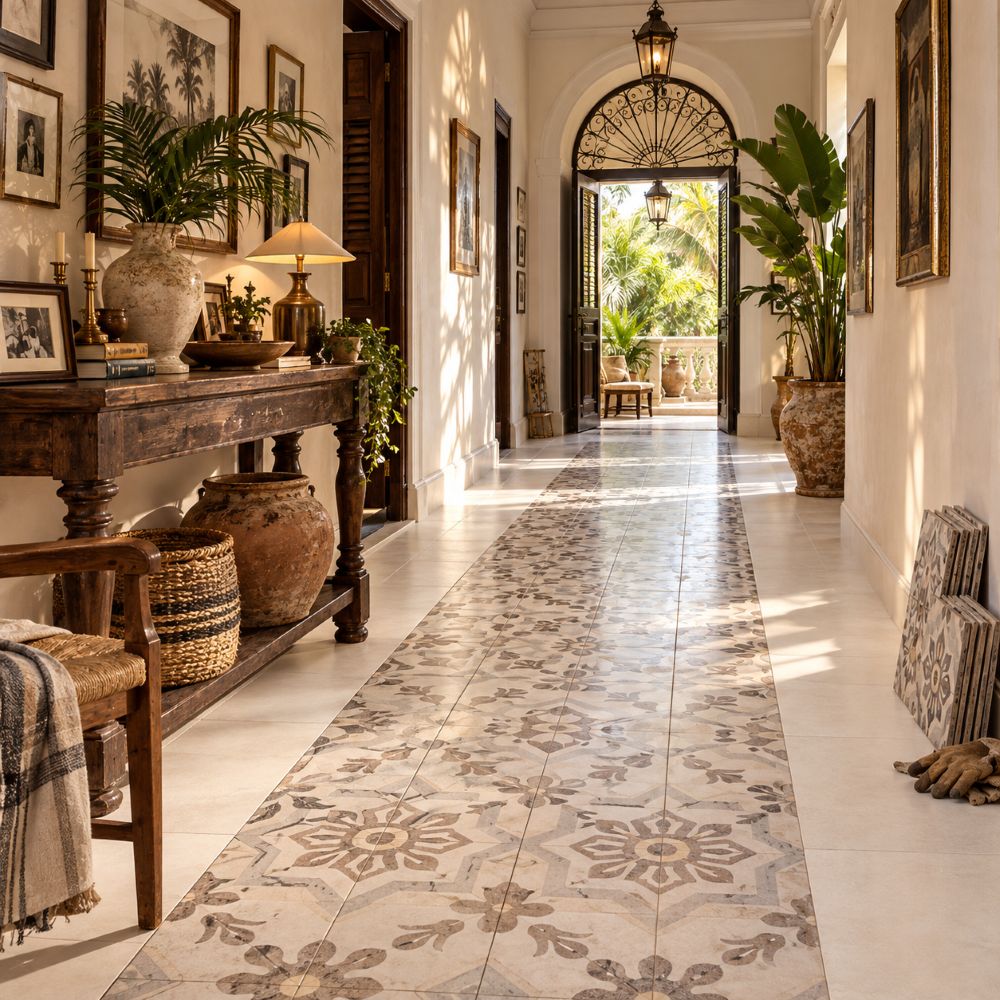
Where a whole section is gone, a border finished with matching trim pieces can frame what survived. Bring a loose piece to the showroom, because the color in natural light tells us far more than any photo.
6. Replace: Cement Tile vs. Porcelain for a New Floor
Sometimes the slab has shifted, or half the floor was lost to plumbing work decades ago, and replacement is the right call. New cement tiles bring back the same matte depth and slow patina, but they ask for sealing and gentle care.
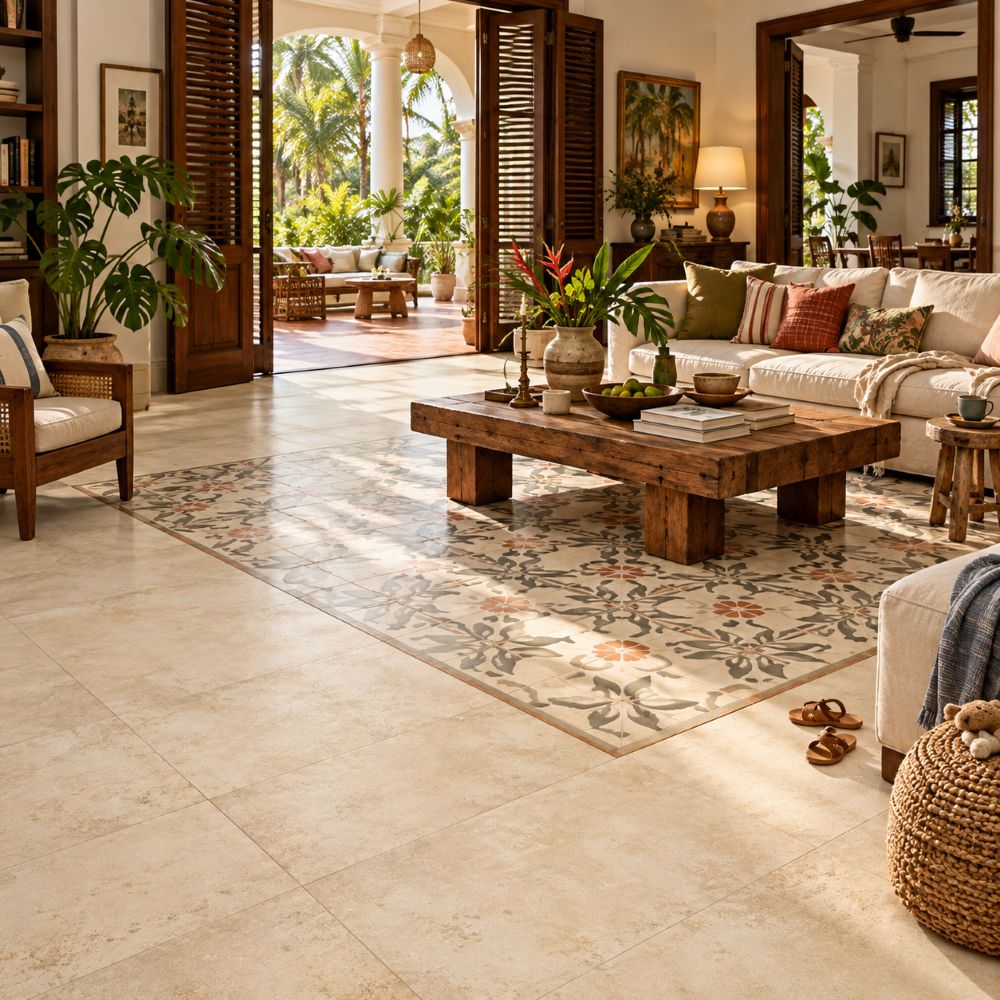
Porcelain gives you the pattern with near-zero water absorption, which is why I suggest it for kitchens, bathrooms and outdoor balconies that take the rain. Many of our clients keep a “rug” of salvaged losas in the living room and run new floor tiles around it, so the history stays where the family gathers.
7. Renovating Historic Tile Floors in Old San Juan and Ponce
If your property sits inside a designated historic zone, such as Old San Juan or the historic center of Ponce, the Instituto de Cultura Puertorriqueña has to give a written recommendation before construction permits are approved.
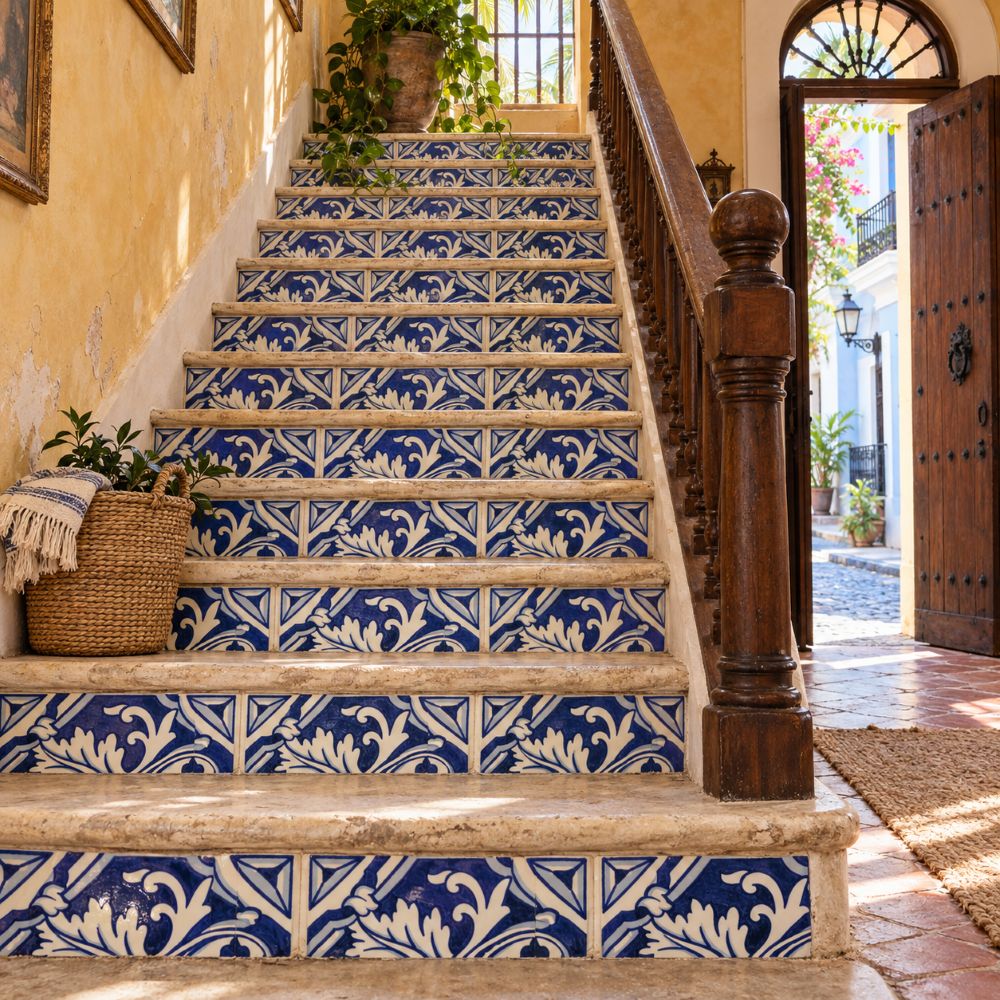
In practice, that means photographing the floor before any demolition and planning repairs that keep original material in place. Contractors new to these streets sometimes pull a floor first and ask questions later, and that is the most expensive order to do things in. For new rooms, handpainted tiles on stair risers or a kitchen wall can echo the old patterns without competing with them.
Bring a Tile to Our San Juan Showroom
A floor like this tells you who lived in the house and how they lived. Before you decide anything, bring us a photo of the room, a loose tile if you have one, and a sense of what the space needs to do now.
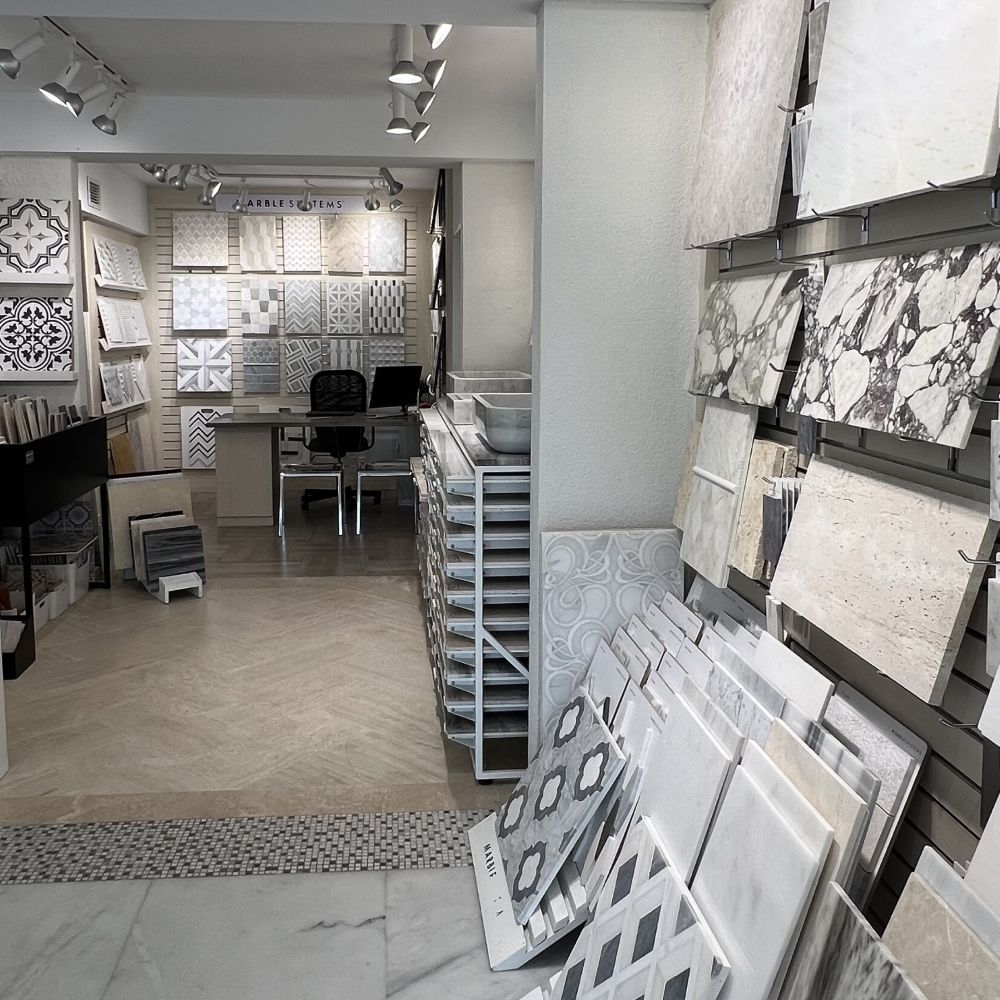
Our team at the Country Floors Puerto Rico showroom on José De Diego Avenue will help you sort out what to save, what to repair and what to replace. If you are still gathering ideas, our guide to Puerto Rico tile designs is a good next read.