
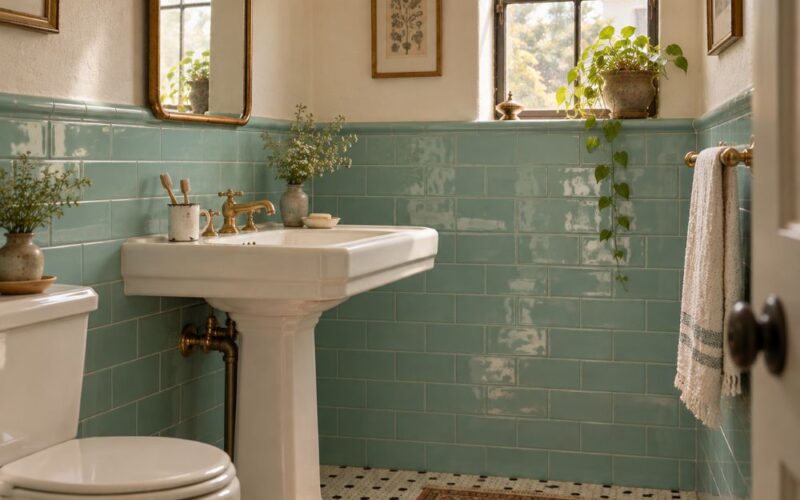
If you own a house in San Francisco’s Sunset, your Sunset District bathroom may still carry tile set in the 1930s: a band of glossy color, a dark cap line, a corner that cracked decades ago and was never fixed. Before any remodel starts, the real question is what that tile is worth to you. I’ve spent thirty years helping owners, designers and contractors answer it, lately at our San Francisco tile showroom, and this is how I think it through.
1. Why Every Sunset District Bathroom Tells a 1930s Story
Most Sunset houses went up between 1925 and 1950, built block by block by merchant builders such as Henry Doelger, Oliver Rousseau and Ray Galli. San Francisco Planning’s history of the neighborhood describes the typical house as five rooms and one bathroom on just under 1,000 square feet, with kitchens and baths often finished in colorful ceramic tile.

That shared pattern works in your favor. Your bathroom follows a known vocabulary, and a known vocabulary can be read, repaired and matched.
2. How to Tell If Your 1930s Bathroom Tile Is Original
Clients usually assume that colored tile must be original. Often it isn’t, because plenty of these baths were redone after the war. Start with the trim. Original work used true ceramic caps, bullnose and cove base, set on a thick mortar bed, so the wall sounds solid when you tap it.
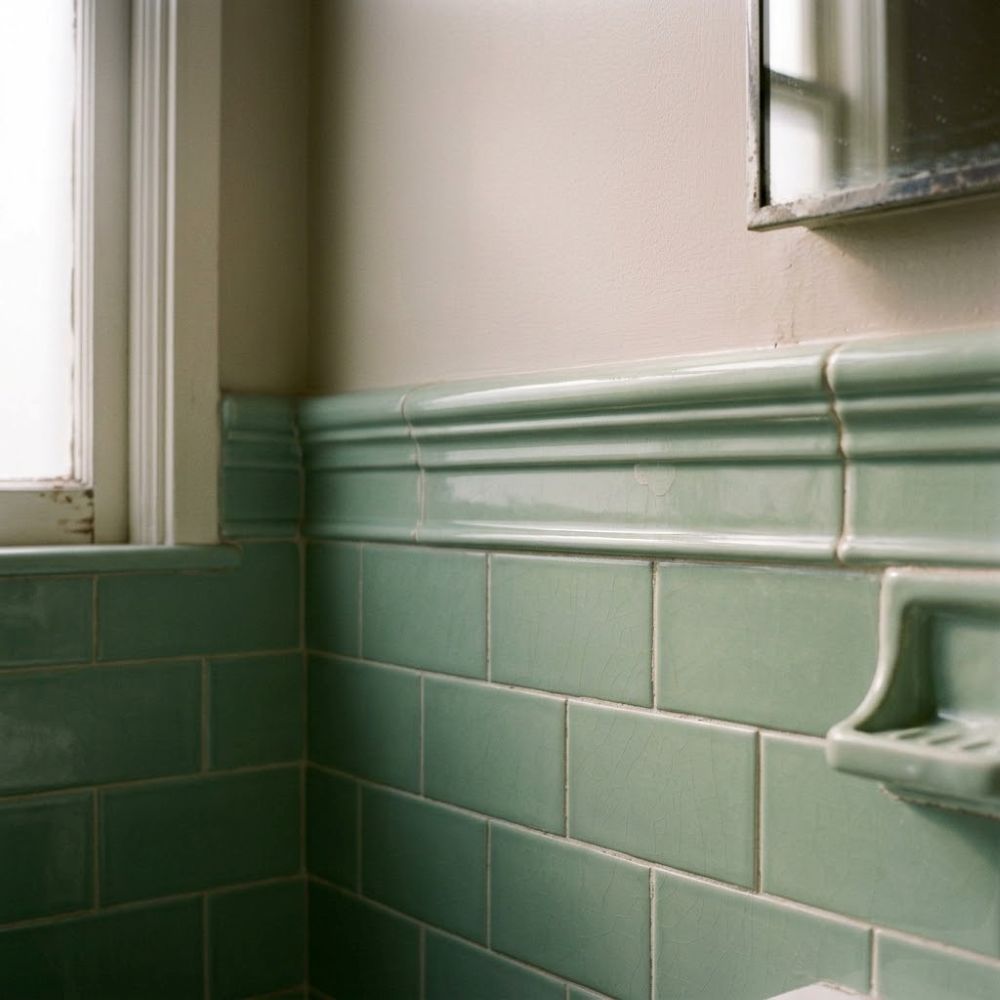
Fine crazing in the glaze and slight size variation are good signs. Square edges cut from field tile usually point to a later job.
3. When to Keep Original Bathroom Tile
If the wainscot is sound, most of the glaze is intact and you still like the color, keep it. A mortar set wall from that era is often flatter and sturdier than whatever replaces it, and those glazes have a depth that is hard to find off a shelf.

Change what surrounds it instead: new bathroom vanities, lighting and paint. The room will feel current without losing the reason you bought the house.
4. How to Restore Vintage Bathroom Tile Without a Patchwork Look
Most suppliers will hand you the closest stock color and call it a repair. We don’t, because a near match in the middle of an old wall draws the eye more than the crack ever did.

When only a few pieces are missing, harvest originals from behind the toilet or a cabinet, set them where people look, and put new tile in the hidden spots. Fresh ceramic trim pieces can rebuild the cap line so the repair disappears.
5. Matching 1930s Bathroom Tile With Made to Order Pieces
When salvage runs out, we turn to our made to order heritage tiles. Bring one loose piece and we check size, thickness, edge profile and glaze before we ever talk color, because a perfect color at the wrong thickness still fails on the wall.

For a lost border or accent band, mosaic customization lets you recolor one of our patterns so it sits comfortably beside the original.
6. Choosing New Tile for a Sunset District Bathroom Remodel
Homeowners often think a period bathroom means copying 1935 exactly. In reality it means keeping the proportions: wainscot near chair-rail height, a defined cap, a contrasting base. Inside that frame, glossy ceramic tile in green or pink, or quieter solid color and tonal tiles, carry the spirit honestly.
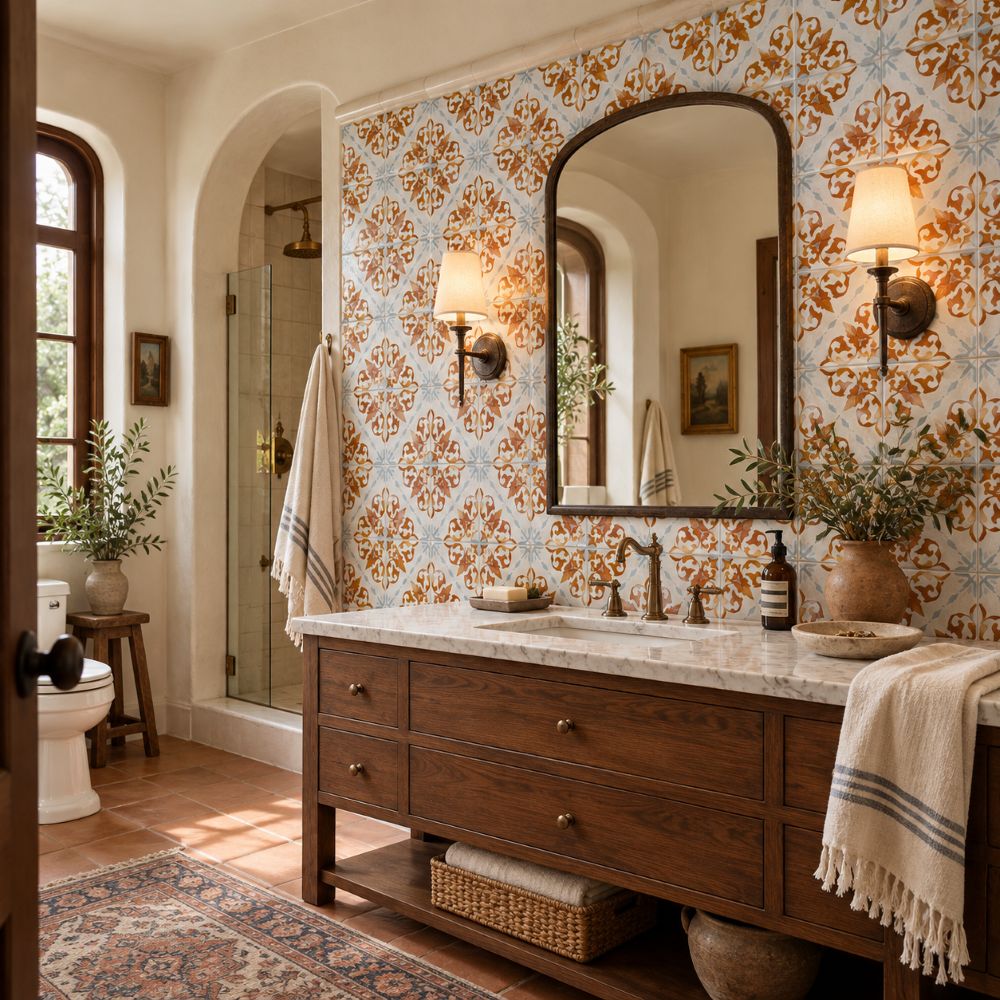
A run of handpainted tile or glazed terracotta nods to the Mediterranean façade outside, the same instinct behind San Francisco’s handpainted tile trend.
7. 1930s Bathroom Floor Tile and Shower Ideas
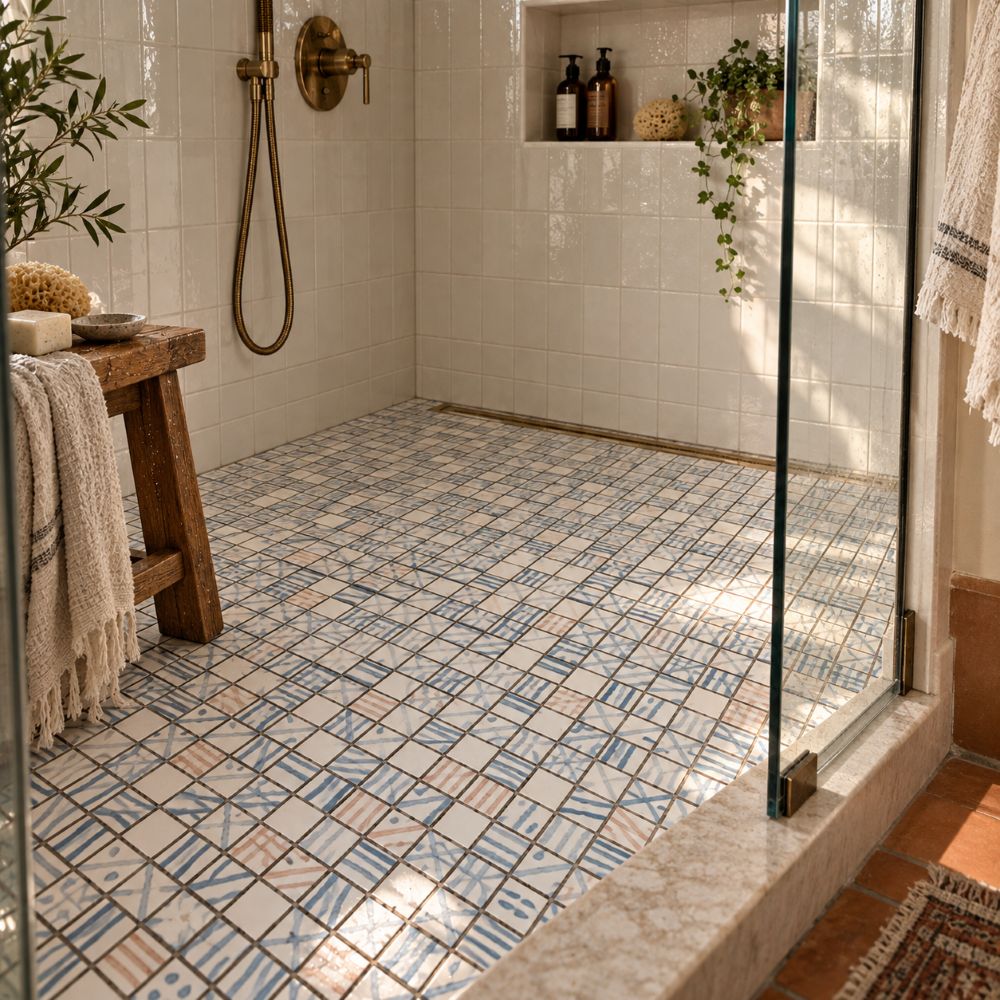
Most of these bathrooms were built around a tub, and adding a proper shower is the change I’m asked about most. Keep the wet zone in the same family as the walls: shower wall tiles that echo the field color, with small mosaics or dedicated shower floor tiles underfoot, where more grout lines mean better grip.
8. Permits for a San Francisco Bathroom Remodel
Interior kitchen and bath work in San Francisco usually goes through the Department of Building Inspection’s over the counter permit path. The Sunset isn’t one of the city’s Article 10 landmark districts, but Planning did identify eligible historic tracts here in 2013, so check your address on the Sunset survey map before changing anything visible from the street. Your contractor should confirm the scope with DBI first.

One more check before anyone opens a wall: a house built in the 1930s almost certainly has lead paint somewhere in its layers, so make sure your contractor is EPA RRP certified, and have any old adhesive or patch material tested before it’s disturbed.
Bring Your Sunset District Bathroom to the Showroom
Nearly every Sunset bathroom project I’ve worked on started with one photo and one loose tile. Bring both to our tile store in San Francisco at 680 8th Street, Suite 175, for a free design consultation. We’re open Monday to Friday, 10 AM to 5 PM, or call (415) 241-0500.
