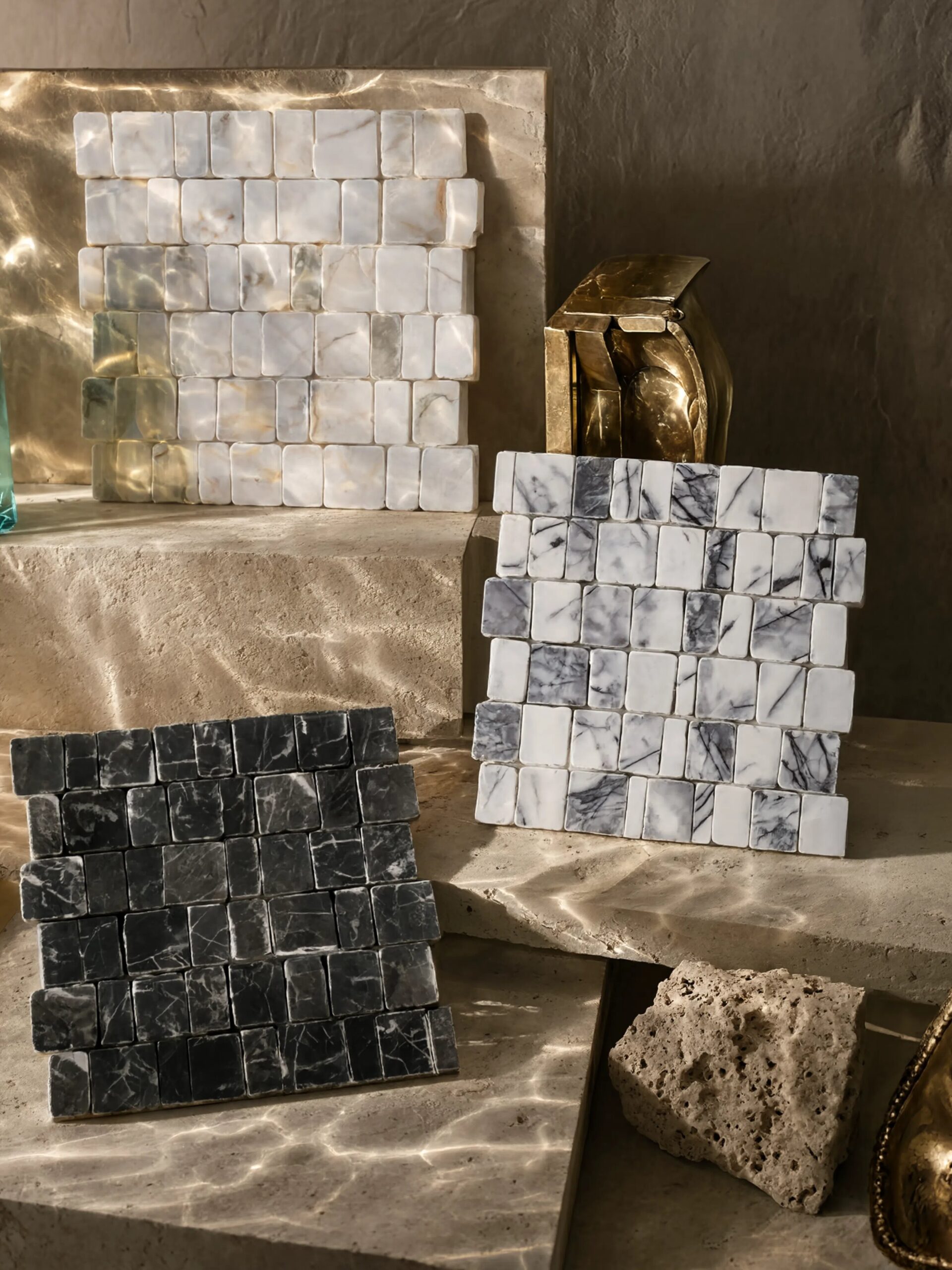
Rough Cut Scarpa
In 1957, Carlo Scarpa was asked to transform a narrow storefront under the arcades of Venice's Piazza San Marco into a showroom for Olivetti, the typewriter company. What he built became one of the most studied interiors of the twentieth century, and its floor is the reason this collection exists.
Scarpa laid the ground in small, irregular tiles of colored stone, each piece set slightly apart from the next, catching light like the staggered keys of the machines on display above them. The Rough Cut Scarpa collection draws directly from that geometry: an interlocking mosaic tile where every fragment holds its own edge, meeting its neighbors in the same restless, precise rhythm Scarpa used to make stone feel almost typographic.
This is a Carlo Scarpa inspired mosaic in the truest sense, not a reproduction, but a continuation of the logic behind the Negozio Olivetti floor. The rough-cut surface keeps the hand of the material visible, so the geometric marble mosaic tile reads as worked stone rather than polished uniformity. Colors shift subtly across the field, the way natural stone does when it's cut from real blocks instead of printed to match.
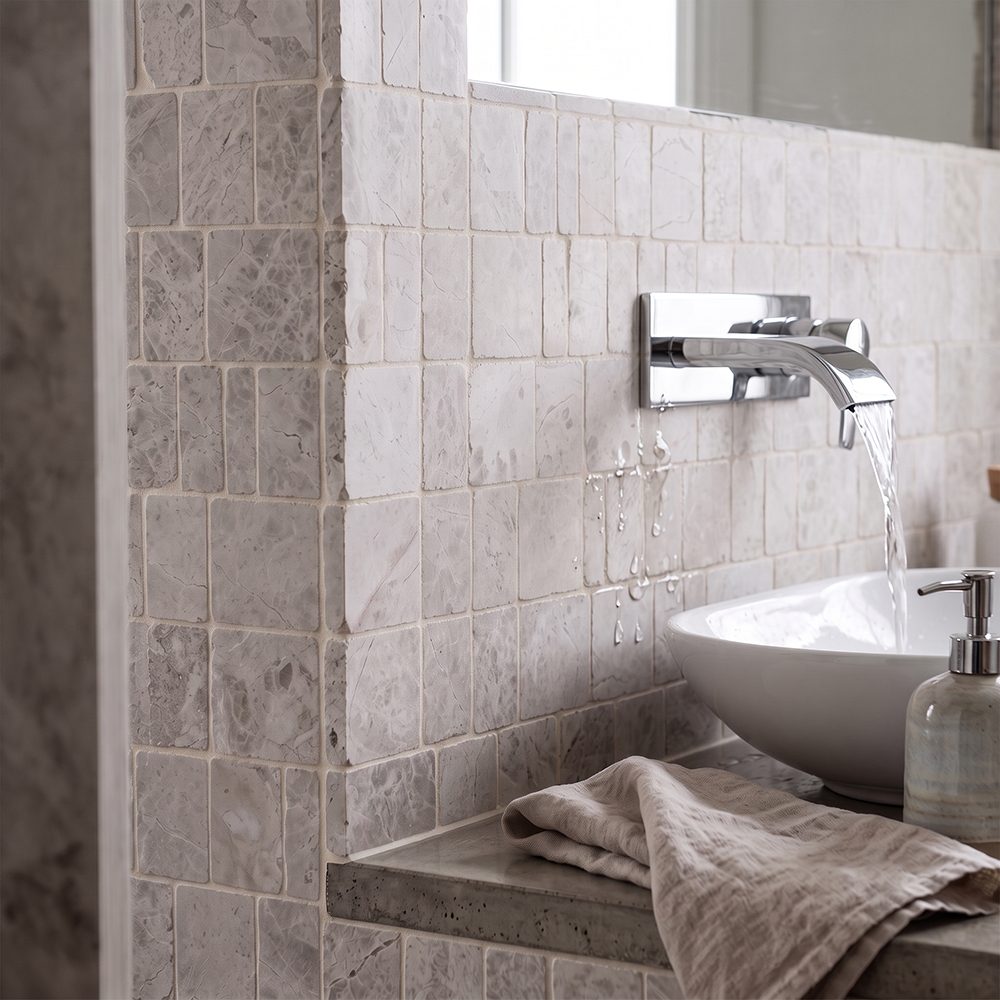
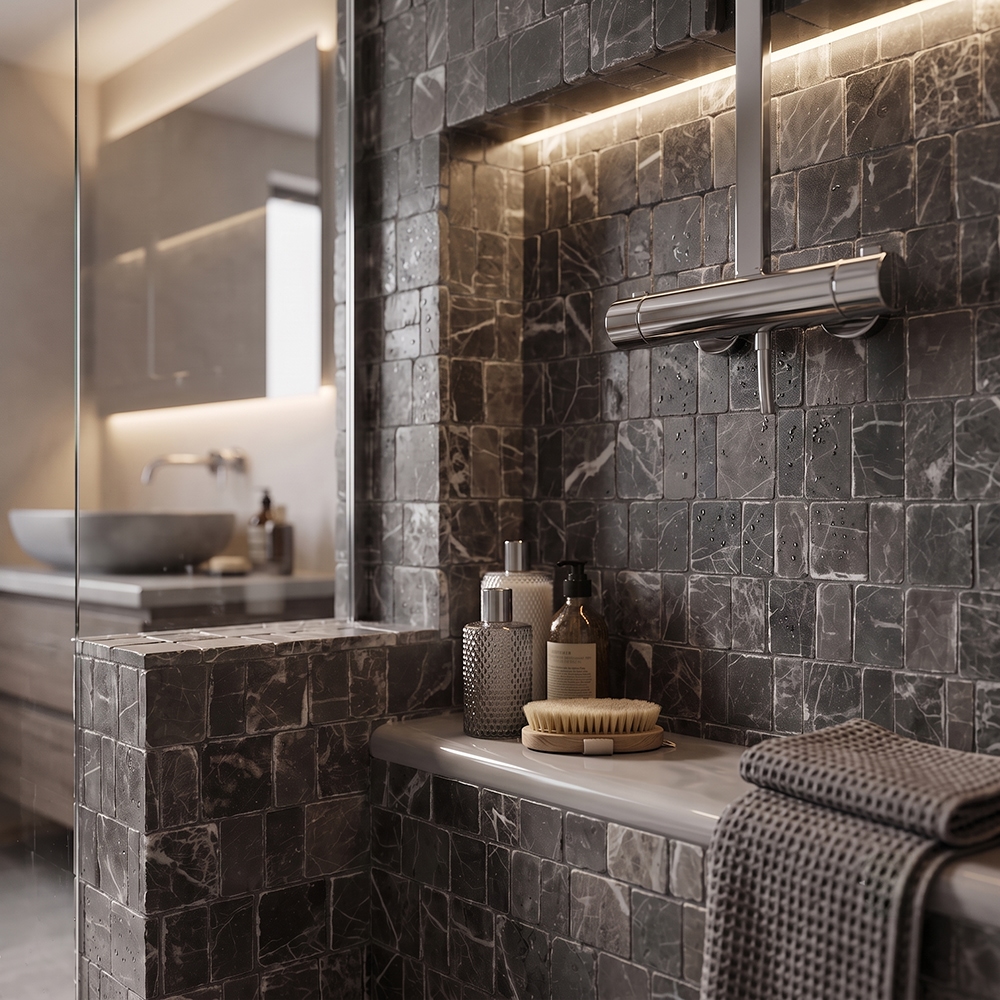
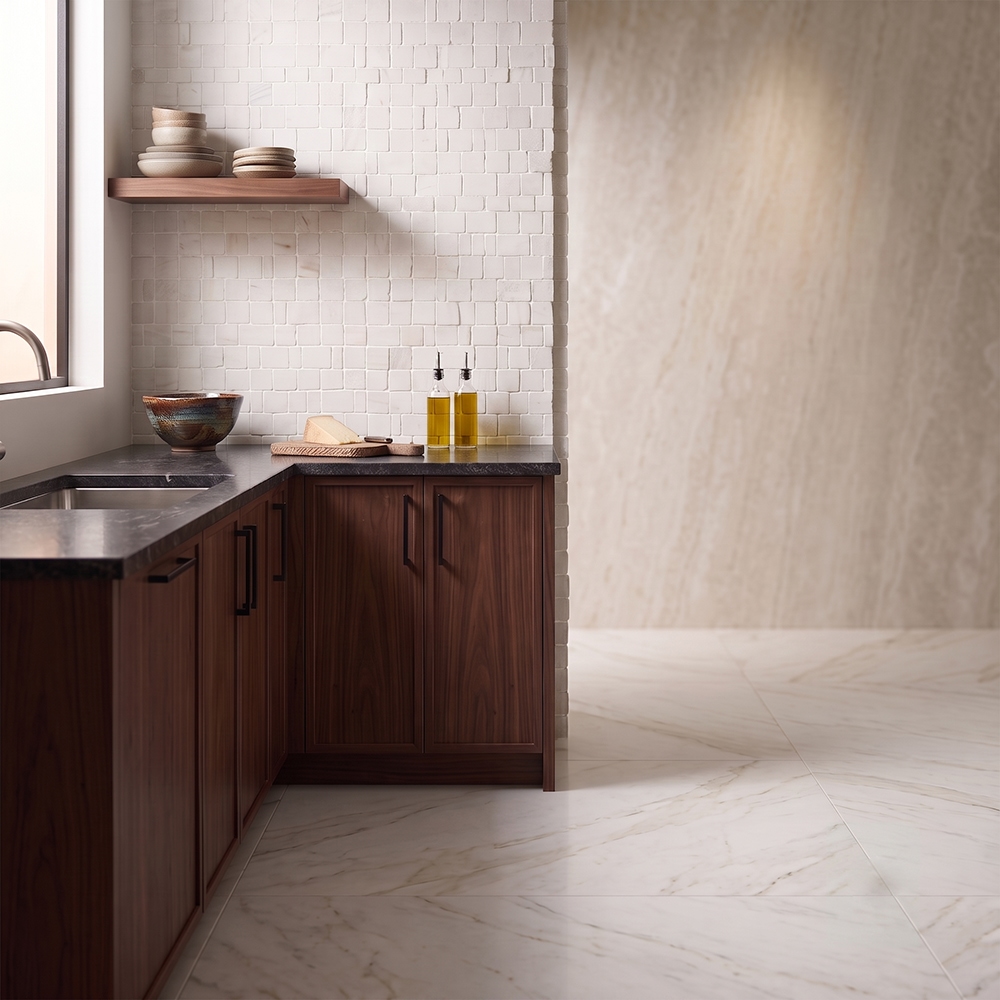
Use it where you'd want a floor to be noticed: an entry, a powder room, a shower niche, a backsplash tile that becomes the focal point of the room. As a designer luxury mosaic tile, the Scarpa collection tile rewards close looking the interlocking pattern reveals itself gradually, one piece at a time.
Most tile is chosen and forgotten. A Scarpa mosaic tile floor tends to be the thing people ask about.





Find your perfect surface
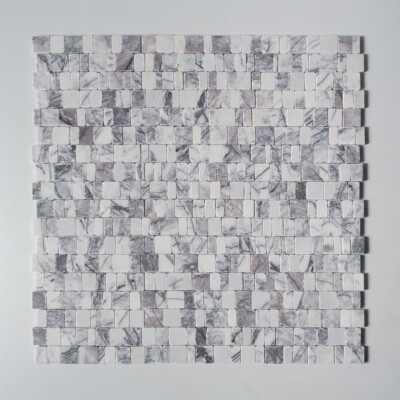
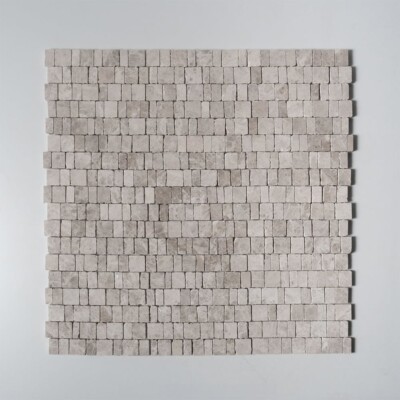
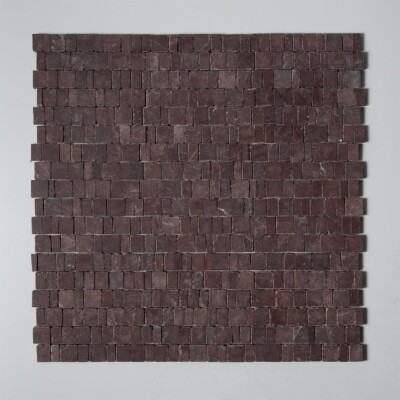
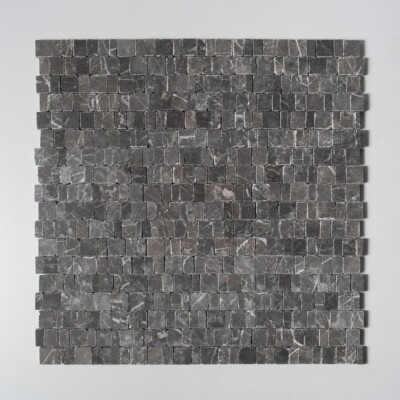
Browse 13 pieces, compare shapes and details, then order a sample to experience the material at home.



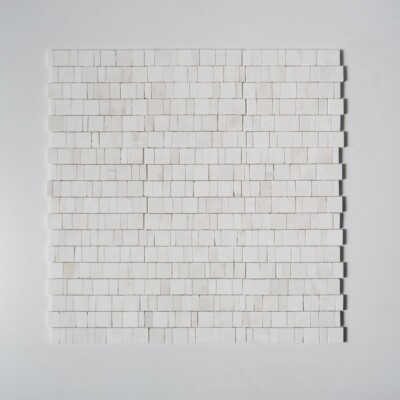
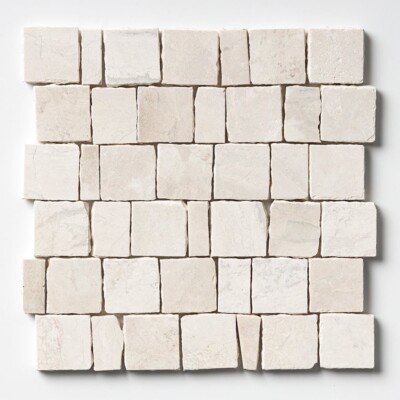
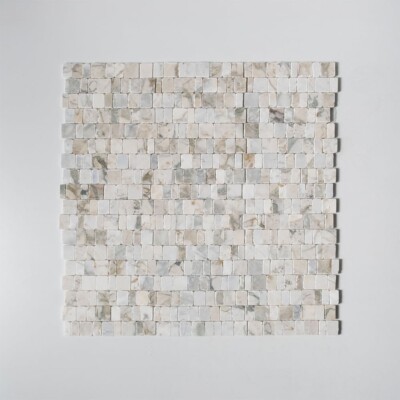
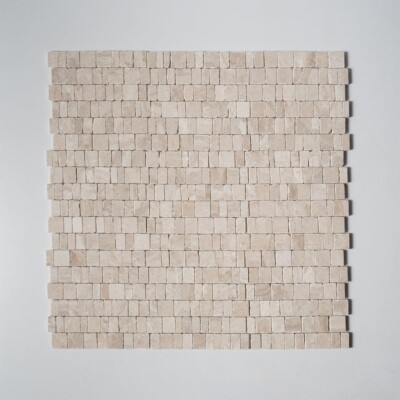
Where you can use it
Compare residential and commercial applications for marble surfaces.
Interior
10 applicationsExterior
2 applicationsInterior
9 applicationsExterior
2 applicationsThis guide is a general reference. Always review the individual product specifications before installation.

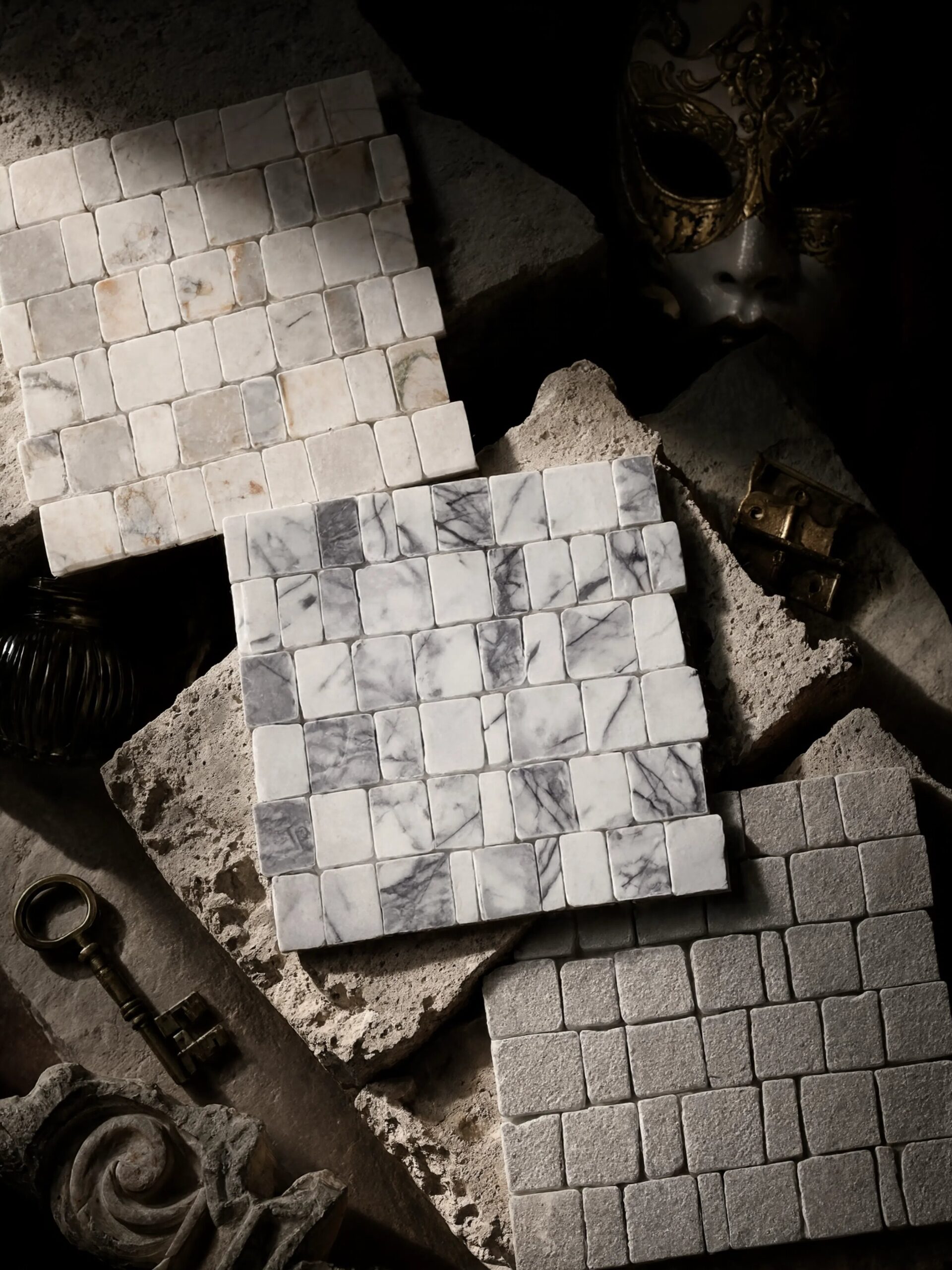
A Story Started in Venice, Became A Design Language Worldwide
Some tile collections take their name from a color palette, material’s veining details, or a technique. Ours takes its name from an architect who never lowered his standards, not even for flooring. The vision was beyond that, and that was the starting point for our story.
In 1957, Carlo Scarpa was asked by Adriano Olivetti to turn a narrow, dark storefront under the arcades of Venice's Piazza San Marco into a showroom for typewriters and calculators. What Scarpa built there became one of the most studied interiors in 20th century architecture, and it's the reason Scarpa mosaic tiles exist. He laid the ground in irregular tesserae of colored glass, each piece set slightly apart from its neighbors, catching light the way water does.
Also, a clever way of color customization is used: red marked the entrance, gray white the center, blue the side passage, yellow the back. That was a great move to avoid signage details and express it with architecture and aesthetics; the mosaic itself told you where you stood. The showroom still exists today, carefully restored and open to the public, and you have a chance to see what an architectural and design miracle looks like in real life in the streets of Venice.
Why Rough Cut Scarpa Continue That Tradition?
Our Rough Cut Scarpa Collection doesn't reproduce the floor tiles only; we aim to carry the tradition and logic behind it. Every Scarpa mosaic tile in the range is cut in irregular rectangular fragments, hand clipped so no two pieces are the same, then set in the same restless, interlocking rhythm Scarpa used to make stone feel almost typographic.
The rough cut surface keeps the hand of the material visible; nothing here is made for perfection, in fact, the imperfection brings the exact soul of what Scarpa tried to create. Color shifts subtly across the field the way it does in a real marble block, because that's exactly what it is.
Don’t think that we offer Scarpa mosaic tile in a limited design spectrum. You’ll find them across a wide range of natural stones, from the cool restraint of Bianco Dolomiti marble and Diana Royal to the depth and unique characteristics of Calacatta Green, Red Bordeaux, and Iris Black. Maximalist or restrained, the design language stays the same: the geometry connects everything, and every fragment holds its own edge.

Where Scarpa Mosaic Tile Is Used In Our Projects?
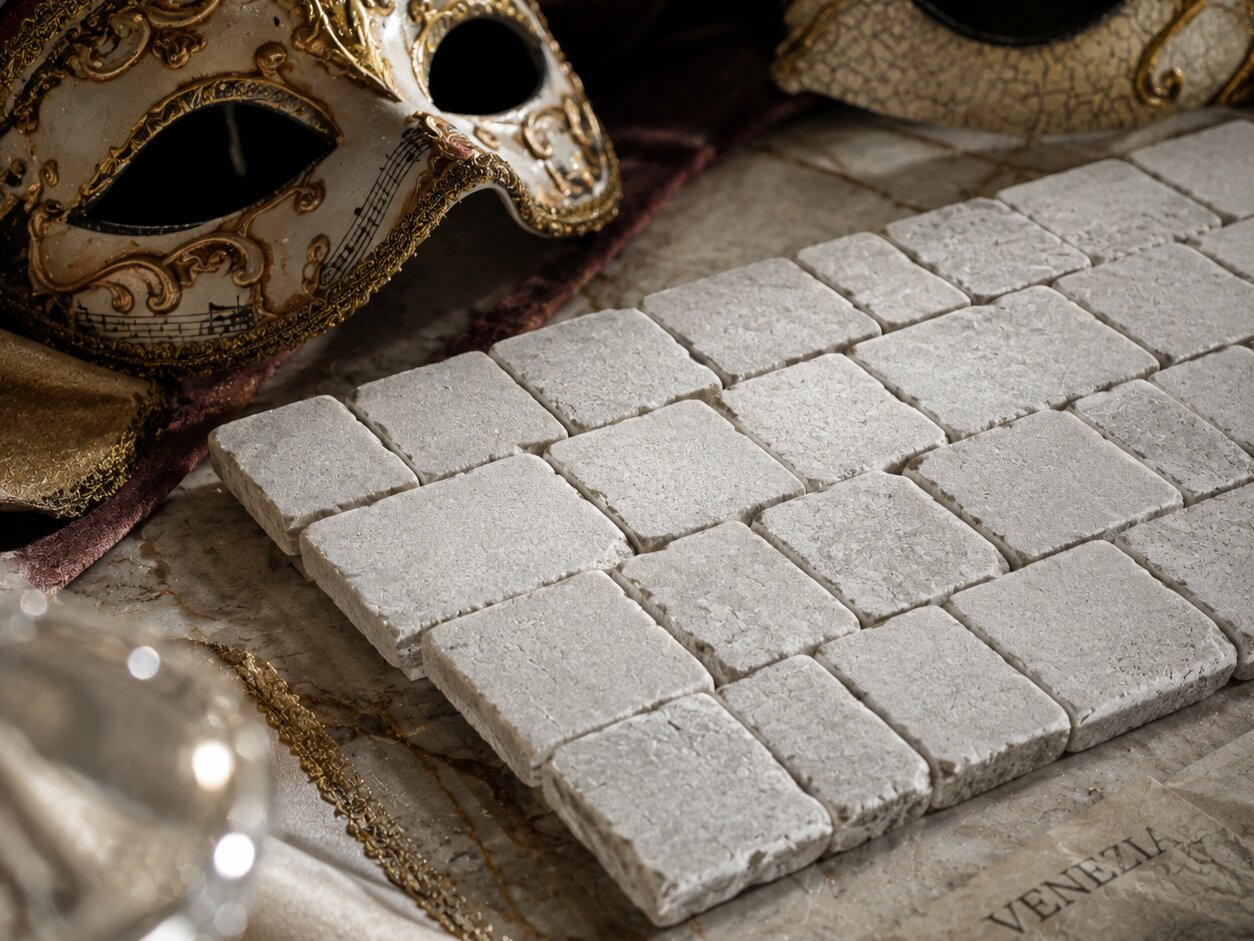
Use it where a floor is meant to express the background of a noble story of an architectural dream: an entry that sets the tone for the whole home, a powder room that becomes the story people tell about your house, a shower niche or kitchen backsplash that turns a utility surface into a focal point. As a designer mosaic, this Scarpa mosaic tile rewards close looking; the interlocking pattern reveals itself one piece at a time, the way Scarpa intended when he asked people to slow down and actually look at a floor. Because that was it, to be able to notice.
Most tile gets chosen once and stops being seen. A Scarpa mosaic tile floor will always remind you that it’s chosen for a reason.